Plot No. 5, Evershine Nagar, Next To Landmark, Link Road, Malad West
Blog Category

Finding the right physiotherapist in Malad can make a big difference when pain, injury, stiffness, weakness or movement difficulty starts affecting your daily life. Many people ignore pain in the beginning, hoping it will settle on its own. But when back pain affects office work, knee pain makes walking difficult, a sports injury stops training, or stroke recovery becomes slow after hospital discharge, proper physiotherapy care becomes important.

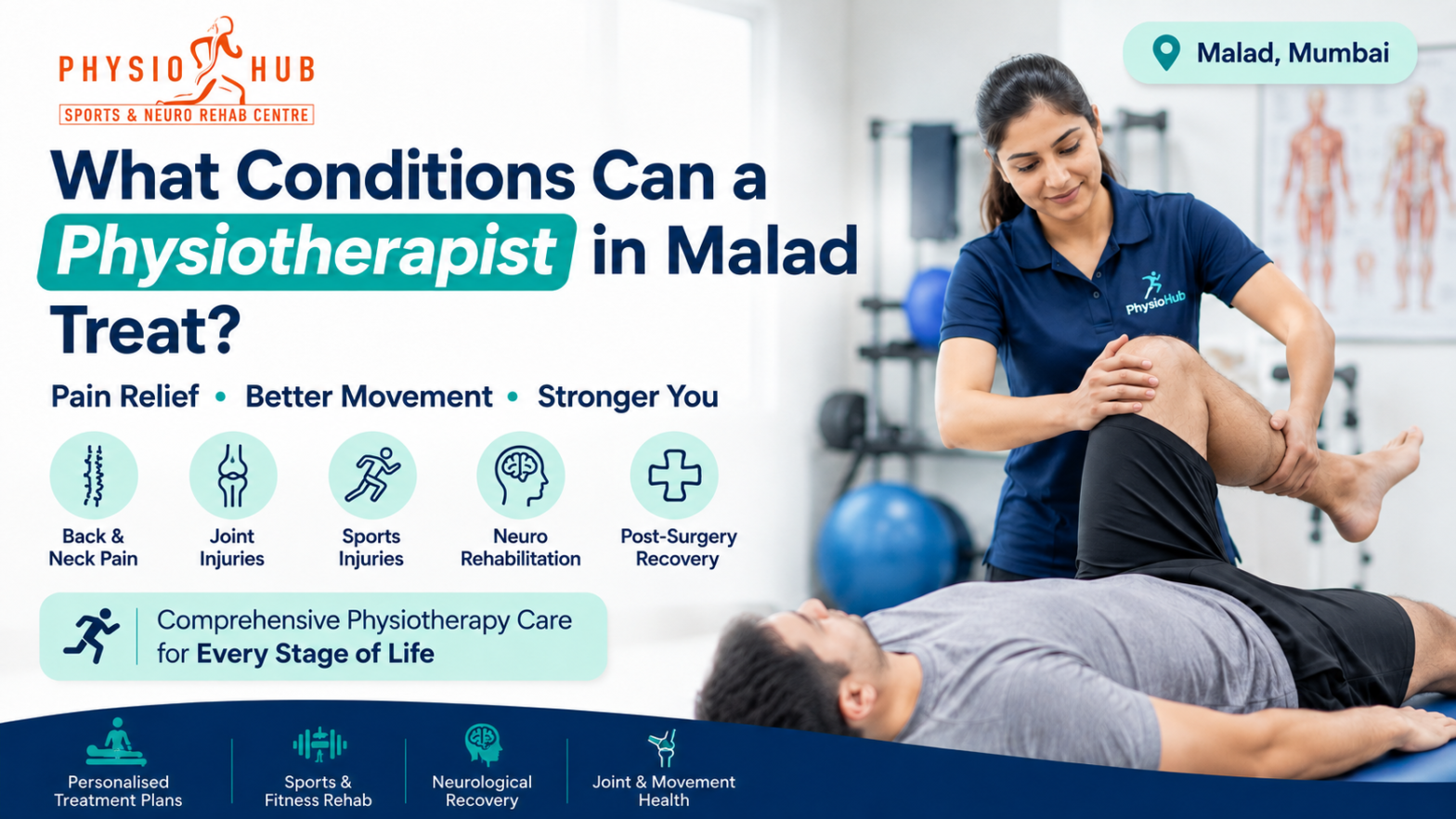
PhysioHub in Malad, Mumbai offers complete physiotherapy care for people who need pain relief, stroke rehabilitation, sports injury rehab, post-surgery recovery, spine care, osteopathy support and guided movement training. Whether you are a working professional with neck pain, a senior citizen with balance issues, a fitness enthusiast recovering from an ACL injury, or a family member looking for stroke recovery physiotherapy in Malad, the right treatment plan can help improve comfort, mobility and confidence.

This blog explains how physiotherapy works, who needs it, what conditions it can support, and how to choose the right physiotherapy clinic in Malad for long-term recovery.

A physiotherapist in Malad helps people recover from pain, stiffness, stroke-related weakness, sports injuries, post-surgery limitations and mobility problems through assessment, manual therapy, exercise therapy, balance training, neuro rehab, posture correction and recovery planning. At PhysioHub Malad, treatment is planned based on the patient’s condition, lifestyle, movement ability and recovery goals.

Physiotherapy is not only for pain. It also supports stroke recovery, balance, walking, posture, sports rehab and post-surgery movement.

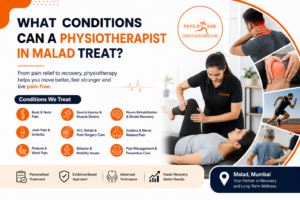
People commonly search for physiotherapy in Malad when they have back pain, neck pain, knee pain, shoulder pain, sciatica, joint pain or chronic pain.

Stroke rehabilitation in Malad may include walking practice, balance training, muscle control, posture correction and caregiver education.

Sports injury physiotherapy can help with ACL rehab in malad, ligament injury, ankle sprain, knee injury and safe return to activity.

A good physiotherapy centre in Malad West should focus on proper assessment, personalized treatment and long-term prevention, not just temporary pain relief.

Complete Physiotherapy Care in Malad: What It Means

Complete physiotherapy care means looking at the full problem, not just the painful area. For example, knee pain may be linked to weak hip muscles, poor walking pattern, old injury, excess load, poor footwear or postural imbalance. Similarly, back pain may be related to long sitting hours, weak core muscles, stress, poor lifting habits or reduced spine mobility.

At a good physiotherapy clinic in Malad, treatment usually starts with understanding the patient’s pain, movement, daily routine, work habits, medical history and recovery goals. This helps the physiotherapist create a plan that is practical and safe.

Complete physiotherapy care in Malad may include:

Pain assessment
Posture and movement analysis
Manual therapy
Exercise therapy
Strength training
Balance and coordination training
Neuro physiotherapy
Sports injury rehab
ACL rehab
Post-surgery physiotherapy
Spine rehabilitation
Osteopathy support
Education for home exercises
Long-term prevention planning

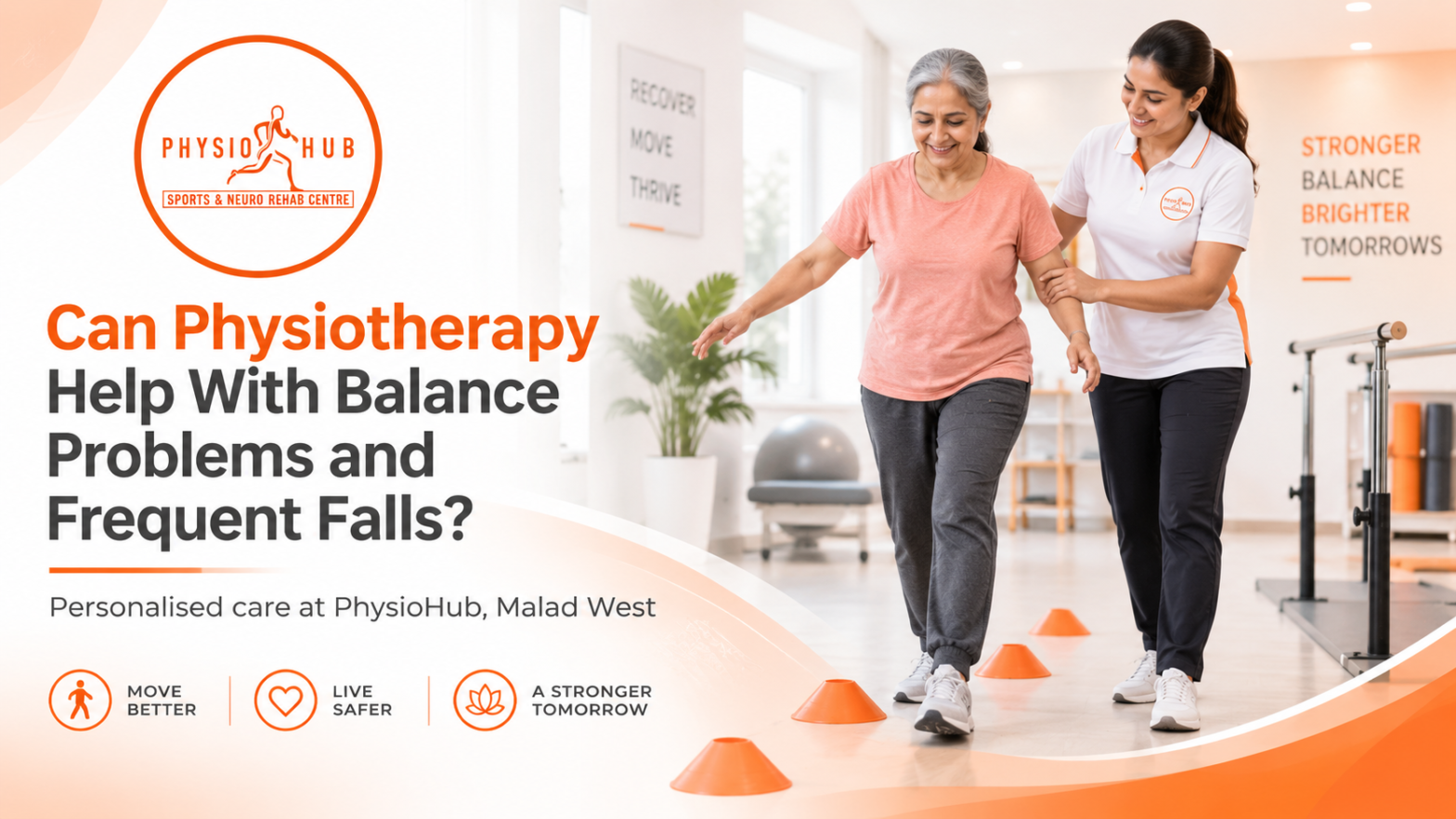
This approach is helpful because every patient is different. A working professional with lower back pain needs a different plan than a stroke patient learning to walk again. A senior citizen with balance problems needs different care than a football player recovering from a ligament injury.

Why People Search for a Physiotherapist in Malad

People in Malad, Malad West, Evershine Nagar, Orlem, Link Road, Mindspace, Goregaon and Kandivali often look for physiotherapy support because they want care that is close, accessible and reliable.

Common reasons people search locally include:

Pain affecting office work
Difficulty walking or climbing stairs
Sports injury during gym, running, cricket or football
Stroke recovery after hospital discharge
Post-surgery stiffness or weakness
Neck pain due to laptop or mobile use
Back pain because of long sitting hours
Knee pain in senior citizens
Shoulder pain while lifting or sleeping
Sciatica pain travelling down the leg
Need for guided rehab instead of random exercises

Many users search terms like physiotherapy in Malad, best physiotherapist in Malad West, physiotherapy centre in Malad West, pain relief physiotherapy in Malad or complete physiotherapy care near me in Malad West. These searches show that people want nearby treatment with proper guidance.

Pain Relief Physiotherapy in Malad

Pain is one of the most common reasons people visit a physiotherapist. But pain relief physiotherapy in Malad should not be limited to temporary comfort. The goal should be to understand why the pain started and how to reduce the chances of it returning.

1. Back Pain Physiotherapy in Malad

Back pain is common among working professionals, drivers, homemakers, gym-goers and senior citizens. It may happen due to long sitting, poor posture, weak core muscles, disc-related issues, muscle tightness or improper lifting.

Back pain physiotherapy in Malad may include:

Spine mobility exercises
Core strengthening
Posture correction
Manual therapy
Ergonomic advice
Stretching for tight muscles
Safe bending and lifting training
Home exercise planning

For people searching for lower back pain physiotherapy in Malad or spine physiotherapy in Malad West, a proper assessment is important before starting exercises.

2. Neck Pain Physiotherapy in Malad

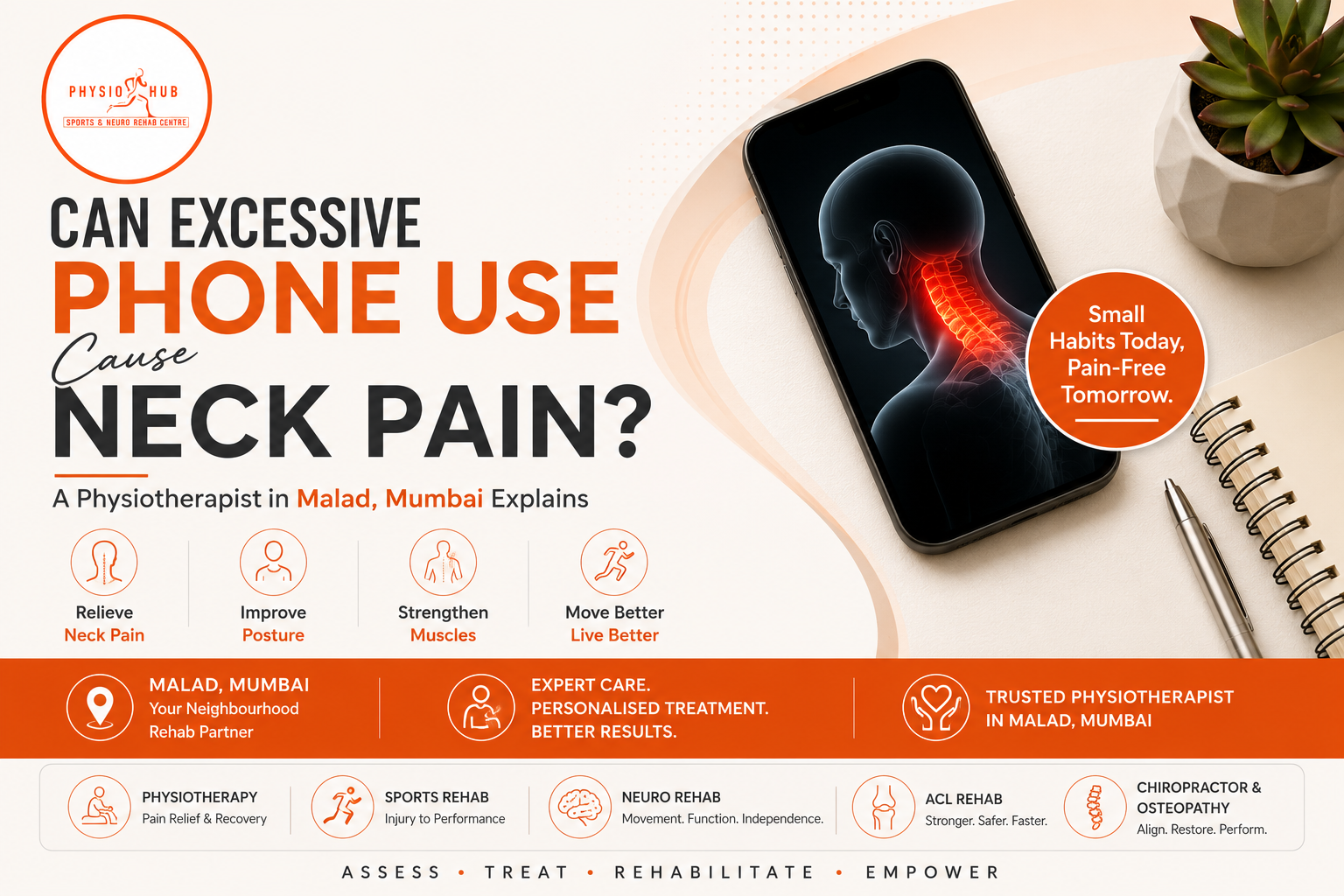
Neck pain is often linked with laptop work, mobile use, stress, poor sleeping posture or long travel. Some people also experience headache, shoulder tightness or tingling in the arm.

Neck pain physiotherapy in Malad may focus on posture, neck mobility, shoulder strength, upper back movement and daily work habits.

3. Knee Pain Physiotherapy in Malad

Knee pain can affect walking, stairs, squatting and exercise. It may happen due to arthritis, muscle weakness, ligament injury, poor alignment, old injury or overuse.

Knee pain physiotherapy in Malad may include strengthening, balance training, mobility work, walking correction and pain management techniques.

4. Shoulder Pain Physiotherapy in Malad

Shoulder pain may make it hard to lift the arm, sleep comfortably, wear clothes or do gym exercises. Physiotherapy can help by improving shoulder mobility, muscle control and strength.

5. Sciatica and Joint Pain Physiotherapy

Sciatica pain usually travels from the lower back to the hip or leg. Joint pain may affect the knees, shoulders, hips, ankles or wrists. Sciatica pain physiotherapy in Malad and joint pain physiotherapy in Malad should always be based on the patient’s symptoms, nerve signs, strength and movement pattern.

Stroke Rehabilitation in Malad

Stroke recovery is one of the most important areas of physiotherapy. After a stroke, a person may experience weakness on one side of the body, poor balance, walking difficulty, hand stiffness, reduced coordination, fear of falling or trouble doing daily activities.

Stroke rehabilitation in Malad may help patients work on movement, walking, posture, balance and independence. It is not only about doing exercises. It is about helping the patient relearn safe and useful movements for daily life.

1. What Stroke Rehab May Include

Stroke recovery physiotherapy in Malad may include:

Muscle activation exercises
Sitting and standing balance training
Walking practice
Weight shifting exercises
Posture correction
Hand and arm movement practice
Fall prevention training
Daily activity training
Caregiver education
Home exercise guidance

Families often search for physiotherapy for stroke patients in Malad after hospital discharge because they want structured support. A neuro rehab centre in Malad can help patients follow a planned recovery routine instead of depending on random exercises.

2. Why Neuro Physiotherapy Matters

Neuro physiotherapy in Malad focuses on conditions related to the brain, nerves and movement control. This may include stroke, paralysis, balance problems, Parkinson’s-related movement difficulty, nerve weakness or walking issues.

A neuro rehab centre in Malad should focus on realistic goals. one patient, the goal may be sitting without support. For another, it may be walking safely at home. For someone else, it may be improving stair climbing or reducing fall risk.

Sports Injury Physiotherapy in Malad

Sports and fitness injuries are common among runners, gym-goers, football players, cricketers, dancers and active adults. Pain after a workout should not always be ignored, especially if it affects movement, swelling, strength or performance.

Sports injury physiotherapy in Malad can help with:

Knee injuries
ACL rehab
Ligament injuries
Ankle sprain
Muscle strain
Shoulder injury
Tennis elbow
Running injuries
Post injury rehab
Return-to-sport training

1. ACL Rehab in Malad

The ACL injuries are common in sports that involve sudden turning, jumping, landing or quick direction changes. ACL rehab in Malad may be needed before surgery, after surgery or in selected non-surgical cases depending on medical advice.

In ACL rehabilitation usually focuses on:

Reducing swelling
Restoring knee movement
Improving quadriceps and hamstring strength
Balance and stability training
Walking correction
Gradual running drills
Jumping and landing control
Safe return-to-sport planning

A sports physiotherapist in Malad can guide the patient through different rehab stages instead of rushing back to activity too early.

2. Why Sports Rehab Should Be Structured

Many sports injuries repeat because people return to activity before the body is ready. Pain may reduce, but strength, balance, coordination and control may still be weak. This is why injury recovery physiotherapy in Malad should include testing, progression and prevention.

Osteopathy and Chiropractor-Related Searches in Malad

Many people searching for back pain, neck pain or spine stiffness also search for osteopathy in Malad or chiropractor in Malad. These searches usually come from people looking for hands-on care, spine mobility, posture correction and relief from muscle or joint stiffness.

Osteopathy may include gentle manual techniques to improve body movement and reduce mechanical stress. Chiropractic-style care is often searched by people with spine-related discomfort. However, for safe recovery, manual therapy should be supported with proper assessment, exercise therapy, posture correction and strengthening.

At a physiotherapy-led setup, hands-on care works best when combined with active rehab. This helps the patient not only feel better but also move better.

Post-Surgery Physiotherapy in Malad

After surgery, many patients feel stiffness, swelling, weakness, fear of movement or difficulty returning to daily life. Post surgery physiotherapy in Malad can support recovery after medical clearance.

It may be useful after:

Knee surgery
ACL reconstruction
Shoulder surgery
Fracture fixation
Spine-related procedures
Hip or knee replacement
Sports injury surgery

The focus is usually on safe movement, swelling control, strength, walking, balance and gradual return to daily activities.

Step-by-Step Guide: How Physiotherapy Treatment Works

Step 1: Assessment

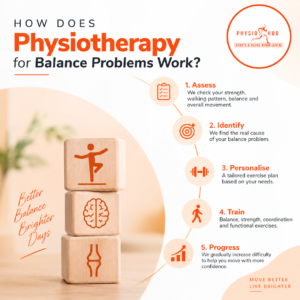
The physiotherapist checks your pain, movement, strength, posture, balance, walking pattern and medical history. This helps identify the possible cause of the problem.

Step 2: Goal Setting

Your goals are discussed clearly. For example, a working professional may want to sit without back pain. A stroke patient may want to walk safely. A sports person may want to return to training.

Step 3: Treatment Planning

A personalized treatment plan is created. It may include manual therapy, exercise therapy, neuro rehab, sports rehab, osteopathy support or post-surgery recovery exercises.

Step 4: Guided Sessions

During sessions, the physiotherapist guides you through safe movements and corrects your form. This is important because wrong exercises may increase pain.

Step 5: Home Exercise Plan

You may receive simple exercises to continue at home. These exercises are usually selected based on your condition and recovery level.

Step 6: Progress Review

Your progress is monitored. The plan may be changed as pain reduces, strength improves or your movement becomes better.

Step 7: Prevention and Long-Term Care

The final goal is not only recovery but also prevention. You learn how to move, sit, lift, exercise and manage your body better.

Benefits of Physiotherapy in Malad

Physiotherapy can help different people in different ways depending on the condition.

The working professionals, it may help reduce back pain, neck pain, posture strain and stiffness caused by long sitting hours.

In sports and fitness enthusiasts, it may help with injury recovery, strength, movement control and safe return to activity.

For stroke patients and families, it may support walking practice, balance, posture, muscle control and confidence.

The senior citizens, it may help with joint pain, balance, fall prevention, mobility and daily comfort.

For post-surgery patients, it may support safe movement, strength recovery and return to routine.

For people searching locally, choosing a physiotherapy centre in Malad West can make regular follow-ups easier and more consistent.

Actionable Checklist Before Visiting a Physiotherapist

Use this checklist before your first visit:

Carry medical reports, scans or prescriptions if available.
Note when the pain started and what increases it.
Mention any previous injury, surgery or medical condition.
Wear comfortable clothes for movement assessment.
Do not hide symptoms like numbness, weakness or balance issues.
Ask what exercises are safe for your condition.
Follow the home plan consistently.
Do not compare your recovery speed with others.
Inform the physiotherapist if any exercise increases pain.
Keep your recovery goals realistic and clear.

Common Mistakes Patients Should Avoid

Mistake 1: Waiting Too Long

Many people visit a physiotherapist only after the pain becomes severe. Early care may help prevent the problem from becoming more difficult to manage.

Mistake 2: Doing Random Online Exercises

Exercises on the internet may not suit every condition. A stretch that helps one person may worsen pain for another.

Mistake 3: Stopping Treatment When Pain Reduces

Pain relief is only one part of recovery. Strength, flexibility, balance and movement control also need attention.

Mistake 4: Ignoring Stroke Rehab After Discharge

After hospital discharge, stroke patients often need continued rehab. Without guided therapy, walking, balance and independence may remain limited.

Mistake 5: Returning to Sports Too Early

In sports injuries, pain may reduce before the body is fully ready. Returning too soon can increase the risk of re-injury.

Mistake 6: Not Following Home Exercises

Physiotherapy sessions help, but home exercises play a big role in progress. Consistency matters.

Mistake 7: Choosing Only Based on “Near Me”

Location is important, but the quality of assessment, experience, treatment planning and communication also matter.

Complete Physiotherapy Care in Malad for Better Pain Relief, Stroke Recovery and Injury Rehabilitation

Pain, stiffness, weakness or difficulty in movement can affect everyday life more than people realize. A person with back pain may struggle to sit at work, a senior citizen may feel unsafe while walking, a sports person may stop training because of a knee injury, and a stroke patient may need guided support to regain balance, strength and confidence. This is where choosing the right physiotherapist in Malad becomes important.

PhysioHub Malad offers complete physiotherapy care for people dealing with pain, stroke recovery, sports injuries, ACL rehab, post-surgery weakness, spine problems, joint stiffness and mobility issues. The focus is not only on reducing pain, but also on understanding the root cause, improving movement, building strength and helping patients return to their daily routine safely.

For people searching for physiotherapy in Malad, neuro rehab centre in Malad, osteopathy in Malad, chiropractor in Malad, ACL rehab in Malad or physiotherapist in Mumbai, PhysioHub provides patient-focused rehabilitation based on proper assessment and personalized treatment planning.

Whether you are a working professional with neck or back pain, a fitness enthusiast recovering from a ligament injury, a stroke patient working on walking recovery, or a senior citizen looking for better balance and joint comfort, physiotherapy can support your recovery journey.

With guided exercises, manual therapy, neuro physiotherapy, posture correction, sports rehab and recovery education, PhysioHub aims to help patients move better, feel stronger and live with more confidence. If pain or limited movement is affecting your life, timely physiotherapy care can make recovery safer, smarter and more effective.

Case Study Example

A 42-year-old working professional from Malad West had lower back pain for almost three months. The pain increased during long sitting hours and after driving. He tried pain-relief sprays and random stretches, but the pain kept coming back.

During physiotherapy assessment, the main issues were poor sitting posture, weak core muscles, tight hip muscles and reduced spine mobility. His treatment plan included spine mobility work, manual therapy, core strengthening, posture correction and simple office-based movement breaks.

After a few weeks of consistent sessions and home exercises, he was able to sit more comfortably, drive with less discomfort and return to light fitness activity. The key reason for improvement was not one single exercise. It was a complete plan based on assessment, daily routine and gradual strengthening.

This example shows why back pain physiotherapy in Malad should focus on the cause, not only the pain.

Expert Insights

Expert Insight 1: Pain Is a Signal, Not Just a Symptom

Pain tells you that something needs attention. It may come from muscles, joints, nerves, posture, weakness or overuse. Treating only the painful spot may not solve the full problem.

Expert Insight 2: Stroke Rehab Needs Patience and Repetition

Stroke recovery often improves through repeated, guided practice. Small progress matters. Sitting better, standing longer or taking safer steps can be meaningful milestones.

Expert Insight 3: Sports Rehab Should Include Return-to-Activity Planning

A sports person should not return only because pain is less. Strength, control, balance and confidence should also be checked.

Expert Insight 4: Manual Therapy Works Better With Exercise

Hands-on treatment may reduce stiffness and improve movement, but long-term recovery usually needs active exercises and lifestyle correction.

Expert Insight 5: Local Access Improves Consistency

Choosing a physiotherapist in Mumbai may feel confusing because there are many options. For people living near Malad, a trusted physiotherapist in Malad can make regular visits easier, which supports better consistency.

PhysioHub Malad offers complete physiotherapy care for pain relief, stroke recovery, sports injury rehab, ACL rehab, osteopathy support, spine care and post-surgery recovery. Whether you need physiotherapy in Malad West for back pain, knee pain, stroke recovery or sports injury treatment, the best approach is a personalized plan based on proper assessment and guided rehab.

FAQs

1. Which is the best physiotherapist in Malad for pain relief?

The best physiotherapist in Malad is someone who assesses your condition properly, explains the cause of pain, gives a personalized treatment plan and guides you with safe exercises. PhysioHub Malad offers physiotherapy care for pain relief, stroke rehab, sports injuries and recovery.

2. What conditions can physiotherapy in Malad help with?

Physiotherapy in Malad can help with back pain, neck pain, knee pain, shoulder pain, joint pain, sciatica, sports injuries, stroke recovery, post-surgery stiffness, balance problems and mobility issues.

3. Where can I get stroke rehabilitation in Malad West?

You can look for a neuro rehab centre in Malad that offers stroke recovery physiotherapy, balance training, walking practice, posture correction and caregiver guidance. PhysioHub Malad provides rehab support for stroke recovery patients and families.

4. How does physiotherapy help in stroke recovery?

Physiotherapy helps stroke patients work on muscle control, sitting balance, standing, walking, posture, coordination and daily activity movement. The goal is to improve safety, independence and confidence.

5. Is physiotherapy useful after a sports injury?

Yes, sports injury physiotherapy in Malad can help with pain control, strength recovery, flexibility, balance, movement correction and safe return to activity. It is useful for knee injuries, ankle sprain, ligament injury, muscle strain and ACL rehab.

6. What is ACL rehab in Malad?

ACL rehab in Malad is a structured physiotherapy program for people with ACL injury or after ACL surgery. It focuses on knee movement, strength, balance, walking, running progress and safe return to sports.

7. Can physiotherapy help with back pain?

Yes, back pain physiotherapy in Malad may help by improving spine mobility, posture, core strength, flexibility and movement habits. Treatment depends on the cause and severity of pain.

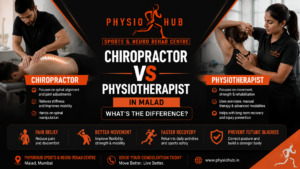
8. What is the difference between physiotherapy, osteopathy and chiropractor care?

Physiotherapy focuses on assessment, exercise, movement recovery and rehabilitation. Osteopathy often uses hands-on techniques for body movement and mechanical balance. People searching for chiropractor in Malad usually look for spine or joint-related manual care. For long-term results, hands-on treatment should be combined with exercise and posture correction.

9. Do senior citizens need physiotherapy?

Yes, senior citizens may benefit from physiotherapy for knee pain, joint stiffness, balance problems, walking difficulty, fall prevention and mobility recovery. A safe and gentle plan is important.

10. When should I visit a physiotherapy clinic in Malad?

You should visit a physiotherapy clinic in Malad if pain lasts for more than a few days, movement becomes difficult, you feel weakness, walking is affected, pain keeps returning, or you need recovery after stroke, surgery or injury.

11. Can physiotherapy help after surgery?

Yes, post surgery physiotherapy in Malad can help restore movement, reduce stiffness, improve strength and support return to daily activities after medical clearance.

12. Is physiotherapy treatment painful?

Physiotherapy should not be forcefully painful. Some exercises may feel challenging, but treatment should be guided, safe and adjusted according to your condition.

13. How many physiotherapy sessions are needed?

The number of sessions depends on the condition, severity, age, healing stage, consistency and goals. A simple pain issue may need fewer sessions, while stroke rehab or ACL recovery may need longer structured care.

14. Can I do physiotherapy exercises at home?

Yes, but only after proper guidance. Home exercises should match your condition. Wrong exercises may delay recovery or increase pain.

15. Is PhysioHub suitable for complete physiotherapy care in Malad?

PhysioHub Malad is suitable for people looking for complete physiotherapy care in Malad for pain relief, stroke recovery, neuro physiotherapy, sports injury rehab, osteopathy support, ACL rehab and post-surgery recovery.

Pain, injury, stroke recovery and movement problems can affect daily life in many ways. The some people struggle to sit at work. Some cannot walk confidently after stroke. The stop sports because of knee or ligament injury. On senior citizens lose confidence because of balance issues.

The right physiotherapist in Malad can help you understand the problem, follow a safe treatment plan and work towards better movement. Physiotherapy is not only about reducing pain. It is about helping you move better, recover safely and return to daily activities with more confidence.

If you are searching for physiotherapy in Malad, neuro rehab centre in Malad, osteopathy in Malad, ACL rehab in Malad, sports injury physiotherapy in Malad or a physiotherapist in Mumbai with local access in Malad West, PhysioHub can be a trusted choice for complete rehab-focused care.

If pain, stiffness, stroke recovery, sports injury or post-surgery weakness is affecting your daily life, visit PhysioHub Malad for a proper physiotherapy assessment and personalized recovery plan. Start your recovery with guided care, safe exercises and the right support for your condition.

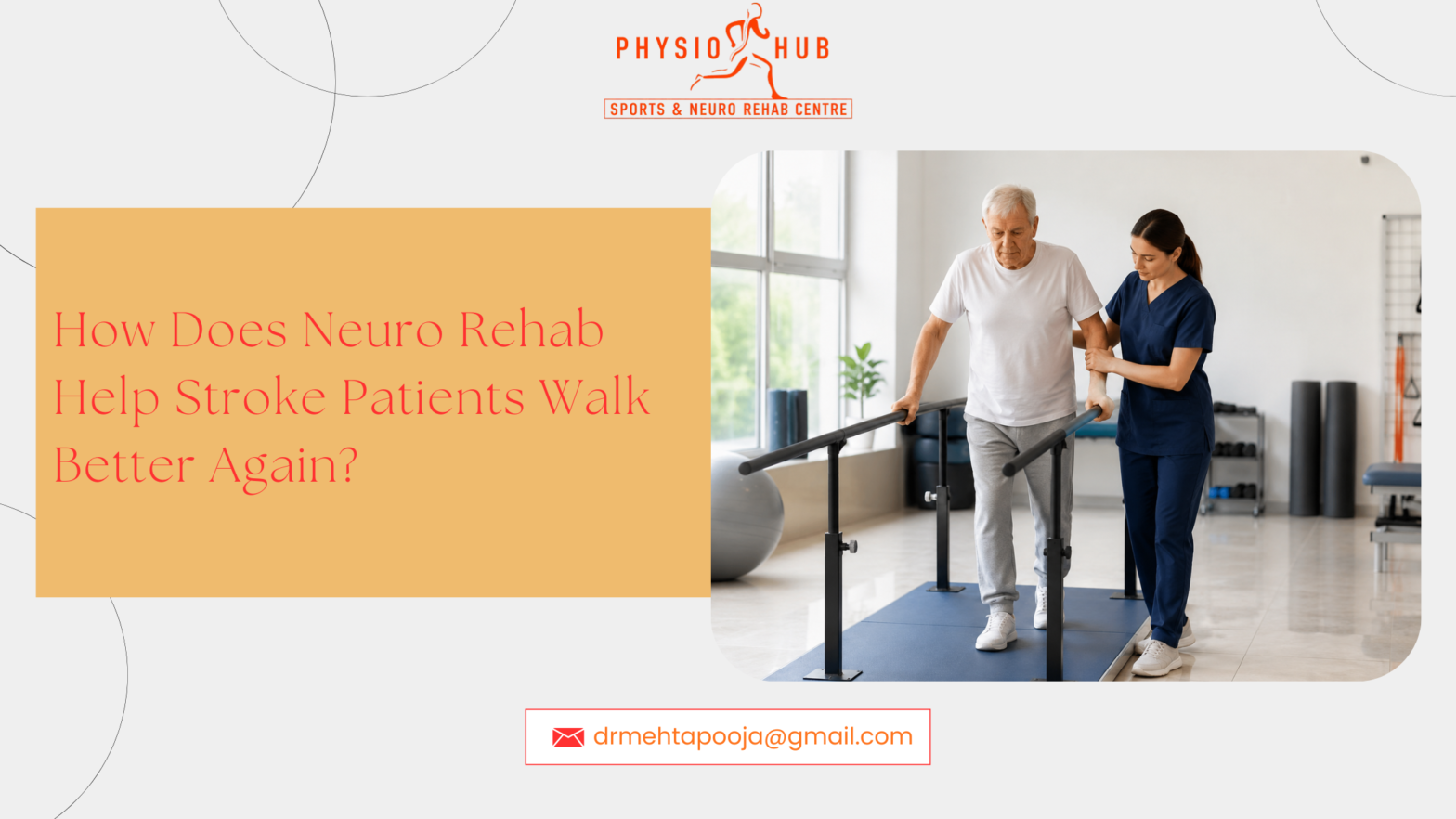
After a stroke, walking can suddenly feel difficult, unsafe, or completely different. Some patients drag one foot, lose balance, walk slowly, depend on support, or feel scared of falling. For families, this can be emotionally challenging because walking is directly connected to independence, confidence, and daily life.

Neuro rehab focuses on retraining the brain, muscles, balance system, and walking pattern after stroke. Unlike general exercise, it is planned according to the patient’s weakness, coordination, muscle tightness, balance, posture, and walking ability.

If you are searching for a physiotherapist in Malad, choosing a specialised neuro rehabilitation approach can make a meaningful difference in stroke recovery. At PhysioHub, the goal is not only to help stroke patients “move more,” but to help them walk safer, better, and with more control.

Stroke rehabilitation should ideally begin once the patient is medically stable, and it often continues after hospital discharge for better functional recovery. The World Health Organization notes that stroke rehab helps improve mobility, strength, balance, coordination, independence, and quality of life.

Neuro rehab helps stroke patients walk better by retraining the brain and body through repetitive walking practice, balance exercises, strength training, posture correction, gait training, and task-specific movements. It improves muscle control, coordination, walking speed, confidence, and safety, helping patients regain independence step by step after stroke.

What is Neuro Rehab for Stroke Walking Recovery?

Neuro rehab is a specialised physiotherapy-based rehabilitation program designed for people with nervous system conditions such as stroke, brain injury, Parkinson’s disease, spinal cord injury, and neurological weakness.

For stroke patients, neuro rehab works on neuroplasticity, which is the brain’s ability to form new pathways and relearn lost functions. After stroke, one side of the body may become weak, stiff, uncoordinated, or poorly controlled. Neuro rehab uses structured exercises and repeated practice to help the brain reconnect with the affected muscles.

In walking recovery, neuro rehab focuses on:

  • Standing balance
  • Weight shifting
  • Leg strength
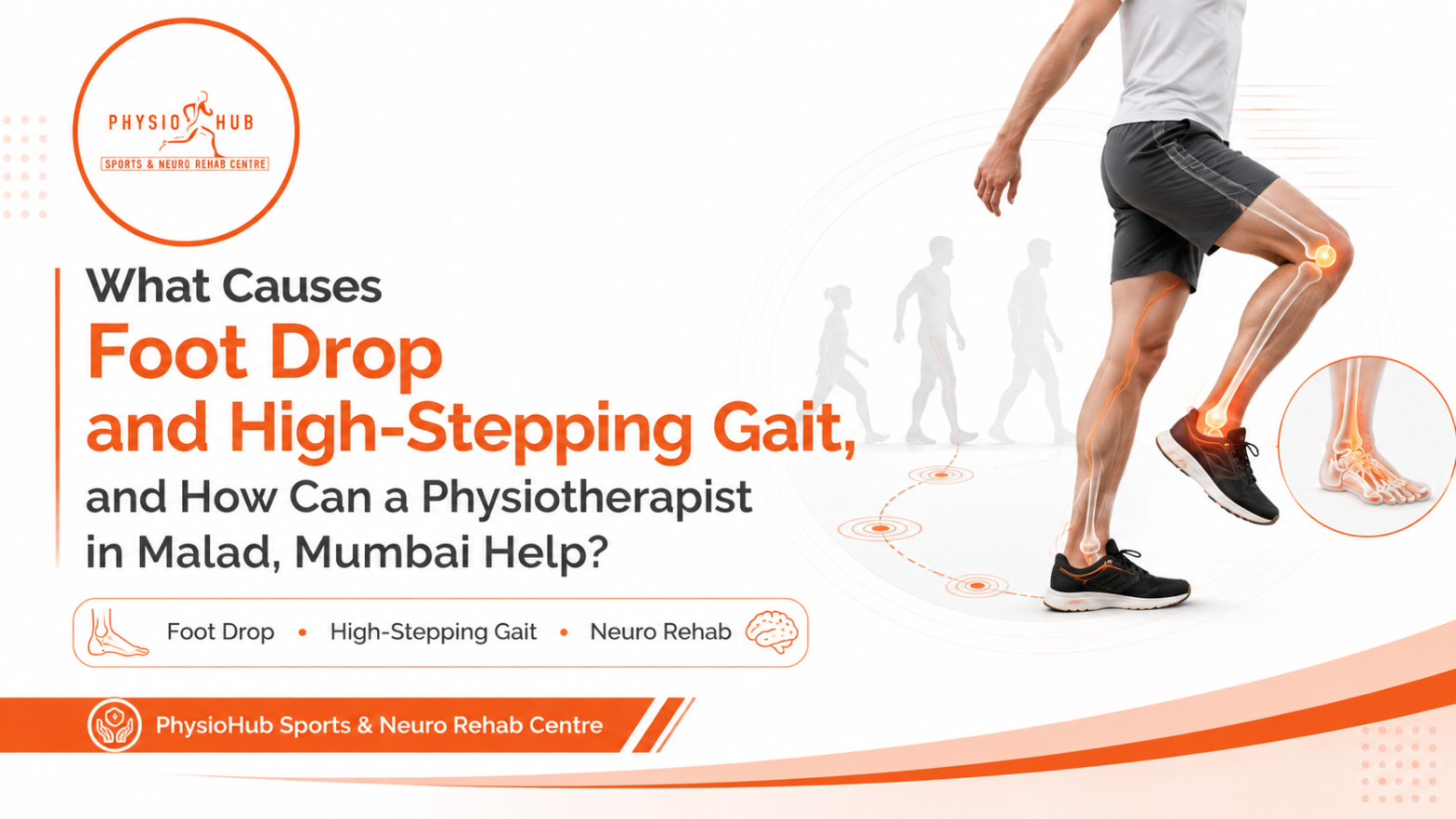
  • Foot clearance
  • Knee control
  • Hip stability
  • Core activation
  • Gait correction
  • Safe walking confidence

A specialised Neuro rehab centre in Malad can assess these walking problems and create a personalised plan instead of giving random exercises.

Why Do Stroke Patients Need Neuro Rehab to Walk Again?

Stroke can affect walking because it damages the brain areas responsible for movement, balance, posture, and coordination. The problem is not always “weak legs.” Often, the issue is poor communication between the brain and muscles.

Common reasons stroke patients struggle to walk include:

  • Muscle weakness: One side of the body may not generate enough force.
  • Foot drop: The foot may drag while walking, increasing fall risk.
  • Poor balance: Patients may lean to one side or feel unstable.
  • Spasticity: Muscles may become tight, stiff, or difficult to control.
  • Reduced coordination: The leg may move at the wrong time or in the wrong pattern.
  • Fear of falling: Confidence drops after one or more near-falls.
  • Poor weight transfer: The patient may avoid putting weight on the affected side.
  • Low endurance: Walking even short distances may feel exhausting.

Walking difficulty after stroke is common. Cochrane notes that around 60% of people after stroke experience walking problems, making walking recovery one of the main goals of rehabilitation.

How Does Neuro Rehab Work Step by Step?

Neuro rehab is not one exercise. It is a structured process that progresses according to the patient’s recovery level.

Step 1: Detailed Assessment

The physiotherapist checks:

  • Muscle strength
  • Balance
  • Joint mobility
  • Walking pattern
  • Foot position
  • Knee and hip control
  • Spasticity
  • Functional independence
  • Fall risk

This helps create a safe and realistic walking recovery plan.

Step 2: Muscle Activation and Control

Many stroke patients cannot activate the affected muscles properly. Rehab begins with controlled movements to improve brain-muscle connection.

This may include:

  • Assisted leg movements
  • Core activation
  • Hip control drills
  • Ankle movement practice
  • Sitting and standing control

Step 3: Balance and Weight Shifting

Before walking improves, standing must improve. Patients are trained to shift weight safely from one leg to another.

This helps reduce overdependence on the stronger side.

Step 4: Sit-to-Stand Training

Getting up from a chair is one of the most important functional skills. It builds leg strength, confidence, and balance.

NICE recommends repetitive task training for lower limb weakness, including sit-to-stand, walking, and stair-related activities after stroke.

Step 5: Gait Training

Gait training teaches the patient how to walk with better rhythm, control, and safety.

It may include:

  • Step practice
  • Parallel bar walking
  • Assisted walking
  • Treadmill training
  • Cue-based walking
  • Mirror feedback
  • Obstacle practice
  • Turning practice

AHA/ASA stroke rehab guidance recommends intensive, repetitive, mobility-task training for people with gait limitations after stroke.

Step 6: Strength and Endurance Training

Stroke patients often need progressive strengthening for the hip, knee, ankle, and core.

Endurance training helps patients walk longer distances without fatigue.

Step 7: Functional Walking Practice

The final goal is not only clinic walking. The patient must walk better in real life.

This includes:

  • Walking at home
  • Walking outdoors
  • Climbing steps
  • Turning safely
  • Getting in and out of bed
  • Moving through crowded areas
  • Reducing fall risk

Mini Summary Box:
Neuro rehab improves walking after stroke by combining brain retraining, muscle activation, balance work, repetitive gait practice, strengthening, and real-life movement training. The more specific and consistent the practice, the better the walking control can become.

Physiotherapist in malad

Benefits of Neuro Rehab for Stroke Patients

Neuro rehab provides physical, functional, and emotional benefits.

Key benefits include:

  • Improved walking balance
  • Better control of the affected leg
  • Reduced foot dragging
  • Improved posture while walking
  • Better confidence during movement
  • Lower fall risk
  • Improved walking speed
  • Better step length and rhythm
  • Increased independence at home
  • Improved ability to climb stairs
  • Reduced fear of movement
  • Better participation in daily activities

The American Stroke Association states that stroke rehabilitation helps people relearn lost skills and improve independence, including mobility, walking, self-care, strength, and daily functioning.

For patients searching for Physiotherapy in Malad, neuro rehab can be especially useful when walking difficulty is affecting daily life after stroke.

Neuro Rehab vs General Exercise: What is Better for Stroke Walking Recovery?

Approach Main Focus Best For Limitation
General exercise Strength and fitness Mild weakness or maintenance May not correct neurological walking patterns
Neuro rehab Brain-muscle retraining Stroke walking recovery Needs specialised assessment and consistency
Treadmill training Repetitive walking practice Patients who can walk with or without support Not suitable for every patient
Balance training Stability and fall prevention Patients with poor balance Must be supervised if fall risk is high
Chiropractic care Joint and spine-focused care Some musculoskeletal pain cases Not a replacement for stroke gait rehab
Osteopathy Manual therapy and body mechanics Pain, mobility, posture support Stroke walking recovery still needs neuro rehab

Treadmill training may improve walking speed and endurance in some stroke patients who are already able to walk, but evidence is more limited for helping fully dependent walkers become independent.

So, if someone is searching for a Chiropractor in Malad or osteopathy in Malad after stroke, it is important to understand that stroke walking recovery usually needs specialised neuro physiotherapy and gait retraining first.

Who Needs Neuro Rehab After Stroke?

Neuro rehab may help stroke patients who have:

  • Difficulty standing independently
  • Poor balance while walking
  • Foot drop or toe dragging
  • One-sided weakness
  • Slow or uneven walking
  • Fear of falling
  • Knee buckling while walking
  • Difficulty climbing stairs
  • Reduced confidence outdoors
  • Trouble getting up from a chair
  • Muscle stiffness or spasticity
  • Walking dependence on a stick, walker, or caregiver

It is also helpful for patients who completed hospital rehabilitation but still struggle with walking at home.

People looking for a physiotherapist in Mumbai or Best physiotherapist in Malad for stroke recovery should choose a clinic that understands neurological movement patterns, not just strengthening exercises.

Cost and Pricing Factors for Neuro Rehab in Malad Mumbai

The cost of neuro rehab may vary based on the patient’s condition and therapy needs.

Common pricing factors include:

  • Severity of stroke weakness
  • Patient’s walking ability
  • Need for one-on-one supervision
  • Frequency of sessions per week
  • Duration of each session
  • Use of equipment or assisted gait training
  • Home program requirements
  • Balance and fall-risk level
  • Need for long-term rehab planning

A patient who can already walk with mild imbalance may need a different plan than a patient who requires full support for standing or stepping.

In Malad Mumbai, stroke rehab pricing should not be judged only by session cost. The better question is: “Is the therapy personalised, goal-based, and focused on functional walking improvement?”

Industry Trends in Neuro Rehab in 2026

Stroke rehabilitation is becoming more personalised, technology-assisted, and outcome-focused.

Important trends in 2026 include:

  • Task-specific gait training: More focus on real walking tasks instead of only bed exercises.
  • Wearable tracking: Sensors can help monitor walking speed, steps, balance, and symmetry.
  • AI-assisted rehab planning: Emerging tools may help predict recovery patterns and personalise therapy.
  • Home exercise monitoring: Patients are encouraged to continue guided exercises beyond clinic sessions.
  • Fall-prevention programs: Rehab now focuses strongly on safety, confidence, and home mobility.
  • Multidisciplinary care: Physiotherapy, occupational therapy, speech therapy, and psychological support often work together.
  • Circuit-based rehab: NICE recommends considering group circuit training with education and peer support in addition to one-to-one walking therapy for suitable stroke patients.

The future of neuro rehab is not only about advanced machines. It is about combining science, repetition, personalised care, and real-life functional goals.

Why Choose PhysioHub in Malad Mumbai?

PhysioHub is positioned as a specialised rehabilitation centre for people looking for neuro and sports recovery support in Malad Mumbai.

For stroke walking recovery, PhysioHub focuses on:

  • Personalised neuro assessment
  • Goal-based walking rehabilitation
  • Balance and fall-risk training
  • Gait correction exercises
  • Strength and coordination training
  • Functional mobility practice
  • Patient and family education
  • Progress-based rehab planning

PhysioHub also supports people searching for related services such as best sports spine rehab in Malad, best ACL rehab in Malad, and ACL rehab in Malad. However, for stroke patients, the priority remains neurological recovery, safe walking, and independence.

If you are searching for a physiotherapist in Malad for stroke rehabilitation, choose a centre that understands how the brain and body relearn movement after stroke.

FAQs

1. Can stroke patients walk normally again?

Some stroke patients regain near-normal walking, while others improve enough to walk safely with support or assistive devices. Recovery depends on stroke severity, age, medical stability, rehab consistency, balance, strength, and neurological recovery.

2. How soon should neuro rehab start after stroke?

Stroke rehab should begin as soon as the patient is medically stable, often during the hospital phase. WHO states that rehabilitation should ideally begin within the first few days after stroke when medically safe.

3. How does a physiotherapist help with walking after stroke?

A physiotherapist helps by improving balance, strength, posture, coordination, leg control, foot clearance, walking rhythm, and confidence. They also train safe transfers, stair climbing, and fall prevention.

4. Is treadmill training useful after stroke?

Treadmill training can help some stroke patients improve walking speed and endurance, especially those who can already walk with or without assistance. It should be used only after proper assessment and supervision.

5. Which is better after stroke: general exercise or neuro rehab?

Neuro rehab is usually better for stroke walking recovery because it targets brain-muscle retraining, balance, gait correction, and functional movement. General exercise may improve fitness but may not correct stroke-related walking patterns.

Walking after stroke can improve with the right guidance, repetition, and specialised care.

If you or your loved one is struggling with balance, foot dragging, slow walking, or fear of falling after stroke, consult PhysioHub – Neuro Rehab Centre in Malad Mumbai for a personalised stroke walking recovery plan with an experienced physiotherapist in Malad.