Plot No. 5, Evershine Nagar, Next To Landmark, Link Road, Malad West
Blog Category

Knee pain while climbing stairs can be annoying at first. Maybe it feels like a small ache when you go up. Maybe it hurts more while coming down. Slowly, you may start holding the railing tighter, avoiding stairs, or choosing the lift even for one floor.

For many people in Mumbai, stairs are part of daily life. Office buildings, railway stations, metro bridges, apartments, gyms and even simple home routines can become difficult when the knee hurts. Senior citizens may feel scared of falling. Runners may worry about training. Office workers may feel pain after sitting for long hours and then taking the stairs.

The good news is that knee pain does not always mean surgery or permanent damage. Many knee problems can improve with proper assessment, strengthening, mobility work and guided rehabilitation.

A trained physiotherapist in Malad, Mumbai can help find the reason behind your stair-related knee pain and create a treatment plan that suits your body. At Physio Hub, care focuses on pain relief, better movement, knee strength and long-term recovery.

Knee pain while climbing stairs is commonly caused by weak muscles, poor knee alignment, arthritis, patellofemoral pain, ligament injury, tendon irritation or reduced hip and ankle mobility. Physiotherapy can help by assessing the root cause, reducing pain, improving strength, correcting movement patterns and guiding safe stair-climbing practice.

What is Knee Pain While Climbing Stairs?

Physiotherapist in Malad, Mumbai

Knee pain while climbing stairs means pain, pressure, stiffness or discomfort around the knee joint during stair movement. It may happen while going up, coming down, or both.

Some people feel pain in the front of the knee. Others may feel it on the inner side, outer side or behind the knee. Sometimes there may be stiffness, swelling, clicking or a feeling that the knee is weak.

Stairs put more load on the knee than normal walking. When you climb up, your thigh and hip muscles work hard to lift your body. When you come down, your knee controls your body weight against gravity. If the muscles are weak or movement control is poor, the knee may start hurting.

Knee pain on stairs can be linked to runner’s knee, early arthritis, cartilage irritation, ligament weakness, tendon overload or poor lower-body movement.

A physiotherapist in Malad, Mumbai does not check only the knee. They also check the hip, ankle, foot posture, muscle strength and walking pattern. Why? Because knee pain is not always only a knee problem.

Knee pain while climbing stairs usually means the knee is struggling with load, control or movement. Physiotherapy helps find the cause and improve safe function.

Why Does Knee Pain Happen While Climbing Stairs?

Knee pain during stairs can happen for many reasons. Sometimes, the problem is inside the knee joint. Sometimes, it is due to weakness or poor control in the hip, thigh, ankle or foot.

Common causes include:

  • Weak quadriceps or thigh muscles
  • Weak hip and glute muscles
  • Poor knee alignment while climbing stairs
  • Patellofemoral pain syndrome
  • Knee arthritis or osteoarthritis
  • Meniscus irritation
  • Ligament weakness or previous injury
  • Tendon irritation around the knee
  • Tight calves, hamstrings or IT band
  • Poor foot posture or flat feet
  • Sudden increase in walking, running or stair use
  • Excess body weight increasing knee load
  • Lack of strength training
  • Old sports injury
  • Poor recovery after knee surgery
  • Reduced ankle or hip mobility

Think of a person who has been sitting for long hours at work. The thigh and hip muscles may become weak over time. Then, suddenly, climbing stairs starts to feel painful.

Or imagine a runner who increases distance too quickly. The knee may not get enough time to adapt. Pain can slowly build up.

Senior citizens may feel knee pain because of arthritis, stiffness or reduced balance. Athletes may feel pain after injury or overtraining. The reason can be different for everyone.

Many people think, “If stairs hurt, I should stop using stairs completely.” But complete avoidance can make the muscles weaker over time. The better approach is to understand the cause and build strength safely.

How Does Physiotherapy for Knee Pain Work Step by Step?

Physiotherapy for knee pain is not just about giving a few exercises and asking you to repeat them. A good plan starts with understanding your pain, your lifestyle and your movement.

Step 1: Detailed Knee Assessment

The physiotherapist first listens to your symptoms and checks your pain pattern.

They may ask:

  • Does pain happen while going up or coming down stairs?
  • Is the pain in front, inside, outside or back of the knee?
  • Is there swelling?
  • Do you feel clicking, locking or giving way?
  • Did the pain start after injury?
  • Do you have pain while sitting, squatting or walking?
  • Are you a runner, athlete or office worker?
  • Have you had knee surgery before?

These questions help the therapist understand what may be causing the pain.

For example, pain while coming down stairs may suggest poor control or weakness. Pain after long sitting may be linked to kneecap irritation or stiffness. Swelling after activity may need closer attention.

Step 2: Movement and Alignment Check

The therapist then checks how your knee moves during daily actions.

This may include:

  • Walking
  • Squatting
  • Step-up movement
  • Step-down movement
  • Single-leg balance
  • Knee bending and straightening
  • Hip and ankle movement
  • Foot posture

Sometimes, the knee moves inward while climbing stairs. This can place extra stress on the joint. Sometimes, weak hips make the knee work harder. Sometimes, stiff ankles change how the body loads the knee.

A proper movement check helps find these hidden issues.

Step 3: Pain Relief and Mobility Care

When pain is high, the first goal is to reduce discomfort and make movement easier.

Treatment may include:

  • Gentle joint mobility work
  • Soft tissue release
  • Stretching guidance
  • Pain-relieving modalities
  • Taping or support if needed
  • Activity modification
  • Advice on stair use

The physiotherapist may also teach safer ways to climb stairs while the knee is recovering.

For example, using the railing correctly, taking one step at a time for a short period, or reducing unnecessary stair use may help during the early phase. The idea is not to avoid movement forever. It is to move smarter while healing.

Step 4: Strength Training

Strengthening is one of the most important parts of knee rehabilitation.

When the muscles around the knee, hip and core are stronger, the knee gets better support. This can reduce pressure and improve control during stairs.

Exercises may focus on:

  • Quadriceps
  • Hamstrings
  • Glutes
  • Hip stabilizers
  • Calves
  • Core muscles

Common exercises may include:

  • Straight leg raises
  • Wall-supported squats
  • Sit-to-stand practice
  • Step-ups
  • Mini lunges
  • Glute bridges
  • Clamshells
  • Calf raises
  • Resistance band work

The exercises should be chosen carefully. A good physiotherapist in Malad, Mumbai will not push you too hard too soon. Exercises are progressed gradually based on pain, strength and confidence.

Step 5: Stair-Climbing Retraining

Once pain starts improving and strength builds up, the therapist may guide actual stair practice.

This can include:

  • Controlled step-ups
  • Step-down training
  • Knee alignment correction
  • Hip control practice
  • Balance training
  • Slow and safe stair movement
  • Gradual increase in stair load

This step matters because the goal is not only to reduce pain on the treatment table. The real goal is to help you return to daily life.

Can you climb stairs without fear? Can you come down safely? Can you use station stairs, office stairs or home stairs with better control? That is what functional rehab aims for.

Step 6: Home Exercise and Prevention Plan

A simple home plan helps maintain progress between sessions.

The physiotherapist may suggest strengthening, stretching, walking guidance and activity advice. The plan may also include what to avoid temporarily and when to progress.

Home exercises are important because knee recovery needs consistency. Small daily efforts can create big changes over time.Physiotherapy for knee pain includes assessment, pain relief, strength training, movement correction and safe stair practice.

Benefits of Physiotherapy for Knee Pain

Physiotherapy can help reduce pain and improve knee function without depending only on temporary relief methods.

Key benefits include:

  • Reduces knee pain while climbing stairs
  • Improves thigh and hip strength
  • Supports better knee alignment
  • Improves balance and control
  • Reduces stiffness
  • Improves walking and stair confidence
  • Helps manage arthritis symptoms
  • Supports recovery after knee injury
  • Helps after ligament or meniscus injury
  • Reduces fear of movement
  • Improves flexibility
  • Supports return to sports or running
  • Helps prevent recurring pain
  • Reduces dependence on painkillers
  • Improves daily function

For example, an office worker who struggles with railway station stairs may benefit from hip and thigh strengthening. A senior citizen with arthritis may need gentle mobility, balance training and controlled strengthening.

A runner with front knee pain may need load management, glute strengthening and step-down control. A person recovering after ligament injury may need a more structured plan.

For sports-related knee injuries, a Sports Physiotherapist in Mumbai can help with performance-focused strengthening and return-to-sport planning. For ligament injuries, acl rehab in Malad may support knee stability, balance and safe recovery.

Physiotherapy gives you a clear plan instead of guessing what to do next.

Physiotherapy vs Other Alternatives for Knee Pain

Care Option Main Focus Best For Limitation
Physiotherapy Pain relief, strengthening, movement correction and function Knee pain during stairs, arthritis, injury rehab, weakness Needs consistency
Painkillers Temporary pain relief Short-term pain control Does not improve strength or alignment
Rest only Reduces immediate overload Acute pain flare-up Too much rest can increase weakness
Massage Muscle relaxation Tightness around thigh or calf May not correct knee mechanics
Knee brace External support Temporary support during activity Does not replace strengthening
General gym exercises Fitness and strength Healthy individuals May worsen pain if not customized
Chiropractic care Spine and joint alignment focus Selected spine-related concerns Not suitable for every knee condition
Osteopathy Whole-body mobility and manual care Posture and movement-related concerns Needs proper evaluation

Some people search for a Chiropractor in Malad or osteopathy in Malad when knee pain is connected with posture, back pain or full-body movement issues. These options may help in selected cases after proper assessment.

However, for knee pain while climbing stairs, Physiotherapy in Malad is often a more structured choice. It focuses on strength, mobility, alignment and functional training.

Painkillers may reduce pain for a while. Rest may calm a flare-up. A brace may support the knee temporarily. But if the real issue is weakness, poor control or movement imbalance, physiotherapy helps address the root cause.

Who Needs Physiotherapy for Knee Pain While Climbing Stairs?

You may need physiotherapy if you experience:

  • Pain while climbing stairs
  • Pain while coming down stairs
  • Front knee pain during squats
  • Knee stiffness after sitting
  • Pain after walking or running
  • Weakness while standing from a chair
  • Clicking with pain
  • Swelling around the knee
  • Difficulty using public transport stairs
  • Knee pain during workouts
  • Pain after sports injury
  • Knee instability or giving-way feeling
  • Pain after knee surgery
  • Fear of falling on stairs
  • Recurring knee discomfort

You do not need to wait until the pain becomes severe. If knee pain keeps coming back, changes how you walk or makes you avoid normal activities, it is worth getting checked.

Senior citizens, office workers, athletes, runners and people recovering from knee injuries can all benefit from proper physiotherapy.

Patients with neurological conditions who have balance or walking problems may need support from a Neuro rehab centre in Malad or Neuro physio therapy in Malad. This is especially important when stair difficulty is linked to poor coordination, weakness after stroke or reduced balance.

Cost and Pricing Factors for Knee Pain Physiotherapy

The cost of physiotherapy for knee pain depends on the condition and the treatment plan.

Common pricing factors include:

  • Cause of knee pain
  • Pain severity
  • Swelling or stiffness
  • Duration of symptoms
  • Need for sports assessment
  • Need for arthritis management
  • Post-surgery rehabilitation needs
  • ACL or ligament rehab needs
  • Number of sessions required
  • Use of equipment or modalities
  • Manual therapy requirement
  • Clinic-based or home-based care
  • Therapist expertise

For example, mild knee pain caused by weakness may need fewer sessions. Long-standing arthritis, ACL recovery or post-surgery rehabilitation may need a longer and more structured plan.

Some people may need only strengthening and mobility work. Others may need advanced rehab, balance training or sport-specific recovery.

The best way to understand expected cost is to book an assessment with a physiotherapist in Malad, Mumbai. After evaluation, the therapist can explain the treatment plan and session needs clearly.

Industry Trends in 2026

In 2026, knee pain rehabilitation is becoming more personalized and prevention-focused.

Earlier, many people waited until knee pain became severe. Now, patients are becoming more aware that early physiotherapy can help avoid long-term weakness, fear of movement and repeated pain.

Important trends include:

  • Movement-based knee assessment
  • Strength training for knee arthritis
  • Step-down and stair-control training
  • AI-supported knee movement analysis
  • Wearable tracking for activity load
  • Sports-specific knee rehab
  • Balance training for seniors
  • Return-to-running and return-to-sport planning
  • Patient education for long-term prevention
  • Non-surgical knee pain management

Technology is also becoming part of modern rehabilitation. Movement tracking, wearable devices and digital tools may help monitor progress. But technology alone is not enough.

A good physiotherapist still looks at the whole person: pain, movement, lifestyle, strength, confidence and goals.

Maybe your goal is climbing stairs without holding the railing. Maybe it is walking at work without discomfort. Maybe it is returning to running or sport. A personalized plan makes recovery more practical and meaningful. Knee rehab in 2026 focuses on early care, strength, movement analysis, stair control, sports rehab and long-term prevention.

Why Choose Physio Hub in Malad, Mumbai?

Physio Hub provides personalized physiotherapy care for knee pain, sports injuries, neuro rehab and movement recovery in Malad, Mumbai.

If you are searching for a trusted physiotherapist in Malad, Mumbai, Physio Hub offers assessment-based care for pain relief, strengthening, mobility and better daily function.

Why patients choose Physio Hub:

  • Personalized knee pain assessment
  • Treatment for stair-related knee pain
  • Strength and mobility training
  • Arthritis and stiffness management
  • Sports injury rehabilitation
  • ACL rehabilitation support
  • Walking and balance training
  • Neuro rehabilitation support
  • Patient-friendly approach
  • Convenient location in Malad, Mumbai

Physio Hub supports patients looking for Physiotherapy in Malad, Sports Physiotherapist in Mumbai, acl rehab in Malad, physiotherapist in Mumbai, Neuro rehab centre in Malad, Neuro physio therapy in Malad, osteopathy in Malad and Chiropractor in Malad.

The goal is simple: help you climb stairs, walk, exercise and move through daily life with less pain and more confidence.

At Physio Hub, treatment is not just about the knee. It is about helping you return to the activities that matter to you.

FAQs

1. Why does my knee hurt when climbing stairs?

Knee pain while climbing stairs may happen due to weak thigh or hip muscles, poor knee alignment, arthritis, patellofemoral pain, tendon irritation or old injury. A physiotherapist can assess the cause and guide treatment.

2. Can physiotherapy help knee pain while climbing stairs?

Yes. Physiotherapy can help by reducing pain, improving knee strength, correcting movement patterns, improving flexibility and retraining safe stair climbing.

3. Should I avoid stairs if I have knee pain?

You may need to reduce painful stair use temporarily, but complete avoidance is not always helpful. A physiotherapist can guide safe stair technique and strengthening exercises based on your condition.

4. Is knee pain on stairs a sign of arthritis?

It can be, especially if there is stiffness, swelling or pain after activity. But stair pain can also happen due to weakness, poor alignment, tendon irritation or sports injury. Proper assessment is important.

5. How long does knee physiotherapy take?

Recovery time depends on the cause and severity of pain. Mild weakness-related pain may improve faster, while arthritis, ligament injury or post-surgery rehab may need a longer structured plan.

Struggling with knee pain while climbing stairs, walking or exercising?

Visit Physio Hub in Malad, Mumbai and consult a trusted physiotherapist in Malad, Mumbai for personalized knee pain assessment, strengthening and rehabilitation.

Book your consultation today and take the first step toward safer stairs, stronger knees and pain-free movement.

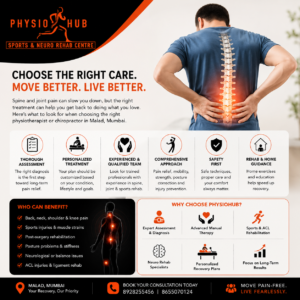
Spine and joint pain can slowly take over your day. A stiff neck can make laptop work uncomfortable. Lower back pain can disturb sleep. Knee or shoulder pain can make simple things like climbing stairs, lifting bags, exercising, or even sitting for long hours feel difficult.

Many people in Malad, Mumbai start by looking for quick relief. Some search for a Chiropractor in malad. Some look for Physiotherapy in malad. Others explore osteopathy in malad because they want better posture, mobility, and pain relief.


But here is the real question: what does your body actually need?

Pain does not always come from one clear cause. It may be linked to posture, weak muscles, joint stiffness, nerve irritation, an old injury, sports strain, or post-surgery weakness. That is why choosing the right care matters.

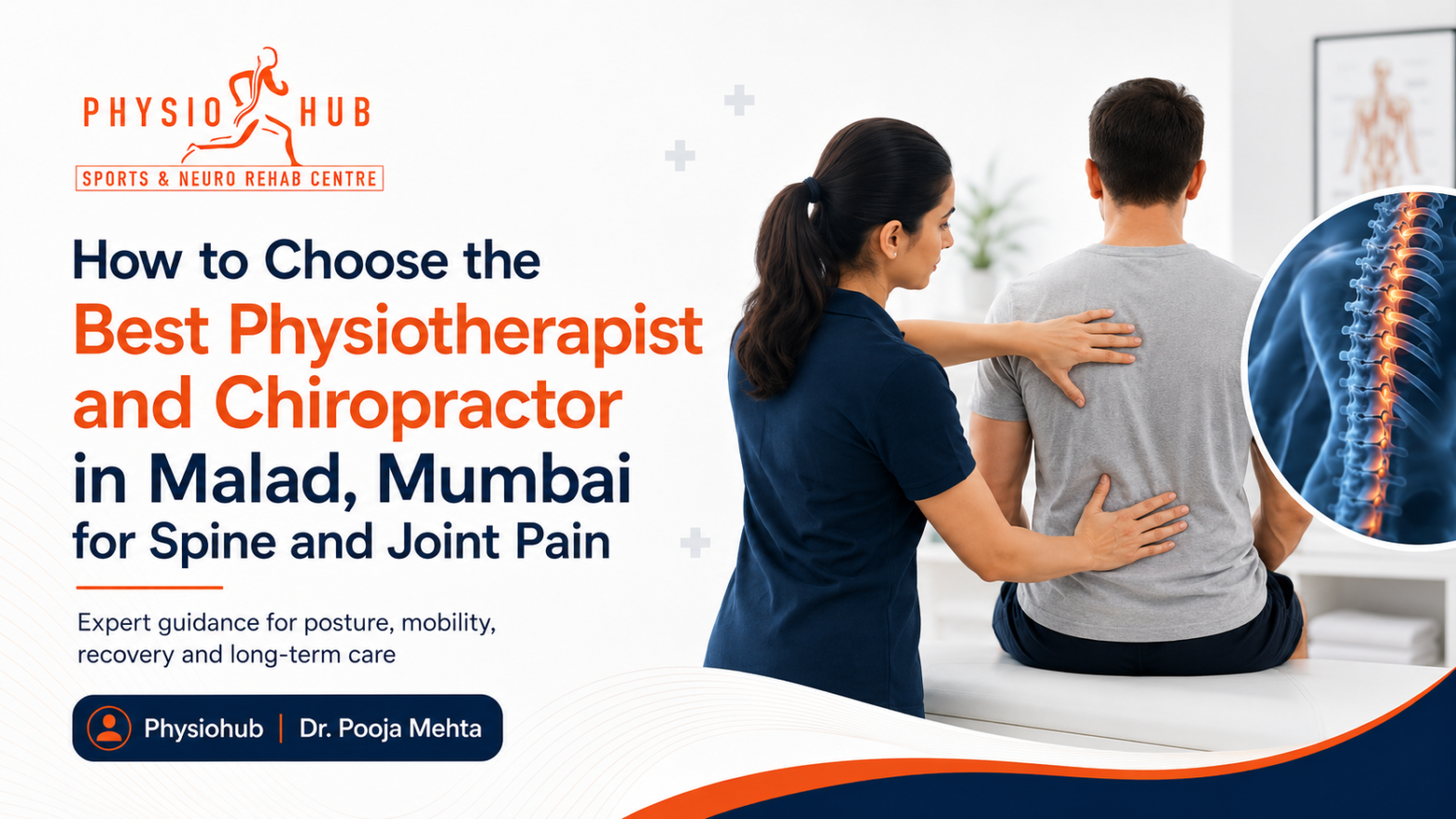
At Physiohub | Dr. Pooja Mehta, the focus is on finding the root cause and creating a safe recovery plan. If you are searching for a trusted Physiotherapist and chiropractor in malad, mumbai, choose care that combines proper assessment, pain relief, movement correction, manual therapy, rehab, and patient education.

How do I choose the best chiropractor or physiotherapist in Malad?

Choose a physiotherapist or chiropractor in Malad by checking their qualification, assessment process, treatment approach, patient reviews, rehab support, safety standards, and experience with spine and joint pain. The best clinic should focus on root-cause diagnosis, pain relief, mobility improvement, strengthening, posture correction, and long-term recovery.

What is Physiotherapist and Chiropractor Care for Spine and Joint Pain?

Physiotherapist and chiropractor care for spine and joint pain is a non-surgical approach that helps reduce pain, improve movement, restore function, and support long-term recovery. It may include assessment, manual therapy, joint mobility work, exercise therapy, posture correction, strengthening, and lifestyle guidance.

Physiotherapy focuses on how your body moves. It works on strength, flexibility, balance, posture, mobility, and daily function.

Chiropractic care often focuses on joint mobility, spinal movement, and manual techniques for selected spine-related conditions.

In a modern rehab setting, both approaches should start with one thing: proper assessment. Treatment should never feel random. What works for one person may not be right for another.

A care plan may include:

  • Spine and joint assessment
  • Posture evaluation
  • Pain and mobility testing
  • Manual therapy when needed
  • Corrective exercises
  • Strength training
  • Ergonomic advice
  • Gait and balance training
  • Sports or injury rehab
  • Home exercise planning

The goal is not only to reduce pain for a few days. The real goal is to help you move better, feel stronger, and reduce the chances of pain returning.

chiropractor in malad mumbai

Why Do You Need the Right Spine and Joint Pain Specialist?

Choosing the right specialist matters because spine and joint pain can have many layers. Sometimes the pain is in your lower back, but the actual issue may be weak hips, poor posture, or tight muscles.

If only the painful area is treated, relief may be temporary. But when the root cause is addressed, recovery becomes more meaningful.

Common reasons people need physiotherapy or chiropractic care include:

  • Neck pain from long screen time
  • Lower back pain due to sitting or lifting
  • Shoulder stiffness or impingement
  • Knee pain while walking or climbing stairs
  • Hip stiffness or poor mobility
  • Sciatica or nerve irritation
  • Posture-related pain
  • Sports injuries
  • Muscle imbalance
  • Joint stiffness
  • Weak core muscles
  • Poor lifting technique
  • Post-surgery weakness
  • Balance or walking difficulty
  • Recurring pain after temporary relief

For example, an office worker may feel neck pain after long hours on a laptop. But the problem may also include rounded shoulders, weak upper back muscles, and poor desk setup.

A gym-goer may complain of back pain after deadlifts. In that case, the issue may be lifting technique, weak core control, or tight hips.

This is why proper assessment matters. Pain relief is important, but long-term recovery needs strength, mobility, posture correction, and better movement habits.

How Does the Treatment Process Work?

A good treatment process should feel clear, safe, and personal. You should know what is being treated, why it is being treated, and how each step supports your recovery.

At Physiohub | Dr. Pooja Mehta in Malad, Mumbai, spine and joint pain care may follow a structured step-by-step plan.

Step 1: Detailed Consultation

The first step is understanding your pain story. When did it start? What makes it worse? What helps? Does it affect your work, sleep, walking, gym routine, or daily confidence?

The physiotherapist checks:

  • Where the pain is located
  • When the pain started
  • What increases or reduces it
  • Whether pain spreads to the arm or leg
  • Your work routine
  • Your activity level
  • Your previous injury history
  • Your fitness or sports routine
  • Your daily posture habits

This helps identify whether the pain is muscle-related, joint-related, posture-related, nerve-related, or linked to weakness.

Step 2: Physical Assessment

The next step is checking how your body moves in real life.

This may include:

  • Spine movement testing
  • Joint mobility testing
  • Muscle strength check
  • Flexibility check
  • Posture assessment
  • Balance assessment
  • Walking pattern assessment
  • Nerve-related screening
  • Functional movement testing

For instance, two people may both say, “I have back pain.” But one may have joint stiffness, while the other may have nerve irritation or weak stabilizing muscles. Their treatment should not be the same.

This step helps the therapist decide whether you need Physiotherapy in malad, chiropractic-style joint mobility work, osteopathy-based manual care, sports rehab, or a combined plan.

Step 3: Pain Relief and Mobility Work

In the early stage, the goal is to calm pain and reduce stiffness. This may include gentle manual therapy, mobility exercises, soft tissue work, joint mobilization, and safe movement guidance.

If chiropractic techniques are suitable, they should be used only after a proper assessment. Safety and comfort should always come first.

Many patients are afraid to move when pain starts. That fear is understandable. But with the right guidance, movement can slowly become safer and easier again.

Step 4: Strength and Corrective Exercises

Once pain starts improving, strengthening becomes important. This is the stage that helps reduce repeated flare-ups.

Your plan may include:

  • Core strengthening
  • Back strengthening
  • Shoulder stability exercises
  • Hip and knee strengthening
  • Mobility drills
  • Balance exercises
  • Functional movement training
  • Return-to-sport training

For example, if your knee pain has changed the way you walk, your back and hips may start taking extra load. If your shoulder is weak, your neck may stay tight. The body works as a chain, so treatment should look beyond one painful point.

Step 5: Posture, Ergonomics and Lifestyle Guidance

Many patients in Malad, Mumbai spend long hours sitting, commuting, working on screens, or driving. These habits can slowly increase stress on the spine and joints.

Your therapist may guide you on:

  • Laptop height
  • Chair support
  • Sitting breaks
  • Sleeping posture
  • Lifting technique
  • Driving posture
  • Exercise form
  • Safe return to gym or sport

Small changes can make a big difference. A better chair setup, regular movement breaks, or corrected lifting form may reduce daily strain more than you expect.

The best spine and joint pain care combines assessment, pain relief, mobility work, strengthening, posture correction, and prevention. Whether you need Physiotherapy in malad, a Chiropractor in malad, or osteopathy in malad, treatment should always match your condition and safety needs.

What Are the Benefits of Choosing the Right Care?

The right care can help you do more than feel temporary relief. It can help you understand your body, move with more confidence, and return to daily life without constantly worrying about pain.

Key benefits include:

  • Reduced spine and joint pain
  • Better neck and back mobility
  • Improved posture
  • Stronger muscles
  • Better walking and balance
  • Reduced stiffness
  • Safer return to work
  • Safer return to gym or sports
  • Better joint control
  • Reduced fear of movement
  • Better body awareness
  • Lower risk of repeated flare-ups
  • Improved daily comfort

There is also an emotional side to pain. When every step, bend, or lift feels risky, your confidence drops. A good recovery plan helps you feel more in control again.

For patients with neurological weakness, walking difficulty, or balance problems, a Neuro rehab centre in malad may be useful. For patients recovering from knee ligament injuries, acl rehab in malad can help restore strength, stability, and safe movement.

Physiotherapist vs Chiropractor vs Osteopathy: Which One Should You Choose?

Many patients feel confused when they compare physiotherapy, chiropractic care, and osteopathy. The terms sound similar, but the focus can be different.

Here is a simple way to understand the options:

Treatment Option Main Focus Best For Limitation
Physiotherapy Pain relief, movement correction, strength, posture, rehab Long-term recovery, sports injury, post-surgery rehab, back and joint pain Needs active participation
Chiropractor in malad Joint mobility and spinal manual techniques Selected stiffness-related spine and joint issues Should be guided by assessment and supported with exercise
osteopathy in malad Whole-body manual approach, mobility, posture balance Mobility restrictions and posture-related discomfort May not be enough without strengthening
Painkillers Temporary symptom relief Short-term pain control Does not correct weakness, posture, or movement patterns
Massage Muscle relaxation Mild tightness or stress-related discomfort Relief may be temporary
Rest only Reduces immediate strain Very acute pain for a short time Too much rest may increase stiffness

Physiotherapy is often preferred when the goal is long-term recovery. Chiropractic or osteopathy-based care may help selected patients, but lasting improvement usually needs exercise, education, and movement retraining.

A Chiropractor in malad may help with selected joint mobility concerns. Osteopathy in malad may support whole-body movement and manual care. Physiotherapy connects pain relief with strengthening, posture correction, functional rehab, and prevention.

Who Needs a Physiotherapist and Chiropractor in Malad, Mumbai?

You may need professional care if pain is affecting your routine, sleep, work, exercise, or confidence.

You should consider visiting a Physiotherapist and chiropractor in malad, mumbai if you have:

  • Back pain lasting more than a few days
  • Neck pain from desk work
  • Shoulder pain or stiffness
  • Knee pain while walking or climbing stairs
  • Hip pain or stiffness
  • Pain travelling to the arm or leg
  • Tingling or numbness
  • Morning stiffness
  • Poor posture
  • Repeated muscle tightness
  • Sports or gym injury
  • Post-surgery weakness
  • Walking or balance difficulty
  • Pain after lifting or twisting
  • Fear of movement due to pain

Ask yourself this: are you changing the way you sit, walk, sleep, or exercise because of pain? If yes, your body may need guided support.

You should seek urgent medical care if you have sudden weakness, loss of bladder or bowel control, unexplained fever, major trauma, severe night pain, or rapidly worsening symptoms.

What Affects the Cost of Treatment?

The cost of spine and joint pain treatment in Malad, Mumbai can vary based on your condition and treatment needs.

Pricing factors may include:

  • Severity of pain
  • Type of condition
  • Acute or chronic pain
  • Number of sessions needed
  • Manual therapy requirement
  • Exercise rehab requirement
  • Need for neuro rehab
  • Need for sports or ACL rehab
  • Advanced equipment use
  • One-on-one therapy time
  • Home exercise monitoring
  • Clinic-based or home-based care

A mild posture-related issue may need fewer sessions. Chronic spine pain, nerve symptoms, sports injuries, post-surgery weakness, or neurological conditions may need a longer rehab plan.

For example, someone with mild neck stiffness from laptop work may need a shorter plan. A person recovering from surgery, ACL injury, or nerve-related pain may need a more structured and longer rehab process.

The best way to understand cost is through a proper assessment. After evaluation, your therapist can suggest a realistic treatment plan and session frequency.

Spine and Joint Pain Care Trends in 2026

In 2026, spine and joint pain care is becoming more personalized, evidence-informed, and movement-focused.

Important trends include:

  • Exercise-led rehab plans
  • Patient education and self-management
  • Manual therapy combined with strengthening
  • Posture correction for desk workers
  • Sports-specific rehab
  • Return-to-gym planning
  • Neuro-musculoskeletal rehabilitation
  • Technology-supported rehab tracking
  • Preventive care for recurring pain
  • Integrated physiotherapy, chiropractic, and osteopathy approaches
  • Focus on long-term function, not only pain relief

More people are searching for a physiotherapist in mumbai who can provide complete care instead of temporary relief. Patients want to know why pain is happening, how to reduce it, and how to stop it from returning.

Modern care is becoming less about “quick fixes” and more about understanding the body as a whole. The aim is to improve movement quality, strength, posture, and confidence.

Why Choose Physiohub | Dr. Pooja Mehta in Malad, Mumbai?

Physiohub | Dr. Pooja Mehta offers patient-focused care for spine and joint pain in Malad, Mumbai. The clinic focuses on detailed assessment, safe treatment, guided rehab, and long-term recovery.

Reasons to choose Physiohub:

  • Detailed assessment before treatment
  • Personalized recovery plans
  • Physiotherapy and rehab-based care
  • Manual therapy when required
  • Posture and ergonomic guidance
  • Neuro rehab support
  • Sports injury care
  • ACL rehab support
  • Exercise-based strengthening
  • Patient education
  • Home exercise guidance
  • Focus on safe, long-term improvement

Whether you are dealing with back pain, neck pain, shoulder stiffness, knee pain, posture issues, sports injury, or post-surgery weakness, Physiohub helps you understand your condition and recover step by step.

For anyone looking for a Physiotherapist and chiropractor in malad, mumbai, the right clinic should help you move better, feel stronger, and return to daily life with confidence.

FAQs About Physiotherapist and Chiropractor Care in Malad

1. How do I choose the best chiropractor in Malad, Mumbai?

Choose a chiropractor or physiotherapy clinic by checking qualification, assessment process, treatment safety, rehab support, patient reviews, and experience with spine and joint pain. A good clinic should focus on diagnosis, pain relief, mobility, strengthening, and prevention.

2. Is a physiotherapist better than a chiropractor for back pain?

It depends on your condition. Physiotherapy focuses on pain relief, movement correction, strength, posture, and rehab. Chiropractic care may help selected joint mobility issues. For long-term recovery, exercise-based rehabilitation is often important.

3. Can physiotherapy help with neck pain and posture problems?

Yes. Physiotherapy can help improve neck mobility, reduce stiffness, strengthen postural muscles, and correct daily habits that increase strain. It is useful for desk workers, students, drivers, and people with screen-related neck pain.

4. Is chiropractic treatment safe for everyone?

Chiropractic-style techniques are not suitable for everyone. Safety depends on your condition, symptoms, medical history, and assessment findings. Patients with nerve symptoms, severe pain, osteoporosis, trauma, or red flags need careful evaluation before manual techniques.

5. When should I visit Physiohub | Dr. Pooja Mehta?

You should visit if you have back pain, neck pain, joint stiffness, sports injury, posture problems, walking difficulty, balance issues, post-surgery weakness, or recurring pain that affects daily life.

Spine and joint pain should not control your work, sleep, fitness, travel, or daily routine.

If you are searching for a trusted Physiotherapist and chiropractor in malad, mumbai, visit Physiohub | Dr. Pooja Mehta for a detailed assessment and personalized recovery plan.

Book your consultation today and take the first step toward pain relief, better movement, and long-term recovery.

Booking your first physiotherapy appointment can feel a little uncertain. You may be thinking, “Will the treatment hurt?”, “Will I be asked to exercise?”, “What if my pain gets worse?”, or “Do I really need physiotherapy, or should I wait?”

These questions are completely normal.

Many people in Malad, Mumbai delay visiting a physiotherapist because they hope the pain will settle on its own. Sometimes it does. But when pain keeps coming back, stiffness affects your routine, or a simple activity like climbing stairs, sitting at work, walking, bending, or sleeping becomes difficult, your body may be asking for proper care.

A first physiotherapy visit is not something to fear. It is mainly a detailed conversation and assessment. Your physiotherapist tries to understand your pain, movement, lifestyle, posture, habits, injury history, and recovery goals.

Whether you have back pain, neck pain, knee pain, sports injury, post-surgery weakness, balance problems, or nerve-related symptoms, meeting a physiotherapist in Malad can give you much-needed clarity.

At Physiohub, the first session is designed to help you understand what is happening in your body and what can be done next.

What happens during your first physiotherapy visit?

During your first physiotherapy visit, the physiotherapist checks your pain history, movement, posture, strength, flexibility, balance, and daily activity limitations. Based on the assessment, they explain the possible cause of your problem and create a personalized treatment plan that may include manual therapy, exercise, posture correction, rehab, or lifestyle guidance.

What is a first physiotherapy visit?

A first physiotherapy visit is your initial assessment session. It helps the physiotherapist understand your pain, injury, stiffness, weakness, or movement problem in detail.

Think of it as the starting point of your recovery journey.

This visit is not just about asking, “Where does it hurt?” A good physiotherapist looks deeper. They try to understand why the pain started, what is making it worse, and how it is affecting your daily life.

For example, a person with knee pain may think the issue is only in the knee. But sometimes, weak hip muscles, poor foot position, past injury, or an incorrect walking pattern may also be involved. Similarly, neck pain may be linked to long laptop hours, poor posture, stress, or reduced shoulder mobility.

During your first visit, a physiotherapist may check:

  • Where you feel pain or stiffness
  • When the problem started
  • What increases or reduces your pain
  • Your posture while standing or sitting
  • Your walking pattern
  • Joint movement
  • Muscle strength
  • Flexibility
  • Balance and coordination
  • Previous injury or surgery history
  • Work routine and daily habits

This is why a first visit is so important. It gives your therapist a clear picture before starting treatment.

If you are searching for physiotherapy in Malad, your first session should help you feel more informed, not more confused.

Why is your first physiotherapy visit important?

Pain can be tricky. The area where you feel pain is not always the real source of the problem.

A person may feel lower back pain, but the cause could be weak core muscles, tight hips, poor lifting technique, long sitting hours, or disc-related irritation. Someone with shoulder pain may actually have stiffness in the upper back or poor shoulder blade control.

That is why the first visit matters.

It helps your physiotherapist understand the root cause instead of only treating the surface symptom.

Your first physiotherapy visit is important because:

  • It helps identify the possible cause of your pain
  • It reduces guesswork in treatment
  • It prevents you from doing the wrong exercises
  • It helps detect warning signs early
  • It gives you a clear recovery direction
  • It helps you understand your condition better
  • It sets realistic recovery goals
  • It reduces the chances of repeated pain
  • It builds confidence in movement

Many people visit only when the pain becomes unbearable. But is it better to wait until daily life becomes difficult?

Early physiotherapy can help in conditions like back pain, frozen shoulder, knee pain, slip disc symptoms, sports injuries, post-surgery stiffness, and posture-related discomfort.

For people living in Malad, Mumbai, choosing a nearby clinic also makes regular follow-ups easier. And in physiotherapy, consistency plays a big role in recovery.

How does the first physiotherapy visit work?

Your first visit usually follows a step-by-step process. The exact plan may change depending on your condition, age, pain level, activity routine, and medical history.

But in most cases, this is what you can expect.

1. Detailed history taking

The session usually starts with a conversation. Your physiotherapist will ask you about your pain, symptoms, daily routine, and medical background.

You may be asked:

  • When did the pain start?
  • Did it begin suddenly or slowly?
  • Was there any fall, accident, workout injury, or lifting strain?
  • Is the pain sharp, dull, burning, pulling, or throbbing?
  • Does the pain travel to your arm or leg?
  • Do you feel numbness, tingling, or weakness?
  • What movements make it worse?
  • What gives you relief?
  • Have you already taken medicines?
  • Have you done an X-ray, MRI, or blood test?

These questions help your physiotherapist understand whether the problem may be related to muscles, joints, nerves, posture, movement habits, or another health condition.

For example, tingling in the leg may need a different approach than simple muscle tightness. Pain after surgery needs a different plan than pain caused by long sitting.

2. Physical assessment

After understanding your history, the physiotherapist checks how your body moves.

This may include:

  • Posture assessment
  • Range of motion testing
  • Muscle strength testing
  • Flexibility testing
  • Balance testing
  • Walking or gait analysis
  • Joint mobility checks
  • Functional movement tests

You may be asked to bend, lift your arm, turn your neck, stand on one leg, squat, walk, or perform simple movements depending on your complaint.

Do not worry. These tests are usually safe and controlled. Your physiotherapist will not force painful movements.

For example, if you visit for ACL rehab in Malad, your physiotherapist may check knee swelling, walking pattern, thigh strength, knee bending, balance, and confidence while putting weight on the leg.

If you visit for back pain, they may check your spine movement, hip mobility, core control, and sitting posture.

3. Pain and function evaluation

Pain is not only about intensity. It is also about how much it affects your life.

That is why your physiotherapist may ask how your condition affects daily activities such as:

  • Sitting at work
  • Climbing stairs
  • Walking
  • Sleeping
  • Bending
  • Lifting objects
  • Exercising
  • Driving
  • Playing sports
  • Doing household work

This part is very important.

For example, two people may both have knee pain. One may feel pain only after running. Another may struggle to climb stairs or stand from a chair. Their treatment plans will not be the same.

A good physiotherapy plan is built around your real-life needs, not just your pain score.

4. Treatment explanation

Once the assessment is done, your physiotherapist will explain what they have found.

This explanation should be simple and easy to understand. You should know what may be causing your symptoms, what needs to improve, and how the treatment plan may help.

Your plan may include:

  • Pain management
  • Manual therapy
  • Exercise therapy
  • Strength training
  • Mobility work
  • Posture correction
  • Balance training
  • Neuro rehabilitation
  • Sports injury rehab
  • Home exercise program
  • Lifestyle and ergonomic advice

At Physiohub, the focus is not only on “doing treatment” but also on helping you understand your body better. When you understand your condition, you are more likely to follow your recovery plan confidently.

5. First treatment session

In many cases, treatment may begin during the first visit itself.

Depending on your condition, your physiotherapist may start with gentle pain-relief techniques, mobility work, simple exercises, manual therapy, or posture correction.

You may also be taught a few safe exercises to do at home.

These exercises are usually simple in the beginning. The goal is not to overload your body on day one. The goal is to start movement safely and gradually.

If your physiotherapist feels that you need further medical evaluation, imaging, or a doctor’s opinion, they may guide you accordingly.

Your first physiotherapy visit is mainly about understanding your pain, finding the possible cause, and creating the right recovery plan. It is not something to fear. A good session should leave you feeling clearer, safer, and more confident about your next step.

What are the benefits of visiting a physiotherapist?

Physiotherapy can help people of different ages and activity levels. It is not only for athletes or people recovering from surgery.

A physiotherapist can help if you are a student with posture pain, an office worker with neck stiffness, a senior citizen with balance issues, a homemaker with knee pain, or a sportsperson recovering from injury.

The benefits may include:

  • Reduced pain and stiffness
  • Better joint movement
  • Improved muscle strength
  • Better posture awareness
  • Faster recovery after injury
  • Safer return to exercise or sport
  • Improved balance and coordination
  • Better walking confidence
  • Support after surgery or fracture
  • Reduced risk of repeated injury
  • Better independence in daily activities
  • More confidence while moving

Physiotherapy is also useful for people with long-term conditions such as arthritis, stroke recovery, Parkinson’s disease, nerve weakness, and age-related mobility problems.

If someone is searching for a neuro rehab centre in Malad, physiotherapy can support walking, balance, coordination, muscle control, and day-to-day independence.

Small improvements can make a big difference. Being able to walk without fear, climb stairs without support, or sit through work without pain can truly improve quality of life.

Physiotherapy vs chiropractor vs osteopathy: What is the difference?

Many people feel confused between physiotherapy, chiropractic care, and osteopathy. It is a common question.

Which one should you choose?

The answer depends on your condition, your symptoms, and your recovery goal.

Option Main Focus Commonly Used For Best When
Physiotherapy Pain relief, movement, strength, rehab, function Back pain, sports injury, post-surgery rehab, neuro rehab, posture issues You need long-term recovery and exercise-based rehabilitation
Chiropractic care Spinal alignment and joint manipulation Back stiffness, neck stiffness, joint mobility issues You need joint mobility-focused care
Osteopathy Whole-body manual approach Mobility restrictions, muscular tension, posture-related discomfort You need gentle manual therapy with body alignment focus
Self-care only Rest, home remedies, pain relief habits Mild temporary pain Pain is minor and improves quickly

If you are searching for a chiropractor in Malad or osteopathy in Malad, it is helpful to first get your condition assessed properly.

Physiotherapy often gives a more complete recovery plan because it includes assessment, pain relief, strengthening, mobility correction, posture training, exercise progression, and prevention.

For example, if you have repeated back pain, temporary relief may help for a few days. But if weak muscles, poor sitting posture, or incorrect lifting habits are not corrected, the pain may return.

That is where physiotherapy can help you build long-term control.

Who needs a first physiotherapy visit?

You do not need to wait until the pain becomes severe to visit a physiotherapist.

If pain, stiffness, weakness, or movement difficulty is affecting your normal routine, it may be time to book an assessment.

You may need physiotherapy if you have:

  • Back pain or slip disc symptoms
  • Neck pain or shoulder stiffness
  • Knee pain while climbing stairs
  • Sports injury or muscle strain
  • ACL injury or ligament tear
  • Post-surgery weakness
  • Stroke recovery needs
  • Balance or walking difficulty
  • Numbness, tingling, or nerve pain
  • Poor posture due to long sitting
  • Arthritis-related stiffness
  • Repeated pain that keeps coming back

A first visit is also useful if you are unsure about your pain. Maybe your shoulder hurts only during workouts. Maybe your back pain appears after sitting for long hours. Maybe your knee feels weak after a previous injury.

Should you ignore it? Not always.

An early check-up can help prevent small problems from becoming bigger.

People looking for a physiotherapist in Mumbai often prefer a local clinic when they need regular sessions. For patients in Malad, Mumbai, visiting a nearby centre like Physiohub can make treatment more consistent and convenient.
physiotherapist in mumbai | Physio Hub

What affects the cost of physiotherapy?

Physiotherapy cost can vary from person to person. This is because every condition is different.

A person with mild neck stiffness may need a different plan than someone recovering after surgery. A sports injury may need progressive strengthening, while a neurological condition may need longer rehabilitation and close supervision.

Common pricing factors include:

  • Type of condition
  • Severity of pain or injury
  • Duration of the problem
  • Acute or chronic symptoms
  • Manual therapy requirement
  • Exercise rehabilitation plan
  • Use of advanced equipment
  • Neuro rehab needs
  • Sports rehab needs
  • Post-surgery recovery stage
  • Number of sessions required
  • One-on-one supervision needs

For example, simple posture-related pain may improve with fewer sessions if treated early. But post-operative rehabilitation, ACL rehab in Malad, or neuro rehabilitation may need a more structured and longer plan.

The best way to understand the cost is to start with an assessment. After your first visit, your physiotherapist can explain your treatment plan, expected sessions, and recovery goals more clearly.

What are the physiotherapy trends in 2026?

Physiotherapy in 2026 is becoming more personalized, practical, and patient-focused. People no longer want only temporary pain relief. They want to move better, stay active, prevent repeat injuries, and understand their bodies.

Here are some important trends.

1. Personalized rehab plans

Earlier, many people were given similar exercises for similar pain. Today, physiotherapy is becoming more specific.

A runner with knee pain, an office worker with knee pain, and a senior citizen with knee pain may all need different plans.

Your age, strength, lifestyle, work routine, activity level, and goals matter.

2. Digital and hybrid care

Online follow-ups, guided exercise videos, and digital check-ins are becoming more common. These tools can help patients stay consistent after their clinic visit.

However, hands-on assessment and professional supervision are still important, especially in pain, post-surgery, sports injury, and neuro rehab cases.

3. AI-supported assessment and tracking

AI-based tools are slowly entering healthcare and rehabilitation. They may help track movement, exercise form, and progress over time.

But can AI replace a physiotherapist?

Not completely.

A physiotherapist’s clinical judgment, touch, experience, and ability to understand patient fear, pain, and movement quality remain very important.

4. Sports and performance rehab

More people are now visiting physiotherapists not only after injury but also to prevent injury.

Gym-goers, runners, dancers, football players, and recreational athletes are choosing physiotherapy for mobility, strength, form correction, and safe return to sport.

This is especially helpful for people looking for sports rehab or ACL rehab in Malad.

5. Neuro rehabilitation awareness

There is growing awareness about early and structured rehab after stroke, Parkinson’s disease, nerve injuries, balance disorders, and walking difficulties.

A neuro rehab centre in Malad can help patients work on strength, coordination, balance, walking confidence, and daily independence.

For families, this support can feel reassuring. Recovery may take time, but small progress often brings big emotional relief.

Why choose Physiohub in Malad, Mumbai?

Physiohub offers patient-focused physiotherapy care in Malad, Mumbai. The approach is simple: understand the person, assess the problem, create a clear plan, and support recovery step by step.

At Physiohub, the focus is not only on reducing pain for a few days. The aim is to help patients move better, build strength, understand their condition, and reduce the chances of the problem coming back.

Patients choose Physiohub because of:

  • Personalized physiotherapy plans
  • Clear first-visit assessment
  • Support for pain, injury, and mobility problems
  • Sports and spine rehab guidance
  • Neuro rehabilitation support
  • Exercise-based recovery planning
  • Manual therapy and movement correction
  • Patient education in simple language
  • Convenient care for people in Malad and nearby areas

If you are looking for a physiotherapist in Malad, Physiohub can help you begin with a proper assessment and a recovery plan that suits your condition.

If you are looking for a physiotherapist in Mumbai but prefer care closer to home, choosing a clinic in Malad can make regular visits easier. And when it comes to physiotherapy, regular follow-through often makes a real difference.

FAQs

1. What should I wear for my first physiotherapy visit?

Wear comfortable clothes that allow easy movement. If you have knee pain, loose pants or shorts are helpful. If you have shoulder or neck pain, wear something that allows your shoulder and upper back to move freely.

2. Will physiotherapy hurt during the first session?

Physiotherapy should not feel forcefully painful. Some movements or exercises may feel slightly uncomfortable, especially if the area is stiff or weak. But your physiotherapist will adjust the session based on your pain level and comfort.

3. How many physiotherapy sessions will I need?

The number of sessions depends on your condition, pain severity, recovery goals, and how your body responds to treatment. Some people need only a few sessions, while post-surgery, sports injury, or neurological cases may need a longer rehab plan.

4. Do I need a doctor’s prescription before visiting a physiotherapist?

In many cases, people visit a physiotherapist directly for pain, stiffness, posture issues, or injury assessment. However, if your condition needs medical evaluation, scans, or specialist care, your physiotherapist may guide you to consult a doctor.

5. Can physiotherapy help avoid surgery?

Physiotherapy can help many people reduce pain, improve strength, and restore movement without surgery. However, some severe injuries or advanced conditions may still need medical or surgical opinion. A proper assessment helps decide the right direction.

Pain, stiffness, weakness, or movement difficulty should not become a normal part of your life.

Your first physiotherapy visit can help you understand what is happening in your body and what steps can help you recover safely.

Book your consultation with Physiohub today and meet an experienced physiotherapist in Malad for personalized care, guided rehabilitation, and long-term movement confidence.