
Sciatica can make everyday life surprisingly difficult. A short walk feels uncomfortable, sitting through a workday becomes tiring, and even getting out of bed may trigger pain that travels from the lower back into the hip or leg. This is where consulting a Physiotherapist in Malad, Mumbai can be useful. Physiotherapy focuses on understanding how your spine, hips, muscles, nerves and daily movement patterns are working together.
For some people, the discomfort is mild and occasional. For others, it may feel sharp, burning or electric, with tingling, numbness or weakness in the leg. When symptoms keep returning, simply resting or applying temporary pain relief may not address the movement problem behind them.
At PhysioHub in Malad, Mumbai, physiotherapy for sciatica begins with an individual assessment rather than a one-size-fits-all exercise routine. The goal is to understand your symptoms, improve comfortable movement, gradually rebuild strength and help you return to everyday activities with greater confidence.
With the right assessment and rehabilitation plan, many people can learn how to manage their symptoms more effectively and reduce unnecessary fear around movement.
How Can Physiotherapy Help With Sciatica?
A physiotherapist can help manage sciatica by assessing spinal movement, muscle strength, nerve sensitivity, posture and daily activities. Treatment may include personalised exercises, mobility work, strengthening, nerve mobility exercises, manual therapy and activity guidance. The exact programme depends on the cause, severity and individual symptoms.
What Is Sciatica?
Sciatica describes symptoms caused when the sciatic nerve or the nerve roots that form it become irritated or compressed.
The sciatic nerve runs from the lower back through the buttock and down the leg. When it becomes irritated, symptoms commonly affect one side of the body.
A person may experience:
- Sharp or burning pain travelling down the leg
- Pain starting around the lower back or buttock
- Tingling or pins and needles
- Numbness
- Leg or foot weakness
- Discomfort that becomes worse with certain movements
- Difficulty sitting, walking or standing for long periods
The NHS notes that sciatica commonly affects the buttock and back of one leg and may include pain, tingling, numbness or weakness.
It is also worth remembering that not every episode of lower back pain is sciatica. This is one reason a proper assessment matters.
What Causes Sciatica and Why Does It Need Attention?
Sciatica is a symptom rather than a single disease. Different problems can irritate or place pressure on the nerve.
Common causes may include:
- Disc-related problems: A spinal disc may irritate or compress a nearby nerve root.
- Spinal stenosis: Narrowing around the spaces where spinal nerves travel can contribute to symptoms.
- Spondylolisthesis: One vertebra moving forward relative to another may sometimes affect nearby nerves.
- Back injuries: Certain injuries may irritate structures around the sciatic nerve.
- Reduced movement or deconditioning: Long periods of inactivity can sometimes make returning to normal movement more difficult.
Sciatica should also be assessed because leg pain can have different causes. A physiotherapist needs to determine whether the symptoms appear related to the spine, nerve irritation, hip movement, muscles or another condition.
According to the World Health Organization, low back pain affected around 619 million people worldwide in 2020 and remains the leading cause of disability globally. Rehabilitation plays an important role in helping people remain active and return to meaningful daily activities.
How Does Physiotherapy for Sciatica Work? Step by Step

At PhysioHub, Physiotherapy in Malad, Mumbai begins with a detailed assessment of your symptoms, spinal movement, hip mobility, muscle strength and nerve sensitivity.
Step 1: Detailed Discussion
Your physiotherapist may ask:
- Where does the pain begin?
- How far does it travel down the leg?
- Do you experience numbness or tingling?
- Which movements make symptoms better or worse?
- Does sitting affect the pain?
- Is your work physically demanding or desk-based?
- Have you experienced similar symptoms before?
These small details can help identify patterns.
Step 2: Movement Assessment
The physiotherapist may then assess:
- Lower-back movement
- Hip mobility
- Muscle strength
- Leg movement
- Balance
- Walking pattern
- Functional movements such as bending or standing
- Nerve sensitivity where appropriate
Imaging is not automatically required for every person with back pain or sciatica. NICE guidance recommends that imaging should not routinely be offered in non-specialist settings unless the result is likely to change management.
Step 3: Symptom-Appropriate Movement
Early treatment may focus on movements that feel comfortable and help the patient gradually return to normal activity.
The aim is usually not complete bed rest.
NICE recommends advice on self-management and encourages people with low back pain with or without sciatica to continue normal activities where appropriate.
Step 4: Mobility and Strengthening
As symptoms allow, rehabilitation may include exercises for:
- Core strength
- Hip muscles
- Lower-back control
- Leg strength
- Flexibility
- Balance
- Functional movement
The exercises should progress according to the patient’s response rather than following the same routine for everyone.
Step 5: Nerve Mobility Exercises
Some patients may benefit from carefully selected nerve mobility exercises.
These movements are designed to help the nervous system tolerate movement more comfortably. They should be prescribed after assessment because aggressive stretching is not appropriate for every case.
Step 6: Manual Therapy When Appropriate
Manual therapy may sometimes be used alongside exercise.
NICE recommends considering mobilisation, manipulation or soft-tissue techniques for low back pain with or without sciatica as part of a treatment package that includes exercise, rather than as a stand-alone solution.
What Are the Benefits of Physiotherapy for Sciatica?
Depending on the individual and the cause of symptoms, physiotherapy may help with:
- Improving spinal and hip mobility
- Building core and leg strength
- Improving confidence during movement
- Reducing stiffness
- Improving walking tolerance
- Improving sitting and standing strategies
- Supporting a gradual return to work
- Teaching safer lifting and movement techniques
- Developing an exercise programme for long-term management
- Helping patients understand which activities they can safely continue
One of the most valuable parts of physiotherapy is education.
When someone has experienced sharp pain down the leg, they may naturally become afraid to bend, walk or exercise. A gradual rehabilitation programme can help them understand which movements are safe and how to progress without rushing. Sciatica rehabilitation is not only about reducing pain. A good programme looks at movement, strength, nerve sensitivity, posture, daily habits and the activities you want to return to. Treatment should be personalised and adjusted according to how your symptoms respond.
Physiotherapy vs Chiropractic vs Osteopathy for Sciatica
Patients often wonder whether they should choose physiotherapy, chiropractic care or osteopathy.
| Approach | Main Focus | May Include |
|---|---|---|
| Physiotherapy | Movement, strength and functional recovery | Exercise therapy, mobility work, manual therapy, education and activity progression |
| Chiropractic Care | Joint and musculoskeletal function | Selected manual techniques, mobility work and movement advice |
| Osteopathy | Musculoskeletal movement and body mechanics | Manual techniques, mobility-based approaches and movement assessment |
| Self-treatment alone | Temporary symptom management | Rest, activity modification or general exercises without personalised assessment |
There is no universal answer for every patient.
Someone searching for a Chiropractor in Malad ,Mumbai or osteopathy in Malad Mumbai may benefit from first understanding what is actually causing or contributing to their symptoms.
At PhysioHub, different rehabilitation approaches can be considered according to the assessment rather than automatically choosing one technique.
Who Should Visit a Physiotherapist for Sciatica?
You may consider seeing a physiotherapist if:
- Pain travels from your back or buttock into your leg
- Sitting for long periods repeatedly triggers symptoms
- You experience recurring episodes of sciatica
- Your movement feels restricted
- You have returned to work but symptoms keep interfering
- Walking or standing tolerance has reduced
- You feel uncertain about which exercises are safe
- Symptoms are improving but you want structured rehabilitation
People involved in sport may also require a more performance-focused approach.
A Sports Physiotherapist in Mumbai may assess not only the painful area but also strength, movement control and the physical demands of returning to sport.
PhysioHub also provides sports rehabilitation services, including ACL rehab in Malad Mumbai, for individuals recovering from knee injuries who need structured return-to-activity training.
When Is Sciatica an Emergency?
Some symptoms require urgent medical attention rather than routine physiotherapy.
Seek urgent medical care if sciatica occurs with symptoms such as:
- Severe or worsening weakness in both legs
- Numbness around the genital or saddle region
- New difficulty controlling urination
- New loss of bowel control
- Severe symptoms affecting both sides
These may indicate a serious spinal problem that needs immediate assessment.
How Much Does Physiotherapy for Sciatica Cost in Malad?
There is no single price for sciatica rehabilitation because treatment needs vary.
Pricing may depend on:
- Initial assessment requirements
- Complexity of the condition
- Duration of each session
- Number of sessions required
- Whether manual therapy is included
- Whether specialised rehabilitation is required
- Individual recovery goals
Some people may need only guidance and a short rehabilitation programme, while others with persistent symptoms may require longer-term care.
Rather than choosing treatment based only on the lowest session price, consider whether the programme includes proper assessment, progression and follow-up.
What Are the Physiotherapy Trends for Sciatica in 2026?
Physiotherapy in 2026 is becoming increasingly focused on active, personalised and function-based rehabilitation.
Instead of relying only on passive treatments, rehabilitation programmes increasingly emphasise:
- Individual exercise prescription
- Strength and movement training
- Patient education
- Return-to-work planning
- Sports-specific rehabilitation
- Goal-based progress tracking
- Combining manual therapy with active exercise when appropriate
- Encouraging safe activity rather than prolonged rest
This approach is consistent with modern clinical guidance that places exercise, self-management and continued activity at the centre of rehabilitation for many people with low back pain and sciatica.
For people with more complex neurological movement problems, access to a Neuro rehab centre in Malad may also provide specialised assessment.
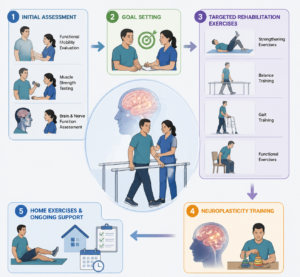
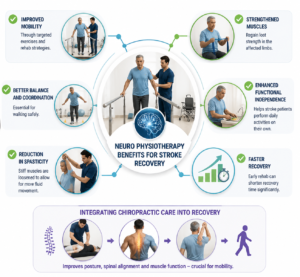
Neuro physiotherapy in Malad can be relevant when weakness, balance difficulties, walking problems or neurological conditions require a dedicated rehabilitation approach beyond routine musculoskeletal physiotherapy.
Why Choose PhysioHub in Malad, Mumbai?
At PhysioHub, rehabilitation starts with understanding the person behind the symptoms.
Dr. Pooja Mehta and the PhysioHub team focus on assessing movement, strength, mobility and functional limitations before planning treatment.
Depending on individual needs, services may include:
- Physiotherapy in Malad
- Sports physiotherapy and rehabilitation
- Neuro rehabilitation
- Chiropractic techniques where appropriate
- Osteopathy in Malad
- Post-surgical rehabilitation
- ACL rehab in Malad
- Strength and mobility programmes
- Gait and movement rehabilitation
For someone looking for a physiotherapist in Mumbai, choosing a clinic close to home can also make consistent rehabilitation easier.
PhysioHub is located in Malad West, Mumbai, making it convenient for people looking for structured physiotherapy, sports rehabilitation or neurological rehabilitation in the area.
Frequently Asked Questions About Sciatica Physiotherapy
1. Can a physiotherapist help with sciatica?
Yes. A physiotherapist can assess movement, strength, nerve-related symptoms and daily activities before creating a personalised rehabilitation plan. Treatment may involve exercises, mobility work, education and manual therapy where appropriate.
2. What exercises are best for sciatica?
There is no single best exercise for everyone. The right exercise depends on the cause, symptom pattern, mobility and strength of the individual. Exercises should ideally be selected after an assessment.
3. Should I rest if I have sciatica?
Prolonged bed rest is generally not the preferred approach for most uncomplicated cases. Staying appropriately active and gradually returning to normal activities is commonly recommended, depending on symptoms and medical advice.
4. How long does sciatica take to improve with physiotherapy?
Recovery time varies. Some episodes improve within weeks, while persistent or complex cases can take longer. The cause of symptoms, severity, general health and consistency with rehabilitation can all affect recovery.
5. When should I visit a physiotherapist in Malad for sciatica?
Consider an assessment when pain repeatedly travels into the leg, affects walking or sitting, keeps returning or limits normal activities. Early assessment can help you understand your symptoms and determine an appropriate rehabilitation plan.
Take the Next Step Towards Comfortable Movement
Living with recurring leg and lower-back pain can affect work, sleep, exercise and even simple daily routines. You do not have to guess which stretches or online exercises are right for you.
If you are looking for a physiotherapist in Malad, Mumbai, PhysioHub can assess your symptoms and create a rehabilitation plan based on your movement, strength and individual goals.
Book an assessment with Dr. Pooja Mehta at PhysioHub Sports & Neuro Rehab Centre, Malad West, Mumbai, and take the first step towards moving with greater comfort and confidence.