Plot No. 5, Evershine Nagar, Next To Landmark, Link Road, Malad West
Blog Category

Spine and joint pain can slowly take over your day. A stiff neck can make laptop work uncomfortable. Lower back pain can disturb sleep. Knee or shoulder pain can make simple things like climbing stairs, lifting bags, exercising, or even sitting for long hours feel difficult.

Many people in Malad, Mumbai start by looking for quick relief. Some search for a Chiropractor in malad. Some look for Physiotherapy in malad. Others explore osteopathy in malad because they want better posture, mobility, and pain relief.


But here is the real question: what does your body actually need?

Pain does not always come from one clear cause. It may be linked to posture, weak muscles, joint stiffness, nerve irritation, an old injury, sports strain, or post-surgery weakness. That is why choosing the right care matters.

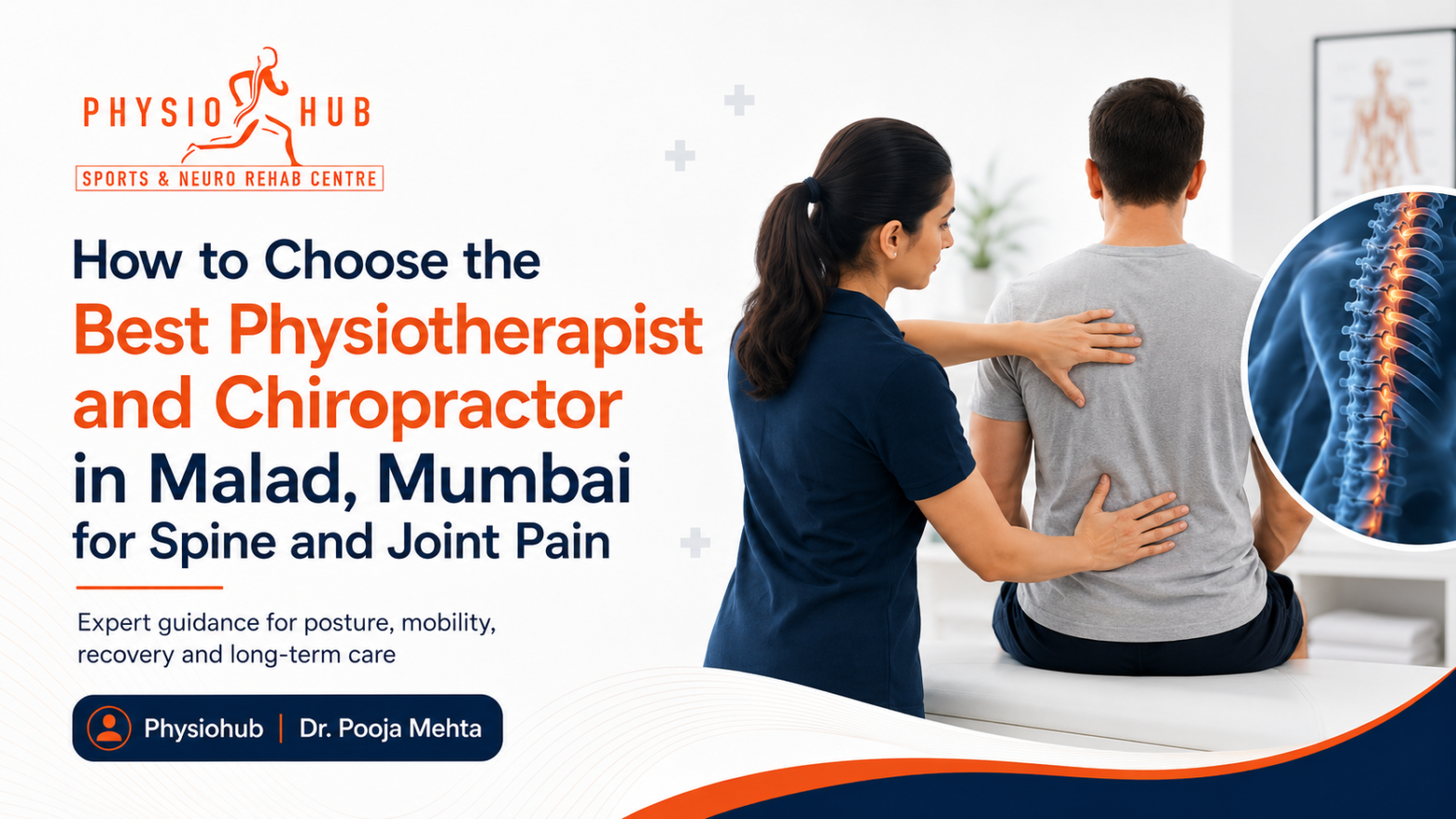
At Physiohub | Dr. Pooja Mehta, the focus is on finding the root cause and creating a safe recovery plan. If you are searching for a trusted Physiotherapist and chiropractor in malad, mumbai, choose care that combines proper assessment, pain relief, movement correction, manual therapy, rehab, and patient education.

How do I choose the best chiropractor or physiotherapist in Malad?

Choose a physiotherapist or chiropractor in Malad by checking their qualification, assessment process, treatment approach, patient reviews, rehab support, safety standards, and experience with spine and joint pain. The best clinic should focus on root-cause diagnosis, pain relief, mobility improvement, strengthening, posture correction, and long-term recovery.

What is Physiotherapist and Chiropractor Care for Spine and Joint Pain?

Physiotherapist and chiropractor care for spine and joint pain is a non-surgical approach that helps reduce pain, improve movement, restore function, and support long-term recovery. It may include assessment, manual therapy, joint mobility work, exercise therapy, posture correction, strengthening, and lifestyle guidance.

Physiotherapy focuses on how your body moves. It works on strength, flexibility, balance, posture, mobility, and daily function.

Chiropractic care often focuses on joint mobility, spinal movement, and manual techniques for selected spine-related conditions.

In a modern rehab setting, both approaches should start with one thing: proper assessment. Treatment should never feel random. What works for one person may not be right for another.

A care plan may include:

  • Spine and joint assessment
  • Posture evaluation
  • Pain and mobility testing
  • Manual therapy when needed
  • Corrective exercises
  • Strength training
  • Ergonomic advice
  • Gait and balance training
  • Sports or injury rehab
  • Home exercise planning

The goal is not only to reduce pain for a few days. The real goal is to help you move better, feel stronger, and reduce the chances of pain returning.
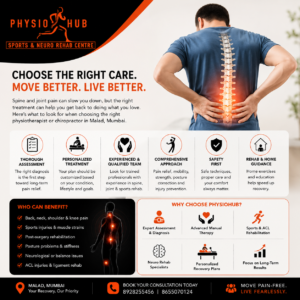
chiropractor in malad mumbai

Why Do You Need the Right Spine and Joint Pain Specialist?

Choosing the right specialist matters because spine and joint pain can have many layers. Sometimes the pain is in your lower back, but the actual issue may be weak hips, poor posture, or tight muscles.

If only the painful area is treated, relief may be temporary. But when the root cause is addressed, recovery becomes more meaningful.

Common reasons people need physiotherapy or chiropractic care include:

  • Neck pain from long screen time
  • Lower back pain due to sitting or lifting
  • Shoulder stiffness or impingement
  • Knee pain while walking or climbing stairs
  • Hip stiffness or poor mobility
  • Sciatica or nerve irritation
  • Posture-related pain
  • Sports injuries
  • Muscle imbalance
  • Joint stiffness
  • Weak core muscles
  • Poor lifting technique
  • Post-surgery weakness
  • Balance or walking difficulty
  • Recurring pain after temporary relief

For example, an office worker may feel neck pain after long hours on a laptop. But the problem may also include rounded shoulders, weak upper back muscles, and poor desk setup.

A gym-goer may complain of back pain after deadlifts. In that case, the issue may be lifting technique, weak core control, or tight hips.

This is why proper assessment matters. Pain relief is important, but long-term recovery needs strength, mobility, posture correction, and better movement habits.

How Does the Treatment Process Work?

A good treatment process should feel clear, safe, and personal. You should know what is being treated, why it is being treated, and how each step supports your recovery.

At Physiohub | Dr. Pooja Mehta in Malad, Mumbai, spine and joint pain care may follow a structured step-by-step plan.

Step 1: Detailed Consultation

The first step is understanding your pain story. When did it start? What makes it worse? What helps? Does it affect your work, sleep, walking, gym routine, or daily confidence?

The physiotherapist checks:

  • Where the pain is located
  • When the pain started
  • What increases or reduces it
  • Whether pain spreads to the arm or leg
  • Your work routine
  • Your activity level
  • Your previous injury history
  • Your fitness or sports routine
  • Your daily posture habits

This helps identify whether the pain is muscle-related, joint-related, posture-related, nerve-related, or linked to weakness.

Step 2: Physical Assessment

The next step is checking how your body moves in real life.

This may include:

  • Spine movement testing
  • Joint mobility testing
  • Muscle strength check
  • Flexibility check
  • Posture assessment
  • Balance assessment
  • Walking pattern assessment
  • Nerve-related screening
  • Functional movement testing

For instance, two people may both say, “I have back pain.” But one may have joint stiffness, while the other may have nerve irritation or weak stabilizing muscles. Their treatment should not be the same.

This step helps the therapist decide whether you need Physiotherapy in malad, chiropractic-style joint mobility work, osteopathy-based manual care, sports rehab, or a combined plan.

Step 3: Pain Relief and Mobility Work

In the early stage, the goal is to calm pain and reduce stiffness. This may include gentle manual therapy, mobility exercises, soft tissue work, joint mobilization, and safe movement guidance.

If chiropractic techniques are suitable, they should be used only after a proper assessment. Safety and comfort should always come first.

Many patients are afraid to move when pain starts. That fear is understandable. But with the right guidance, movement can slowly become safer and easier again.

Step 4: Strength and Corrective Exercises

Once pain starts improving, strengthening becomes important. This is the stage that helps reduce repeated flare-ups.

Your plan may include:

  • Core strengthening
  • Back strengthening
  • Shoulder stability exercises
  • Hip and knee strengthening
  • Mobility drills
  • Balance exercises
  • Functional movement training
  • Return-to-sport training

For example, if your knee pain has changed the way you walk, your back and hips may start taking extra load. If your shoulder is weak, your neck may stay tight. The body works as a chain, so treatment should look beyond one painful point.

Step 5: Posture, Ergonomics and Lifestyle Guidance

Many patients in Malad, Mumbai spend long hours sitting, commuting, working on screens, or driving. These habits can slowly increase stress on the spine and joints.

Your therapist may guide you on:

  • Laptop height
  • Chair support
  • Sitting breaks
  • Sleeping posture
  • Lifting technique
  • Driving posture
  • Exercise form
  • Safe return to gym or sport

Small changes can make a big difference. A better chair setup, regular movement breaks, or corrected lifting form may reduce daily strain more than you expect.

The best spine and joint pain care combines assessment, pain relief, mobility work, strengthening, posture correction, and prevention. Whether you need Physiotherapy in malad, a Chiropractor in malad, or osteopathy in malad, treatment should always match your condition and safety needs.

What Are the Benefits of Choosing the Right Care?

The right care can help you do more than feel temporary relief. It can help you understand your body, move with more confidence, and return to daily life without constantly worrying about pain.

Key benefits include:

  • Reduced spine and joint pain
  • Better neck and back mobility
  • Improved posture
  • Stronger muscles
  • Better walking and balance
  • Reduced stiffness
  • Safer return to work
  • Safer return to gym or sports
  • Better joint control
  • Reduced fear of movement
  • Better body awareness
  • Lower risk of repeated flare-ups
  • Improved daily comfort

There is also an emotional side to pain. When every step, bend, or lift feels risky, your confidence drops. A good recovery plan helps you feel more in control again.

For patients with neurological weakness, walking difficulty, or balance problems, a Neuro rehab centre in malad may be useful. For patients recovering from knee ligament injuries, acl rehab in malad can help restore strength, stability, and safe movement.

Physiotherapist vs Chiropractor vs Osteopathy: Which One Should You Choose?

Many patients feel confused when they compare physiotherapy, chiropractic care, and osteopathy. The terms sound similar, but the focus can be different.

Here is a simple way to understand the options:

Treatment Option Main Focus Best For Limitation
Physiotherapy Pain relief, movement correction, strength, posture, rehab Long-term recovery, sports injury, post-surgery rehab, back and joint pain Needs active participation
Chiropractor in malad Joint mobility and spinal manual techniques Selected stiffness-related spine and joint issues Should be guided by assessment and supported with exercise
osteopathy in malad Whole-body manual approach, mobility, posture balance Mobility restrictions and posture-related discomfort May not be enough without strengthening
Painkillers Temporary symptom relief Short-term pain control Does not correct weakness, posture, or movement patterns
Massage Muscle relaxation Mild tightness or stress-related discomfort Relief may be temporary
Rest only Reduces immediate strain Very acute pain for a short time Too much rest may increase stiffness

Physiotherapy is often preferred when the goal is long-term recovery. Chiropractic or osteopathy-based care may help selected patients, but lasting improvement usually needs exercise, education, and movement retraining.

A Chiropractor in malad may help with selected joint mobility concerns. Osteopathy in malad may support whole-body movement and manual care. Physiotherapy connects pain relief with strengthening, posture correction, functional rehab, and prevention.

Who Needs a Physiotherapist and Chiropractor in Malad, Mumbai?

You may need professional care if pain is affecting your routine, sleep, work, exercise, or confidence.

You should consider visiting a Physiotherapist and chiropractor in malad, mumbai if you have:

  • Back pain lasting more than a few days
  • Neck pain from desk work
  • Shoulder pain or stiffness
  • Knee pain while walking or climbing stairs
  • Hip pain or stiffness
  • Pain travelling to the arm or leg
  • Tingling or numbness
  • Morning stiffness
  • Poor posture
  • Repeated muscle tightness
  • Sports or gym injury
  • Post-surgery weakness
  • Walking or balance difficulty
  • Pain after lifting or twisting
  • Fear of movement due to pain

Ask yourself this: are you changing the way you sit, walk, sleep, or exercise because of pain? If yes, your body may need guided support.

You should seek urgent medical care if you have sudden weakness, loss of bladder or bowel control, unexplained fever, major trauma, severe night pain, or rapidly worsening symptoms.

What Affects the Cost of Treatment?

The cost of spine and joint pain treatment in Malad, Mumbai can vary based on your condition and treatment needs.

Pricing factors may include:

  • Severity of pain
  • Type of condition
  • Acute or chronic pain
  • Number of sessions needed
  • Manual therapy requirement
  • Exercise rehab requirement
  • Need for neuro rehab
  • Need for sports or ACL rehab
  • Advanced equipment use
  • One-on-one therapy time
  • Home exercise monitoring
  • Clinic-based or home-based care

A mild posture-related issue may need fewer sessions. Chronic spine pain, nerve symptoms, sports injuries, post-surgery weakness, or neurological conditions may need a longer rehab plan.

For example, someone with mild neck stiffness from laptop work may need a shorter plan. A person recovering from surgery, ACL injury, or nerve-related pain may need a more structured and longer rehab process.

The best way to understand cost is through a proper assessment. After evaluation, your therapist can suggest a realistic treatment plan and session frequency.

Spine and Joint Pain Care Trends in 2026

In 2026, spine and joint pain care is becoming more personalized, evidence-informed, and movement-focused.

Important trends include:

  • Exercise-led rehab plans
  • Patient education and self-management
  • Manual therapy combined with strengthening
  • Posture correction for desk workers
  • Sports-specific rehab
  • Return-to-gym planning
  • Neuro-musculoskeletal rehabilitation
  • Technology-supported rehab tracking
  • Preventive care for recurring pain
  • Integrated physiotherapy, chiropractic, and osteopathy approaches
  • Focus on long-term function, not only pain relief

More people are searching for a physiotherapist in mumbai who can provide complete care instead of temporary relief. Patients want to know why pain is happening, how to reduce it, and how to stop it from returning.

Modern care is becoming less about “quick fixes” and more about understanding the body as a whole. The aim is to improve movement quality, strength, posture, and confidence.

Why Choose Physiohub | Dr. Pooja Mehta in Malad, Mumbai?

Physiohub | Dr. Pooja Mehta offers patient-focused care for spine and joint pain in Malad, Mumbai. The clinic focuses on detailed assessment, safe treatment, guided rehab, and long-term recovery.

Reasons to choose Physiohub:

  • Detailed assessment before treatment
  • Personalized recovery plans
  • Physiotherapy and rehab-based care
  • Manual therapy when required
  • Posture and ergonomic guidance
  • Neuro rehab support
  • Sports injury care
  • ACL rehab support
  • Exercise-based strengthening
  • Patient education
  • Home exercise guidance
  • Focus on safe, long-term improvement

Whether you are dealing with back pain, neck pain, shoulder stiffness, knee pain, posture issues, sports injury, or post-surgery weakness, Physiohub helps you understand your condition and recover step by step.

For anyone looking for a Physiotherapist and chiropractor in malad, mumbai, the right clinic should help you move better, feel stronger, and return to daily life with confidence.

FAQs About Physiotherapist and Chiropractor Care in Malad

1. How do I choose the best chiropractor in Malad, Mumbai?

Choose a chiropractor or physiotherapy clinic by checking qualification, assessment process, treatment safety, rehab support, patient reviews, and experience with spine and joint pain. A good clinic should focus on diagnosis, pain relief, mobility, strengthening, and prevention.

2. Is a physiotherapist better than a chiropractor for back pain?

It depends on your condition. Physiotherapy focuses on pain relief, movement correction, strength, posture, and rehab. Chiropractic care may help selected joint mobility issues. For long-term recovery, exercise-based rehabilitation is often important.

3. Can physiotherapy help with neck pain and posture problems?

Yes. Physiotherapy can help improve neck mobility, reduce stiffness, strengthen postural muscles, and correct daily habits that increase strain. It is useful for desk workers, students, drivers, and people with screen-related neck pain.

4. Is chiropractic treatment safe for everyone?

Chiropractic-style techniques are not suitable for everyone. Safety depends on your condition, symptoms, medical history, and assessment findings. Patients with nerve symptoms, severe pain, osteoporosis, trauma, or red flags need careful evaluation before manual techniques.

5. When should I visit Physiohub | Dr. Pooja Mehta?

You should visit if you have back pain, neck pain, joint stiffness, sports injury, posture problems, walking difficulty, balance issues, post-surgery weakness, or recurring pain that affects daily life.

Spine and joint pain should not control your work, sleep, fitness, travel, or daily routine.

If you are searching for a trusted Physiotherapist and chiropractor in malad, mumbai, visit Physiohub | Dr. Pooja Mehta for a detailed assessment and personalized recovery plan.

Book your consultation today and take the first step toward pain relief, better movement, and long-term recovery.


Booking your first physiotherapy appointment can feel a little uncertain. You may be thinking, “Will the treatment hurt?”, “Will I be asked to exercise?”, “What if my pain gets worse?”, or “Do I really need physiotherapy, or should I wait?”

These questions are completely normal.

Many people in Malad, Mumbai delay visiting a physiotherapist because they hope the pain will settle on its own. Sometimes it does. But when pain keeps coming back, stiffness affects your routine, or a simple activity like climbing stairs, sitting at work, walking, bending, or sleeping becomes difficult, your body may be asking for proper care.

A first physiotherapy visit is not something to fear. It is mainly a detailed conversation and assessment. Your physiotherapist tries to understand your pain, movement, lifestyle, posture, habits, injury history, and recovery goals.

Whether you have back pain, neck pain, knee pain, sports injury, post-surgery weakness, balance problems, or nerve-related symptoms, meeting a physiotherapist in Malad can give you much-needed clarity.

At Physiohub, the first session is designed to help you understand what is happening in your body and what can be done next.

What happens during your first physiotherapy visit?

During your first physiotherapy visit, the physiotherapist checks your pain history, movement, posture, strength, flexibility, balance, and daily activity limitations. Based on the assessment, they explain the possible cause of your problem and create a personalized treatment plan that may include manual therapy, exercise, posture correction, rehab, or lifestyle guidance.

What is a first physiotherapy visit?

A first physiotherapy visit is your initial assessment session. It helps the physiotherapist understand your pain, injury, stiffness, weakness, or movement problem in detail.

Think of it as the starting point of your recovery journey.

This visit is not just about asking, “Where does it hurt?” A good physiotherapist looks deeper. They try to understand why the pain started, what is making it worse, and how it is affecting your daily life.

For example, a person with knee pain may think the issue is only in the knee. But sometimes, weak hip muscles, poor foot position, past injury, or an incorrect walking pattern may also be involved. Similarly, neck pain may be linked to long laptop hours, poor posture, stress, or reduced shoulder mobility.

During your first visit, a physiotherapist may check:

  • Where you feel pain or stiffness
  • When the problem started
  • What increases or reduces your pain
  • Your posture while standing or sitting
  • Your walking pattern
  • Joint movement
  • Muscle strength
  • Flexibility
  • Balance and coordination
  • Previous injury or surgery history
  • Work routine and daily habits

This is why a first visit is so important. It gives your therapist a clear picture before starting treatment.

If you are searching for physiotherapy in Malad, your first session should help you feel more informed, not more confused.

Why is your first physiotherapy visit important?

Pain can be tricky. The area where you feel pain is not always the real source of the problem.

A person may feel lower back pain, but the cause could be weak core muscles, tight hips, poor lifting technique, long sitting hours, or disc-related irritation. Someone with shoulder pain may actually have stiffness in the upper back or poor shoulder blade control.

That is why the first visit matters.

It helps your physiotherapist understand the root cause instead of only treating the surface symptom.

Your first physiotherapy visit is important because:

  • It helps identify the possible cause of your pain
  • It reduces guesswork in treatment
  • It prevents you from doing the wrong exercises
  • It helps detect warning signs early
  • It gives you a clear recovery direction
  • It helps you understand your condition better
  • It sets realistic recovery goals
  • It reduces the chances of repeated pain
  • It builds confidence in movement

Many people visit only when the pain becomes unbearable. But is it better to wait until daily life becomes difficult?

Early physiotherapy can help in conditions like back pain, frozen shoulder, knee pain, slip disc symptoms, sports injuries, post-surgery stiffness, and posture-related discomfort.

For people living in Malad, Mumbai, choosing a nearby clinic also makes regular follow-ups easier. And in physiotherapy, consistency plays a big role in recovery.

How does the first physiotherapy visit work?

Your first visit usually follows a step-by-step process. The exact plan may change depending on your condition, age, pain level, activity routine, and medical history.

But in most cases, this is what you can expect.

1. Detailed history taking

The session usually starts with a conversation. Your physiotherapist will ask you about your pain, symptoms, daily routine, and medical background.

You may be asked:

  • When did the pain start?
  • Did it begin suddenly or slowly?
  • Was there any fall, accident, workout injury, or lifting strain?
  • Is the pain sharp, dull, burning, pulling, or throbbing?
  • Does the pain travel to your arm or leg?
  • Do you feel numbness, tingling, or weakness?
  • What movements make it worse?
  • What gives you relief?
  • Have you already taken medicines?
  • Have you done an X-ray, MRI, or blood test?

These questions help your physiotherapist understand whether the problem may be related to muscles, joints, nerves, posture, movement habits, or another health condition.

For example, tingling in the leg may need a different approach than simple muscle tightness. Pain after surgery needs a different plan than pain caused by long sitting.

2. Physical assessment

After understanding your history, the physiotherapist checks how your body moves.

This may include:

  • Posture assessment
  • Range of motion testing
  • Muscle strength testing
  • Flexibility testing
  • Balance testing
  • Walking or gait analysis
  • Joint mobility checks
  • Functional movement tests

You may be asked to bend, lift your arm, turn your neck, stand on one leg, squat, walk, or perform simple movements depending on your complaint.

Do not worry. These tests are usually safe and controlled. Your physiotherapist will not force painful movements.

For example, if you visit for ACL rehab in Malad, your physiotherapist may check knee swelling, walking pattern, thigh strength, knee bending, balance, and confidence while putting weight on the leg.

If you visit for back pain, they may check your spine movement, hip mobility, core control, and sitting posture.

3. Pain and function evaluation

Pain is not only about intensity. It is also about how much it affects your life.

That is why your physiotherapist may ask how your condition affects daily activities such as:

  • Sitting at work
  • Climbing stairs
  • Walking
  • Sleeping
  • Bending
  • Lifting objects
  • Exercising
  • Driving
  • Playing sports
  • Doing household work

This part is very important.

For example, two people may both have knee pain. One may feel pain only after running. Another may struggle to climb stairs or stand from a chair. Their treatment plans will not be the same.

A good physiotherapy plan is built around your real-life needs, not just your pain score.

4. Treatment explanation

Once the assessment is done, your physiotherapist will explain what they have found.

This explanation should be simple and easy to understand. You should know what may be causing your symptoms, what needs to improve, and how the treatment plan may help.

Your plan may include:

  • Pain management
  • Manual therapy
  • Exercise therapy
  • Strength training
  • Mobility work
  • Posture correction
  • Balance training
  • Neuro rehabilitation
  • Sports injury rehab
  • Home exercise program
  • Lifestyle and ergonomic advice

At Physiohub, the focus is not only on “doing treatment” but also on helping you understand your body better. When you understand your condition, you are more likely to follow your recovery plan confidently.

5. First treatment session

In many cases, treatment may begin during the first visit itself.

Depending on your condition, your physiotherapist may start with gentle pain-relief techniques, mobility work, simple exercises, manual therapy, or posture correction.

You may also be taught a few safe exercises to do at home.

These exercises are usually simple in the beginning. The goal is not to overload your body on day one. The goal is to start movement safely and gradually.

If your physiotherapist feels that you need further medical evaluation, imaging, or a doctor’s opinion, they may guide you accordingly.

Your first physiotherapy visit is mainly about understanding your pain, finding the possible cause, and creating the right recovery plan. It is not something to fear. A good session should leave you feeling clearer, safer, and more confident about your next step.

What are the benefits of visiting a physiotherapist?

Physiotherapy can help people of different ages and activity levels. It is not only for athletes or people recovering from surgery.

A physiotherapist can help if you are a student with posture pain, an office worker with neck stiffness, a senior citizen with balance issues, a homemaker with knee pain, or a sportsperson recovering from injury.

The benefits may include:

  • Reduced pain and stiffness
  • Better joint movement
  • Improved muscle strength
  • Better posture awareness
  • Faster recovery after injury
  • Safer return to exercise or sport
  • Improved balance and coordination
  • Better walking confidence
  • Support after surgery or fracture
  • Reduced risk of repeated injury
  • Better independence in daily activities
  • More confidence while moving

Physiotherapy is also useful for people with long-term conditions such as arthritis, stroke recovery, Parkinson’s disease, nerve weakness, and age-related mobility problems.

If someone is searching for a neuro rehab centre in Malad, physiotherapy can support walking, balance, coordination, muscle control, and day-to-day independence.

Small improvements can make a big difference. Being able to walk without fear, climb stairs without support, or sit through work without pain can truly improve quality of life.

Physiotherapy vs chiropractor vs osteopathy: What is the difference?

Many people feel confused between physiotherapy, chiropractic care, and osteopathy. It is a common question.

Which one should you choose?

The answer depends on your condition, your symptoms, and your recovery goal.

Option Main Focus Commonly Used For Best When
Physiotherapy Pain relief, movement, strength, rehab, function Back pain, sports injury, post-surgery rehab, neuro rehab, posture issues You need long-term recovery and exercise-based rehabilitation
Chiropractic care Spinal alignment and joint manipulation Back stiffness, neck stiffness, joint mobility issues You need joint mobility-focused care
Osteopathy Whole-body manual approach Mobility restrictions, muscular tension, posture-related discomfort You need gentle manual therapy with body alignment focus
Self-care only Rest, home remedies, pain relief habits Mild temporary pain Pain is minor and improves quickly

If you are searching for a chiropractor in Malad or osteopathy in Malad, it is helpful to first get your condition assessed properly.

Physiotherapy often gives a more complete recovery plan because it includes assessment, pain relief, strengthening, mobility correction, posture training, exercise progression, and prevention.

For example, if you have repeated back pain, temporary relief may help for a few days. But if weak muscles, poor sitting posture, or incorrect lifting habits are not corrected, the pain may return.

That is where physiotherapy can help you build long-term control.

Who needs a first physiotherapy visit?

You do not need to wait until the pain becomes severe to visit a physiotherapist.

If pain, stiffness, weakness, or movement difficulty is affecting your normal routine, it may be time to book an assessment.

You may need physiotherapy if you have:

  • Back pain or slip disc symptoms
  • Neck pain or shoulder stiffness
  • Knee pain while climbing stairs
  • Sports injury or muscle strain
  • ACL injury or ligament tear
  • Post-surgery weakness
  • Stroke recovery needs
  • Balance or walking difficulty
  • Numbness, tingling, or nerve pain
  • Poor posture due to long sitting
  • Arthritis-related stiffness
  • Repeated pain that keeps coming back

A first visit is also useful if you are unsure about your pain. Maybe your shoulder hurts only during workouts. Maybe your back pain appears after sitting for long hours. Maybe your knee feels weak after a previous injury.

Should you ignore it? Not always.

An early check-up can help prevent small problems from becoming bigger.

People looking for a physiotherapist in Mumbai often prefer a local clinic when they need regular sessions. For patients in Malad, Mumbai, visiting a nearby centre like Physiohub can make treatment more consistent and convenient.
physiotherapist in mumbai | Physio Hub

What affects the cost of physiotherapy?

Physiotherapy cost can vary from person to person. This is because every condition is different.

A person with mild neck stiffness may need a different plan than someone recovering after surgery. A sports injury may need progressive strengthening, while a neurological condition may need longer rehabilitation and close supervision.

Common pricing factors include:

  • Type of condition
  • Severity of pain or injury
  • Duration of the problem
  • Acute or chronic symptoms
  • Manual therapy requirement
  • Exercise rehabilitation plan
  • Use of advanced equipment
  • Neuro rehab needs
  • Sports rehab needs
  • Post-surgery recovery stage
  • Number of sessions required
  • One-on-one supervision needs

For example, simple posture-related pain may improve with fewer sessions if treated early. But post-operative rehabilitation, ACL rehab in Malad, or neuro rehabilitation may need a more structured and longer plan.

The best way to understand the cost is to start with an assessment. After your first visit, your physiotherapist can explain your treatment plan, expected sessions, and recovery goals more clearly.

What are the physiotherapy trends in 2026?

Physiotherapy in 2026 is becoming more personalized, practical, and patient-focused. People no longer want only temporary pain relief. They want to move better, stay active, prevent repeat injuries, and understand their bodies.

Here are some important trends.

1. Personalized rehab plans

Earlier, many people were given similar exercises for similar pain. Today, physiotherapy is becoming more specific.

A runner with knee pain, an office worker with knee pain, and a senior citizen with knee pain may all need different plans.

Your age, strength, lifestyle, work routine, activity level, and goals matter.

2. Digital and hybrid care

Online follow-ups, guided exercise videos, and digital check-ins are becoming more common. These tools can help patients stay consistent after their clinic visit.

However, hands-on assessment and professional supervision are still important, especially in pain, post-surgery, sports injury, and neuro rehab cases.

3. AI-supported assessment and tracking

AI-based tools are slowly entering healthcare and rehabilitation. They may help track movement, exercise form, and progress over time.

But can AI replace a physiotherapist?

Not completely.

A physiotherapist’s clinical judgment, touch, experience, and ability to understand patient fear, pain, and movement quality remain very important.

4. Sports and performance rehab

More people are now visiting physiotherapists not only after injury but also to prevent injury.

Gym-goers, runners, dancers, football players, and recreational athletes are choosing physiotherapy for mobility, strength, form correction, and safe return to sport.

This is especially helpful for people looking for sports rehab or ACL rehab in Malad.

5. Neuro rehabilitation awareness

There is growing awareness about early and structured rehab after stroke, Parkinson’s disease, nerve injuries, balance disorders, and walking difficulties.

A neuro rehab centre in Malad can help patients work on strength, coordination, balance, walking confidence, and daily independence.

For families, this support can feel reassuring. Recovery may take time, but small progress often brings big emotional relief.

Why choose Physiohub in Malad, Mumbai?

Physiohub offers patient-focused physiotherapy care in Malad, Mumbai. The approach is simple: understand the person, assess the problem, create a clear plan, and support recovery step by step.

At Physiohub, the focus is not only on reducing pain for a few days. The aim is to help patients move better, build strength, understand their condition, and reduce the chances of the problem coming back.

Patients choose Physiohub because of:

  • Personalized physiotherapy plans
  • Clear first-visit assessment
  • Support for pain, injury, and mobility problems
  • Sports and spine rehab guidance
  • Neuro rehabilitation support
  • Exercise-based recovery planning
  • Manual therapy and movement correction
  • Patient education in simple language
  • Convenient care for people in Malad and nearby areas

If you are looking for a physiotherapist in Malad, Physiohub can help you begin with a proper assessment and a recovery plan that suits your condition.

If you are looking for a physiotherapist in Mumbai but prefer care closer to home, choosing a clinic in Malad can make regular visits easier. And when it comes to physiotherapy, regular follow-through often makes a real difference.

FAQs

1. What should I wear for my first physiotherapy visit?

Wear comfortable clothes that allow easy movement. If you have knee pain, loose pants or shorts are helpful. If you have shoulder or neck pain, wear something that allows your shoulder and upper back to move freely.

2. Will physiotherapy hurt during the first session?

Physiotherapy should not feel forcefully painful. Some movements or exercises may feel slightly uncomfortable, especially if the area is stiff or weak. But your physiotherapist will adjust the session based on your pain level and comfort.

3. How many physiotherapy sessions will I need?

The number of sessions depends on your condition, pain severity, recovery goals, and how your body responds to treatment. Some people need only a few sessions, while post-surgery, sports injury, or neurological cases may need a longer rehab plan.

4. Do I need a doctor’s prescription before visiting a physiotherapist?

In many cases, people visit a physiotherapist directly for pain, stiffness, posture issues, or injury assessment. However, if your condition needs medical evaluation, scans, or specialist care, your physiotherapist may guide you to consult a doctor.

5. Can physiotherapy help avoid surgery?

Physiotherapy can help many people reduce pain, improve strength, and restore movement without surgery. However, some severe injuries or advanced conditions may still need medical or surgical opinion. A proper assessment helps decide the right direction.

Pain, stiffness, weakness, or movement difficulty should not become a normal part of your life.

Your first physiotherapy visit can help you understand what is happening in your body and what steps can help you recover safely.

Book your consultation with Physiohub today and meet an experienced physiotherapist in Malad for personalized care, guided rehabilitation, and long-term movement confidence.


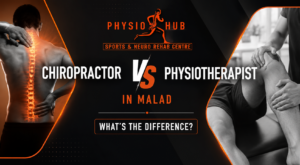
Chiropractor vs Physiotherapist in Malad: What’s the Difference?

Back pain after long office hours. Neck stiffness from looking at your phone. Knee pain while climbing stairs. Shoulder pain that makes even wearing a shirt difficult.

Sounds familiar?

When pain starts affecting daily life, many people feel confused about where to go. Should you visit a chiropractor in Malad? Should you choose a physiotherapist in Malad? Or is osteopathy in Malad the right option?

The confusion is common because all three may help with pain, stiffness, and movement problems. But they do not work in the same way.

A chiropractor usually focuses on spinal alignment and joint adjustments. A physiotherapist looks at pain, muscle weakness, posture, movement, balance, injury recovery, and long-term function. So, if your goal is not just quick relief but proper recovery, physiotherapy can be a more complete choice.

At Physiohub, the focus is simple: understand the root cause, reduce pain safely, improve movement, and help you return to your normal routine with confidence.

A chiropractor mainly focuses on spinal and joint adjustments, while a physiotherapist focuses on pain relief, movement correction, strength, mobility, posture, and rehabilitation. If you need long-term recovery after injury, surgery, stroke, sports damage, or chronic pain, a physiotherapist in Malad can offer a complete treatment plan.

What is the Difference Between a Chiropractor and Physiotherapist?

A chiropractor is commonly known for treating spine and joint-related problems. Chiropractic care may include hands-on adjustments to improve joint movement, reduce stiffness, and support spinal alignment.

A physiotherapist takes a broader approach. They assess how your body moves, where the pain is coming from, which muscles are weak, and how your daily habits may be adding to the problem.

For example, if you have lower back pain, the issue may not only be in your back. It could be due to weak core muscles, tight hips, poor sitting posture, or incorrect lifting habits. A physiotherapist checks these details and then creates a plan that suits your body.

Physiotherapy in Malad may include manual therapy, exercise therapy, posture correction, electrotherapy, stretching, strengthening, balance training, gait training, and rehabilitation after injury or surgery.

So, the main difference is this: chiropractic care often focuses more on adjustments, while physiotherapy focuses on complete movement recovery.

Simple answer:
Choose chiropractic care if your concern is mostly spinal stiffness or joint alignment. Choose physiotherapy if you need pain relief, injury recovery, post-surgery rehab, posture correction, strength building, neuro rehab, or long-term movement improvement.

Why Do You Need to Know the Difference?

Pain can be frustrating. It can affect work, sleep, exercise, travel, and even your mood. And when the pain keeps coming back, it becomes even more stressful.

That is why choosing the right treatment matters.

People often compare chiropractic care and physiotherapy for conditions like:

  • Back pain from long sitting hours
  • Neck pain due to phone or laptop use
  • Shoulder stiffness or frozen shoulder
  • Knee pain while walking or climbing stairs
  • Sports injuries
  • Sciatica or slip disc symptoms
  • Post-surgery weakness
  • Stroke recovery and walking difficulty
  • ACL injury or ligament rehab
  • Poor posture and body imbalance
  • Chronic pain that keeps returning

Think of a person working at a desk for 8 to 10 hours every day. They may feel neck tightness, shoulder heaviness, and frequent headaches. A quick adjustment may give temporary relief. But if the posture, muscle weakness, and sitting habits are not corrected, the pain may return.

That is where a physiotherapist in Malad can help. Physiotherapy does not only ask, “Where is the pain?” It also asks, “Why is this pain happening again?”

This makes treatment more practical and long-lasting.

How Does Physiotherapy Work Step by Step?

At Physiohub, physiotherapy begins with understanding the person, not just the pain area. Two people may have the same knee pain, but their causes can be completely different.

One person may have arthritis. Another may have an old sports injury. Someone else may have weak hip muscles or poor walking posture.

That is why step-by-step assessment is important.

Step 1: Detailed Assessment

The physiotherapist checks your pain, movement, posture, strength, flexibility, balance, and daily activity problems.

You may be asked simple questions like:

  • When did the pain start?
  • What makes it worse?
  • Does it affect walking, sitting, sleeping, or exercise?
  • Have you had any injury or surgery before?
  • Have you taken treatment earlier?

This helps the physiotherapist understand the full picture.

Step 2: Diagnosis-Based Treatment Plan

Once the assessment is done, a personalized plan is created. This plan depends on your condition, pain level, lifestyle, age, activity needs, and recovery goal.

For example, a young athlete with an ACL injury will need a different plan compared to a senior citizen with balance problems.

This is why acl rehab in Malad should always be guided properly. It is not just about doing a few exercises. It is about rebuilding strength, stability, confidence, and safe movement.

Step 3: Pain Relief and Mobility Work

In the early stage, the focus may be on reducing pain and improving movement.

This may include:

  • Manual therapy
  • Soft tissue release
  • Gentle joint movements
  • Stretching
  • Heat or cold therapy
  • Electrotherapy if needed
  • Guided pain-free exercises

The goal is to make movement easier without pushing the body too hard.

Step 4: Strength and Stability Training

Once pain reduces, strengthening becomes very important.

Why? Because weak muscles often allow the same pain to come back.

For back pain, core strength may be needed.
For knee pain, hip and thigh strength may be important.
For shoulder pain, shoulder blade control may be required.

This stage helps the body become stronger and more stable.

Step 5: Functional Recovery

The final stage is about returning to real life.

Can you climb stairs without fear?
Can you sit at work without pain?
Can you walk confidently after a stroke?
Can you return to sports after an ACL injury?

For patients recovering from stroke or neurological conditions, a neuro rehab centre in Malad can support walking practice, balance training, coordination work, and repeated movement training.

This makes recovery more meaningful because it connects treatment with daily life.

What Are the Benefits of Physiotherapy?

Physiotherapy is not only for pain relief. It helps people move better, feel stronger, and become more independent.

The benefits may include:

  • Reduces pain naturally
  • Improves flexibility and mobility
  • Builds strength and stability
  • Corrects posture and movement habits
  • Supports recovery after surgery
  • Helps prevent repeated injuries
  • Improves balance and walking confidence
  • Supports stroke and neuro rehabilitation
  • Helps athletes return to sport safely
  • Reduces fear of movement
  • Improves daily function
  • Supports better quality of life

For many patients, the biggest relief is not just physical. It is emotional too.

Imagine someone who has avoided walking outside because of knee pain. Or someone who feels scared to bend after a back injury. With the right physiotherapy plan, they slowly regain trust in their body.

That confidence matters.

Chiropractor vs Physiotherapist vs Osteopathy: Which One is Better?

There is no one-size-fits-all answer. The best option depends on your condition and what your body needs.

Treatment Option Main Focus Commonly Used For Best Suited For
Chiropractor Spine and joint adjustment Back stiffness, neck stiffness, spinal mobility issues People looking for adjustment-based care
Physiotherapist Pain relief, movement, strength, rehab, function Back pain, knee pain, sports injury, stroke rehab, post-surgery recovery People needing long-term recovery and guided exercise
Osteopathy Whole-body manual approach Body alignment, mobility, muscle and joint discomfort People looking for hands-on whole-body care
Painkillers Temporary symptom control Short-term pain relief Acute pain under medical advice
Surgery Structural correction when needed Severe injury, advanced joint damage, major disc or ligament issues Cases where conservative care is not enough

A chiropractor in Malad may be helpful for people with spinal stiffness or joint movement concerns. Osteopathy in Malad may help people who prefer a whole-body hands-on approach.

But if your problem involves injury, muscle weakness, poor posture, surgery recovery, neurological issues, or repeated pain, physiotherapy is often a more complete choice.

Physiotherapy also teaches you what to do at home, what to avoid, and how to protect your body in the long run.

Best choice for long-term recovery:
Physiotherapy is often more complete when pain is linked to weakness, injury, posture, surgery, sports damage, or neurological conditions.

Who Needs a Physiotherapist in Malad?

You should consider visiting a physiotherapist if pain is affecting your routine, sleep, work, walking, or confidence.

A physiotherapist in Malad can help if you have:

  • Back pain that lasts more than a few days
  • Neck pain with stiffness or headache
  • Knee pain while walking or climbing stairs
  • Shoulder pain or frozen shoulder
  • Sciatica or pain travelling down the leg
  • Sports injury or muscle strain
  • ACL tear or ligament injury
  • Post-fracture stiffness
  • Post-surgery weakness
  • Stroke recovery needs
  • Parkinson’s-related movement problems
  • Poor balance or fear of falling
  • Desk posture-related pain
  • Repeated pain despite rest or medicines

Many people wait until pain becomes severe. But early physiotherapy can often make recovery easier.

For example, if your knee pain starts only while climbing stairs, that is the right time to get checked. Waiting until you cannot walk comfortably may make treatment longer.

Physiotherapy can also help people who are not in pain right now but want to prevent future problems. This is especially useful for office workers, athletes, senior citizens, and people recovering from old injuries.

What Are the Cost and Pricing Factors?

The cost of physiotherapy depends on the condition, treatment plan, session duration, and type of care required.

Pricing may vary based on:

  • Severity of pain or injury
  • Acute or chronic condition
  • Manual therapy needs
  • Exercise rehab requirements
  • Neuro rehab needs
  • Post-surgery recovery stage
  • Sports-specific rehab planning
  • Advanced equipment or machine-assisted therapy
  • Home care or clinic-based sessions
  • Number of sessions needed

For example, mild neck stiffness may need fewer sessions. But stroke rehab, ACL rehab, or post-operative recovery usually needs a longer and more structured plan.

The number of sessions also depends on how your body responds. Some people improve quickly. Others may need gradual progress, especially if the condition has been present for months or years.

At Physiohub, the aim is to keep the treatment clear and honest. After assessment, patients are guided about what may be needed, why it is needed, and how the recovery plan will move forward.

What Are the Physiotherapy Industry Trends in 2026?

Physiotherapy is becoming more advanced and more patient-friendly. In 2026, the focus is not only on pain relief but also on prevention, performance, independence, and long-term health.

Important trends include:

  • AI-assisted movement analysis
  • Digital exercise tracking
  • Hybrid physiotherapy care
  • Machine-assisted gait training
  • Advanced neuro rehabilitation
  • Preventive physiotherapy for desk workers
  • Sports performance rehab
  • Posture and ergonomic correction
  • Evidence-based manual therapy
  • Patient education and self-management
  • Multidisciplinary care combining physiotherapy, osteopathy, and rehab science

More people are now looking for treatment that is personalized. They do not want general advice like “take rest” or “do basic exercise.” They want to know what is wrong, what can be improved, and how long recovery may take.

This shift is also seen in Malad. Patients are searching for modern physiotherapy in Malad that includes assessment, advanced rehab methods, guided exercises, and progress-based care.

A trusted physiotherapist in Mumbai today is not only someone who treats pain. They also educate, guide, motivate, and help patients stay active safely.

Why Choose Physiohub in Malad?

Physiohub is a trusted choice for people looking for physiotherapy in Malad because the care is personal, structured, and focused on real recovery.

The team understands that every patient comes with a different story. Some are tired of recurring back pain. Some are worried about walking after a stroke. Some want to return to sports after an ACL injury. Some just want to sit, sleep, or climb stairs without pain.

At Physiohub, treatment is planned around your condition and your goals.

Here is why patients choose Physiohub:

  • Personalized assessment before treatment
  • Clear explanation of the condition
  • Treatment plans based on pain, movement, and function
  • Support for back pain, neck pain, knee pain, and shoulder pain
  • Advanced care for sports injury and acl rehab in Malad
  • Neuro rehabilitation support for stroke and balance issues
  • Professional guidance for posture correction
  • Exercise-based long-term recovery
  • Modern techniques with a human touch
  • Comfortable and supportive clinic environment

If you are searching for a chiropractor in Malad, osteopathy in Malad, or a physiotherapist in Malad, Physiohub can help you understand which approach is right for your condition.

The goal is not just to reduce pain for a few days. The goal is to help you move better, feel stronger, and live with more confidence.

FAQs

1. Is a chiropractor better than a physiotherapist for back pain?

It depends on the cause of your back pain. A chiropractor may help with spinal stiffness and joint mobility. A physiotherapist can help with pain relief, posture correction, core strength, flexibility, and long-term prevention. If your back pain keeps returning, physiotherapy may offer a more complete recovery plan.

2. When should I visit a physiotherapist in Malad?

You should visit a physiotherapist in Malad if you have pain, stiffness, weakness, injury, walking difficulty, balance problems, post-surgery recovery needs, or pain that keeps coming back. Early treatment can help prevent the condition from becoming more serious.

3. Can physiotherapy help avoid surgery?

In many cases, physiotherapy can help reduce pain, improve strength, and restore movement without surgery. However, some severe injuries or advanced conditions may still need a doctor’s opinion. A proper assessment helps decide the best next step.

4. What is the difference between osteopathy and physiotherapy?

Osteopathy often uses a whole-body manual approach to improve mobility and alignment. Physiotherapy uses assessment, exercise therapy, manual therapy, strengthening, balance training, posture correction, and rehabilitation to restore movement and function.

5. Does Physiohub offer neuro rehabilitation in Malad?

Yes. Physiohub supports patients who need neuro rehabilitation, including stroke recovery, balance training, walking practice, and movement improvement. If you are looking for a neuro rehab centre in Malad, Physiohub offers guided and structured care.

Pain should not become your normal.

If you are confused between a chiropractor, osteopathy, or physiotherapy, let Physiohub guide you with the right assessment and treatment plan.

Book your consultation with Physiohub today and meet a trusted physiotherapist in Malad for safe pain relief, better movement, and long-term recovery.
Finding the right physiotherapist in Malad can make a big difference when pain, injury, stiffness, weakness or movement difficulty starts affecting your daily life. Many people ignore pain in the beginning, hoping it will settle on its own. But when back pain affects office work, knee pain makes walking difficult, a sports injury stops training, or stroke recovery becomes slow after hospital discharge, proper physiotherapy care becomes important.

PhysioHub in Malad, Mumbai offers complete physiotherapy care for people who need pain relief, stroke rehabilitation, sports injury rehab, post-surgery recovery, spine care, osteopathy support and guided movement training. Whether you are a working professional with neck pain, a senior citizen with balance issues, a fitness enthusiast recovering from an ACL injury, or a family member looking for stroke recovery physiotherapy in Malad, the right treatment plan can help improve comfort, mobility and confidence.

This blog explains how physiotherapy works, who needs it, what conditions it can support, and how to choose the right physiotherapy clinic in Malad for long-term recovery.

A physiotherapist in Malad helps people recover from pain, stiffness, stroke-related weakness, sports injuries, post-surgery limitations and mobility problems through assessment, manual therapy, exercise therapy, balance training, neuro rehab, posture correction and recovery planning. At PhysioHub Malad, treatment is planned based on the patient’s condition, lifestyle, movement ability and recovery goals.

Physiotherapy is not only for pain. It also supports stroke recovery, balance, walking, posture, sports rehab and post-surgery movement.

People commonly search for physiotherapy in Malad when they have back pain, neck pain, knee pain, shoulder pain, sciatica, joint pain or chronic pain.

Stroke rehabilitation in Malad may include walking practice, balance training, muscle control, posture correction and caregiver education.

Sports injury physiotherapy can help with ACL rehab in malad, ligament injury, ankle sprain, knee injury and safe return to activity.

A good physiotherapy centre in Malad West should focus on proper assessment, personalized treatment and long-term prevention, not just temporary pain relief.

Complete Physiotherapy Care in Malad: What It Means

Complete physiotherapy care means looking at the full problem, not just the painful area. For example, knee pain may be linked to weak hip muscles, poor walking pattern, old injury, excess load, poor footwear or postural imbalance. Similarly, back pain may be related to long sitting hours, weak core muscles, stress, poor lifting habits or reduced spine mobility.

At a good physiotherapy clinic in Malad, treatment usually starts with understanding the patient’s pain, movement, daily routine, work habits, medical history and recovery goals. This helps the physiotherapist create a plan that is practical and safe.

Complete physiotherapy care in Malad may include:

Pain assessment
Posture and movement analysis
Manual therapy
Exercise therapy
Strength training
Balance and coordination training
Neuro physiotherapy
Sports injury rehab
ACL rehab
Post-surgery physiotherapy
Spine rehabilitation
Osteopathy support
Education for home exercises
Long-term prevention planning

This approach is helpful because every patient is different. A working professional with lower back pain needs a different plan than a stroke patient learning to walk again. A senior citizen with balance problems needs different care than a football player recovering from a ligament injury.

Why People Search for a Physiotherapist in Malad

People in Malad, Malad West, Evershine Nagar, Orlem, Link Road, Mindspace, Goregaon and Kandivali often look for physiotherapy support because they want care that is close, accessible and reliable.

Common reasons people search locally include:

Pain affecting office work
Difficulty walking or climbing stairs
Sports injury during gym, running, cricket or football
Stroke recovery after hospital discharge
Post-surgery stiffness or weakness
Neck pain due to laptop or mobile use
Back pain because of long sitting hours
Knee pain in senior citizens
Shoulder pain while lifting or sleeping
Sciatica pain travelling down the leg
Need for guided rehab instead of random exercises

Many users search terms like physiotherapy in Malad, best physiotherapist in Malad West, physiotherapy centre in Malad West, pain relief physiotherapy in Malad or complete physiotherapy care near me in Malad West. These searches show that people want nearby treatment with proper guidance.

Pain Relief Physiotherapy in Malad

Pain is one of the most common reasons people visit a physiotherapist. But pain relief physiotherapy in Malad should not be limited to temporary comfort. The goal should be to understand why the pain started and how to reduce the chances of it returning.

1. Back Pain Physiotherapy in Malad

Back pain is common among working professionals, drivers, homemakers, gym-goers and senior citizens. It may happen due to long sitting, poor posture, weak core muscles, disc-related issues, muscle tightness or improper lifting.

Back pain physiotherapy in Malad may include:

Spine mobility exercises
Core strengthening
Posture correction
Manual therapy
Ergonomic advice
Stretching for tight muscles
Safe bending and lifting training
Home exercise planning

For people searching for lower back pain physiotherapy in Malad or spine physiotherapy in Malad West, a proper assessment is important before starting exercises.

2. Neck Pain Physiotherapy in Malad

Neck pain is often linked with laptop work, mobile use, stress, poor sleeping posture or long travel. Some people also experience headache, shoulder tightness or tingling in the arm.

Neck pain physiotherapy in Malad may focus on posture, neck mobility, shoulder strength, upper back movement and daily work habits.

3. Knee Pain Physiotherapy in Malad

Knee pain can affect walking, stairs, squatting and exercise. It may happen due to arthritis, muscle weakness, ligament injury, poor alignment, old injury or overuse.

Knee pain physiotherapy in Malad may include strengthening, balance training, mobility work, walking correction and pain management techniques.

4. Shoulder Pain Physiotherapy in Malad

Shoulder pain may make it hard to lift the arm, sleep comfortably, wear clothes or do gym exercises. Physiotherapy can help by improving shoulder mobility, muscle control and strength.

5. Sciatica and Joint Pain Physiotherapy

Sciatica pain usually travels from the lower back to the hip or leg. Joint pain may affect the knees, shoulders, hips, ankles or wrists. Sciatica pain physiotherapy in Malad and joint pain physiotherapy in Malad should always be based on the patient’s symptoms, nerve signs, strength and movement pattern.

Stroke Rehabilitation in Malad

Stroke recovery is one of the most important areas of physiotherapy. After a stroke, a person may experience weakness on one side of the body, poor balance, walking difficulty, hand stiffness, reduced coordination, fear of falling or trouble doing daily activities.

Stroke rehabilitation in Malad may help patients work on movement, walking, posture, balance and independence. It is not only about doing exercises. It is about helping the patient relearn safe and useful movements for daily life.

1. What Stroke Rehab May Include

Stroke recovery physiotherapy in Malad may include:

Muscle activation exercises
Sitting and standing balance training
Walking practice
Weight shifting exercises
Posture correction
Hand and arm movement practice
Fall prevention training
Daily activity training
Caregiver education
Home exercise guidance

Families often search for physiotherapy for stroke patients in Malad after hospital discharge because they want structured support. A neuro rehab centre in Malad can help patients follow a planned recovery routine instead of depending on random exercises.

2. Why Neuro Physiotherapy Matters

Neuro physiotherapy in Malad focuses on conditions related to the brain, nerves and movement control. This may include stroke, paralysis, balance problems, Parkinson’s-related movement difficulty, nerve weakness or walking issues.

A neuro rehab centre in Malad should focus on realistic goals. one patient, the goal may be sitting without support. For another, it may be walking safely at home. For someone else, it may be improving stair climbing or reducing fall risk.

Sports Injury Physiotherapy in Malad

Sports and fitness injuries are common among runners, gym-goers, football players, cricketers, dancers and active adults. Pain after a workout should not always be ignored, especially if it affects movement, swelling, strength or performance.

Sports injury physiotherapy in Malad can help with:

Knee injuries
ACL rehab
Ligament injuries
Ankle sprain
Muscle strain
Shoulder injury
Tennis elbow
Running injuries
Post injury rehab
Return-to-sport training

1. ACL Rehab in Malad

The ACL injuries are common in sports that involve sudden turning, jumping, landing or quick direction changes. ACL rehab in Malad may be needed before surgery, after surgery or in selected non-surgical cases depending on medical advice.

In ACL rehabilitation usually focuses on:

Reducing swelling
Restoring knee movement
Improving quadriceps and hamstring strength
Balance and stability training
Walking correction
Gradual running drills
Jumping and landing control
Safe return-to-sport planning

A sports physiotherapist in Malad can guide the patient through different rehab stages instead of rushing back to activity too early.

2. Why Sports Rehab Should Be Structured

Many sports injuries repeat because people return to activity before the body is ready. Pain may reduce, but strength, balance, coordination and control may still be weak. This is why injury recovery physiotherapy in Malad should include testing, progression and prevention.

Osteopathy and Chiropractor-Related Searches in Malad

Many people searching for back pain, neck pain or spine stiffness also search for osteopathy in Malad or chiropractor in Malad. These searches usually come from people looking for hands-on care, spine mobility, posture correction and relief from muscle or joint stiffness.

Osteopathy may include gentle manual techniques to improve body movement and reduce mechanical stress. Chiropractic-style care is often searched by people with spine-related discomfort. However, for safe recovery, manual therapy should be supported with proper assessment, exercise therapy, posture correction and strengthening.

At a physiotherapy-led setup, hands-on care works best when combined with active rehab. This helps the patient not only feel better but also move better.

Post-Surgery Physiotherapy in Malad

After surgery, many patients feel stiffness, swelling, weakness, fear of movement or difficulty returning to daily life. Post surgery physiotherapy in Malad can support recovery after medical clearance.

It may be useful after:

Knee surgery
ACL reconstruction
Shoulder surgery
Fracture fixation
Spine-related procedures
Hip or knee replacement
Sports injury surgery

The focus is usually on safe movement, swelling control, strength, walking, balance and gradual return to daily activities.

Step-by-Step Guide: How Physiotherapy Treatment Works

Step 1: Assessment

The physiotherapist checks your pain, movement, strength, posture, balance, walking pattern and medical history. This helps identify the possible cause of the problem.

Step 2: Goal Setting

Your goals are discussed clearly. For example, a working professional may want to sit without back pain. A stroke patient may want to walk safely. A sports person may want to return to training.

Step 3: Treatment Planning

A personalized treatment plan is created. It may include manual therapy, exercise therapy, neuro rehab, sports rehab, osteopathy support or post-surgery recovery exercises.

Step 4: Guided Sessions

During sessions, the physiotherapist guides you through safe movements and corrects your form. This is important because wrong exercises may increase pain.

Step 5: Home Exercise Plan

You may receive simple exercises to continue at home. These exercises are usually selected based on your condition and recovery level.

Step 6: Progress Review

Your progress is monitored. The plan may be changed as pain reduces, strength improves or your movement becomes better.

Step 7: Prevention and Long-Term Care

The final goal is not only recovery but also prevention. You learn how to move, sit, lift, exercise and manage your body better.

Benefits of Physiotherapy in Malad

Physiotherapy can help different people in different ways depending on the condition.

The working professionals, it may help reduce back pain, neck pain, posture strain and stiffness caused by long sitting hours.

In sports and fitness enthusiasts, it may help with injury recovery, strength, movement control and safe return to activity.

For stroke patients and families, it may support walking practice, balance, posture, muscle control and confidence.

The senior citizens, it may help with joint pain, balance, fall prevention, mobility and daily comfort.

For post-surgery patients, it may support safe movement, strength recovery and return to routine.

For people searching locally, choosing a physiotherapy centre in Malad West can make regular follow-ups easier and more consistent.

Actionable Checklist Before Visiting a Physiotherapist

Use this checklist before your first visit:

Carry medical reports, scans or prescriptions if available.
Note when the pain started and what increases it.
Mention any previous injury, surgery or medical condition.
Wear comfortable clothes for movement assessment.
Do not hide symptoms like numbness, weakness or balance issues.
Ask what exercises are safe for your condition.
Follow the home plan consistently.
Do not compare your recovery speed with others.
Inform the physiotherapist if any exercise increases pain.
Keep your recovery goals realistic and clear.

Common Mistakes Patients Should Avoid

Mistake 1: Waiting Too Long

Many people visit a physiotherapist only after the pain becomes severe. Early care may help prevent the problem from becoming more difficult to manage.

Mistake 2: Doing Random Online Exercises

Exercises on the internet may not suit every condition. A stretch that helps one person may worsen pain for another.

Mistake 3: Stopping Treatment When Pain Reduces

Pain relief is only one part of recovery. Strength, flexibility, balance and movement control also need attention.

Mistake 4: Ignoring Stroke Rehab After Discharge

After hospital discharge, stroke patients often need continued rehab. Without guided therapy, walking, balance and independence may remain limited.

Mistake 5: Returning to Sports Too Early

In sports injuries, pain may reduce before the body is fully ready. Returning too soon can increase the risk of re-injury.

Mistake 6: Not Following Home Exercises

Physiotherapy sessions help, but home exercises play a big role in progress. Consistency matters.

Mistake 7: Choosing Only Based on “Near Me”

Location is important, but the quality of assessment, experience, treatment planning and communication also matter.

Complete Physiotherapy Care in Malad for Better Pain Relief, Stroke Recovery and Injury Rehabilitation

Pain, stiffness, weakness or difficulty in movement can affect everyday life more than people realize. A person with back pain may struggle to sit at work, a senior citizen may feel unsafe while walking, a sports person may stop training because of a knee injury, and a stroke patient may need guided support to regain balance, strength and confidence. This is where choosing the right physiotherapist in Malad becomes important.

PhysioHub Malad offers complete physiotherapy care for people dealing with pain, stroke recovery, sports injuries, ACL rehab, post-surgery weakness, spine problems, joint stiffness and mobility issues. The focus is not only on reducing pain, but also on understanding the root cause, improving movement, building strength and helping patients return to their daily routine safely.

For people searching for physiotherapy in Malad, neuro rehab centre in Malad, osteopathy in Malad, chiropractor in Malad, ACL rehab in Malad or physiotherapist in Mumbai, PhysioHub provides patient-focused rehabilitation based on proper assessment and personalized treatment planning.

Whether you are a working professional with neck or back pain, a fitness enthusiast recovering from a ligament injury, a stroke patient working on walking recovery, or a senior citizen looking for better balance and joint comfort, physiotherapy can support your recovery journey.

With guided exercises, manual therapy, neuro physiotherapy, posture correction, sports rehab and recovery education, PhysioHub aims to help patients move better, feel stronger and live with more confidence. If pain or limited movement is affecting your life, timely physiotherapy care can make recovery safer, smarter and more effective.

Case Study Example

A 42-year-old working professional from Malad West had lower back pain for almost three months. The pain increased during long sitting hours and after driving. He tried pain-relief sprays and random stretches, but the pain kept coming back.

During physiotherapy assessment, the main issues were poor sitting posture, weak core muscles, tight hip muscles and reduced spine mobility. His treatment plan included spine mobility work, manual therapy, core strengthening, posture correction and simple office-based movement breaks.

After a few weeks of consistent sessions and home exercises, he was able to sit more comfortably, drive with less discomfort and return to light fitness activity. The key reason for improvement was not one single exercise. It was a complete plan based on assessment, daily routine and gradual strengthening.

This example shows why back pain physiotherapy in Malad should focus on the cause, not only the pain.

Expert Insights

Expert Insight 1: Pain Is a Signal, Not Just a Symptom

Pain tells you that something needs attention. It may come from muscles, joints, nerves, posture, weakness or overuse. Treating only the painful spot may not solve the full problem.

Expert Insight 2: Stroke Rehab Needs Patience and Repetition

Stroke recovery often improves through repeated, guided practice. Small progress matters. Sitting better, standing longer or taking safer steps can be meaningful milestones.

Expert Insight 3: Sports Rehab Should Include Return-to-Activity Planning

A sports person should not return only because pain is less. Strength, control, balance and confidence should also be checked.

Expert Insight 4: Manual Therapy Works Better With Exercise

Hands-on treatment may reduce stiffness and improve movement, but long-term recovery usually needs active exercises and lifestyle correction.

Expert Insight 5: Local Access Improves Consistency

Choosing a physiotherapist in Mumbai may feel confusing because there are many options. For people living near Malad, a trusted physiotherapist in Malad can make regular visits easier, which supports better consistency.

PhysioHub Malad offers complete physiotherapy care for pain relief, stroke recovery, sports injury rehab, ACL rehab, osteopathy support, spine care and post-surgery recovery. Whether you need physiotherapy in Malad West for back pain, knee pain, stroke recovery or sports injury treatment, the best approach is a personalized plan based on proper assessment and guided rehab.

FAQs

1. Which is the best physiotherapist in Malad for pain relief?

The best physiotherapist in Malad is someone who assesses your condition properly, explains the cause of pain, gives a personalized treatment plan and guides you with safe exercises. PhysioHub Malad offers physiotherapy care for pain relief, stroke rehab, sports injuries and recovery.

2. What conditions can physiotherapy in Malad help with?

Physiotherapy in Malad can help with back pain, neck pain, knee pain, shoulder pain, joint pain, sciatica, sports injuries, stroke recovery, post-surgery stiffness, balance problems and mobility issues.

3. Where can I get stroke rehabilitation in Malad West?

You can look for a neuro rehab centre in Malad that offers stroke recovery physiotherapy, balance training, walking practice, posture correction and caregiver guidance. PhysioHub Malad provides rehab support for stroke recovery patients and families.

4. How does physiotherapy help in stroke recovery?

Physiotherapy helps stroke patients work on muscle control, sitting balance, standing, walking, posture, coordination and daily activity movement. The goal is to improve safety, independence and confidence.

5. Is physiotherapy useful after a sports injury?

Yes, sports injury physiotherapy in Malad can help with pain control, strength recovery, flexibility, balance, movement correction and safe return to activity. It is useful for knee injuries, ankle sprain, ligament injury, muscle strain and ACL rehab.

6. What is ACL rehab in Malad?

ACL rehab in Malad is a structured physiotherapy program for people with ACL injury or after ACL surgery. It focuses on knee movement, strength, balance, walking, running progress and safe return to sports.

7. Can physiotherapy help with back pain?

Yes, back pain physiotherapy in Malad may help by improving spine mobility, posture, core strength, flexibility and movement habits. Treatment depends on the cause and severity of pain.

8. What is the difference between physiotherapy, osteopathy and chiropractor care?

Physiotherapy focuses on assessment, exercise, movement recovery and rehabilitation. Osteopathy often uses hands-on techniques for body movement and mechanical balance. People searching for chiropractor in Malad usually look for spine or joint-related manual care. For long-term results, hands-on treatment should be combined with exercise and posture correction.

9. Do senior citizens need physiotherapy?

Yes, senior citizens may benefit from physiotherapy for knee pain, joint stiffness, balance problems, walking difficulty, fall prevention and mobility recovery. A safe and gentle plan is important.

10. When should I visit a physiotherapy clinic in Malad?

You should visit a physiotherapy clinic in Malad if pain lasts for more than a few days, movement becomes difficult, you feel weakness, walking is affected, pain keeps returning, or you need recovery after stroke, surgery or injury.

11. Can physiotherapy help after surgery?

Yes, post surgery physiotherapy in Malad can help restore movement, reduce stiffness, improve strength and support return to daily activities after medical clearance.

12. Is physiotherapy treatment painful?

Physiotherapy should not be forcefully painful. Some exercises may feel challenging, but treatment should be guided, safe and adjusted according to your condition.

13. How many physiotherapy sessions are needed?

The number of sessions depends on the condition, severity, age, healing stage, consistency and goals. A simple pain issue may need fewer sessions, while stroke rehab or ACL recovery may need longer structured care.

14. Can I do physiotherapy exercises at home?

Yes, but only after proper guidance. Home exercises should match your condition. Wrong exercises may delay recovery or increase pain.

15. Is PhysioHub suitable for complete physiotherapy care in Malad?

PhysioHub Malad is suitable for people looking for complete physiotherapy care in Malad for pain relief, stroke recovery, neuro physiotherapy, sports injury rehab, osteopathy support, ACL rehab and post-surgery recovery.

Pain, injury, stroke recovery and movement problems can affect daily life in many ways. The some people struggle to sit at work. Some cannot walk confidently after stroke. The stop sports because of knee or ligament injury. On senior citizens lose confidence because of balance issues.

The right physiotherapist in Malad can help you understand the problem, follow a safe treatment plan and work towards better movement. Physiotherapy is not only about reducing pain. It is about helping you move better, recover safely and return to daily activities with more confidence.

If you are searching for physiotherapy in Malad, neuro rehab centre in Malad, osteopathy in Malad, ACL rehab in Malad, sports injury physiotherapy in Malad or a physiotherapist in Mumbai with local access in Malad West, PhysioHub can be a trusted choice for complete rehab-focused care.

If pain, stiffness, stroke recovery, sports injury or post-surgery weakness is affecting your daily life, visit PhysioHub Malad for a proper physiotherapy assessment and personalized recovery plan. Start your recovery with guided care, safe exercises and the right support for your condition.