
Have you noticed small changes in your movement lately? Maybe walking feels slightly different, your balance is not as steady as before or simple daily tasks require more effort than they used to.
Many people ignore these signs thinking they are temporary. But when changes in strength, coordination or mobility start affecting daily life, getting the right guidance early can make a meaningful difference.
Neurological conditions, injuries or health changes can impact how the brain, nerves and muscles communicate with each other. This can lead to difficulty with walking, maintaining balance, controlling movements or performing routine activities.
A detailed assessment by a physiotherapist in Malad Mumbai can help understand the reason behind these challenges and create a personalised rehabilitation plan.
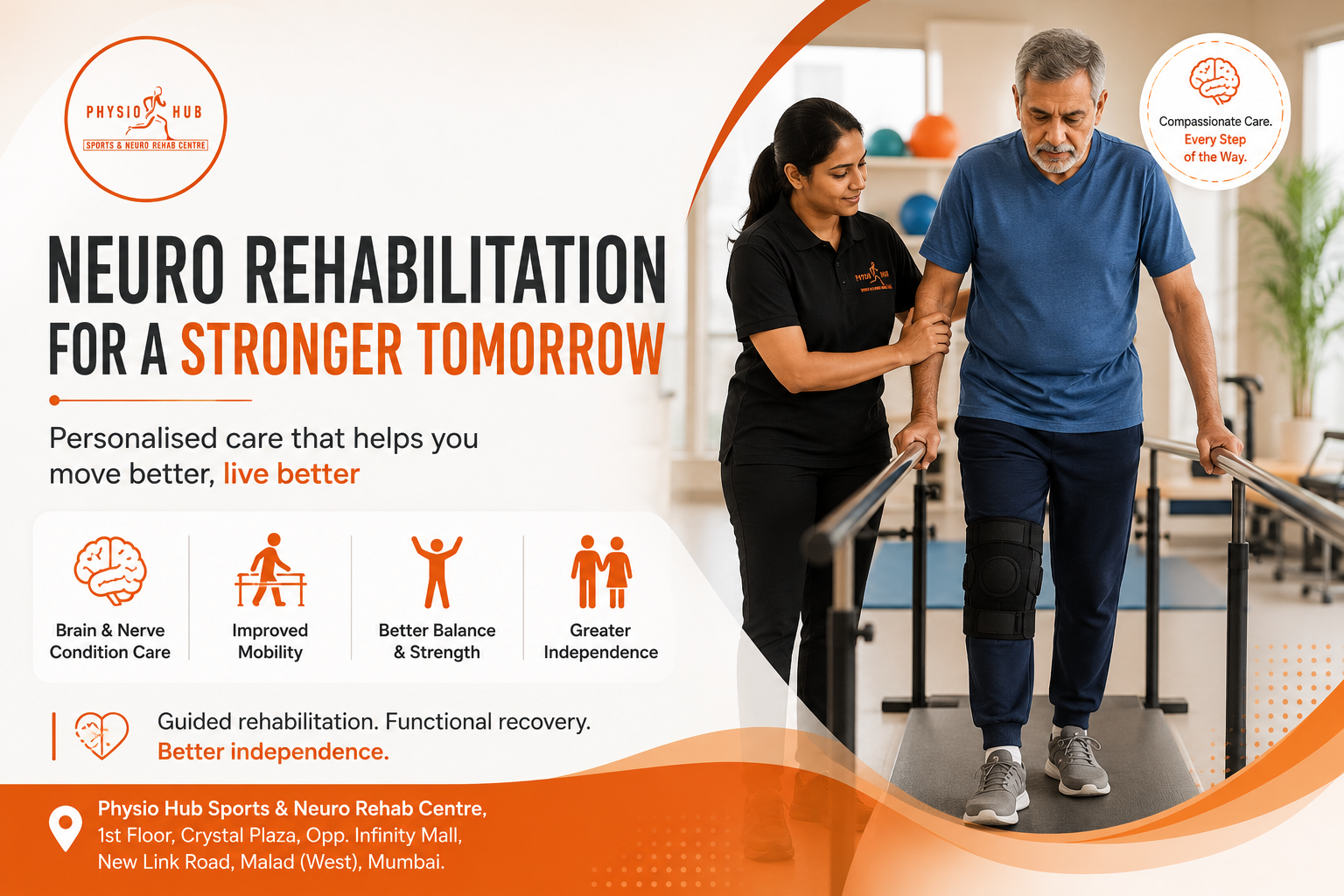
At Physiohub, neuro physiotherapy focuses on improving movement, strength, balance and functional independence through structured therapy approaches. Whether someone is recovering after a stroke, dealing with nerve-related weakness or facing mobility difficulties, the right rehabilitation support can help improve quality of life.
What is Neuro Physiotherapy Assessment?
A neuro physiotherapy assessment evaluates movement, muscle strength, balance, coordination and functional abilities in individuals experiencing neurological challenges. It helps identify specific limitations and creates a personalised rehabilitation plan to improve mobility, independence and daily functioning.
What is Neuro Physiotherapy Assessment?
A neuro physiotherapy assessment is a detailed evaluation process designed for individuals experiencing movement difficulties due to neurological conditions.
The nervous system controls how we move, balance and perform everyday activities. When communication between the brain, spinal cord, nerves and muscles is affected, it may result in weakness, stiffness, poor coordination or difficulty controlling movements.
During an assessment, a physiotheraphy in Malad West studies how these changes are affecting daily activities and identifies areas that need attention.
The assessment may include:
- Muscle strength evaluation
- Balance and coordination testing
- Walking and movement analysis
- Posture assessment
- Range of motion evaluation
- Functional activity assessment
The goal is not only to identify the problem but also to understand how it impacts a person’s routine.
For example, a person recovering from a stroke may struggle with walking independently, while someone with a neurological condition may experience difficulty maintaining balance. A customised rehabilitation approach can address these specific concerns.
Why is a Neuro Physiotherapy Assessment Needed?
Small movement changes can sometimes indicate that the body needs additional support.
A professional assessment can help identify:
- Changes in walking pattern or stability
- Muscle weakness affecting daily activities
- Difficulty maintaining balance
- Reduced coordination
- Stiffness or abnormal muscle tone
- Challenges in performing routine movements
- Reduced confidence while moving independently
Common conditions where neuro physiotherapy may help:
- Stroke rehabilitation
- Parkinson’s disease
- Spinal cord injuries
- Brain injuries
- Multiple sclerosis
- Nerve injuries
- Balance disorders
- Neurological movement problems
Ignoring these changes may make daily activities more challenging over time. Early evaluation allows therapists to understand the condition and provide suitable rehabilitation support.
Neuro physiotherapy helps with:
✓ Improving movement control
✓ Building strength and balance
✓ Supporting recovery after neurological conditions
✓ Enhancing independence in daily activities
How Does Neuro Physiotherapy Assessment Work? Step-by-Step Process
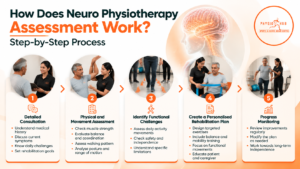
A neuro rehabilitation journey begins with understanding the person’s current abilities and challenges.
1. Detailed Consultation
The physiotherapist first discusses:
- Medical history
- Previous injuries or conditions
- Current symptoms
- Daily movement difficulties
- Personal rehabilitation goals
This helps create a complete picture of the individual’s condition.
2. Physical and Movement Assessment
The therapist evaluates:
- Muscle strength
- Joint movements
- Balance ability
- Coordination
- Walking pattern
- Posture and body control
Every person’s movement pattern is different, so the assessment is personalised.
3. Identifying Functional Challenges
The focus is not only on exercises but also on daily activities.
For example:
- Can the person walk safely?
- Can they climb stairs?
- Can they maintain sitting or standing balance?
- Can they perform regular household activities?
4. Creating a Personalised Rehabilitation Plan
Based on the assessment, the physiotherapist develops a treatment approach that may include:
- Therapeutic exercises
- Balance training
- Mobility exercises
- Strengthening techniques
- Functional movement training
- Patient and caregiver education
5. Progress Monitoring
Recovery goals are reviewed regularly to understand improvement and modify the rehabilitation plan when needed.
Benefits of Neuro Physiotherapy
Neuro physiotherapy focuses on helping individuals regain better control over their movements and improve daily function.
Key benefits include:
- Improved balance and coordination
- Better muscle strength and flexibility
- Enhanced walking ability
- Increased confidence during movement
- Improved functional independence
- Better posture and body control
- Support in returning to daily activities
For many patients and families, rehabilitation is not only about physical improvement. It is also about feeling more confident while performing everyday tasks.
Neuro Physiotherapy vs General Physiotherapy: Understanding the Difference
| Aspect | Neuro Physiotherapy | General Physiotherapy |
|---|---|---|
| Main Focus | Neurological movement challenges | Musculoskeletal injuries and pain |
| Conditions Treated | Stroke, nerve conditions, brain injuries | Back pain, sports injuries, joint problems |
| Assessment | Focuses on balance, coordination and nervous system function | Focuses on muscles, joints and movement patterns |
| Treatment Goal | Improve mobility and independence | Reduce pain and restore physical function |
Both approaches aim to improve movement, but the treatment strategy depends on the individual’s condition.
A specialised neuro physiotherapy in Malad approach is designed for people who require neurological rehabilitation support.
Who Needs a Neuro Physiotherapy Assessment?
A neuro physiotherapy assessment may be suitable for individuals experiencing:
- Difficulty walking independently
- Frequent balance problems
- Weakness on one side of the body
- Reduced coordination
- Changes after stroke
- Difficulty controlling movements
- Muscle stiffness or unusual tightness
- Problems with daily activities due to neurological conditions
Family members may also notice changes before the person experiencing them does.
For example, someone may start avoiding stairs, walking slower than usual or needing extra support during routine tasks. These small changes can be worth discussing with a professional.
A neuro rehab centre in Malad Mumbai can provide specialised evaluation and rehabilitation support based on individual needs.
Cost of Neuro Physiotherapy Assessment: Factors That Influence Pricing
The cost of neuro physiotherapy assessment and rehabilitation can vary depending on:
- Type of neurological condition
- Assessment complexity
- Duration of therapy required
- Treatment frequency
- Rehabilitation goals
- Techniques used during therapy
A detailed evaluation is important because every patient’s requirements are different. The focus should be on receiving appropriate care based on individual needs rather than following a standard approach.
Neuro Physiotherapy Trends in 2026
Neuro rehabilitation is becoming more personalised with advancements in assessment techniques and therapy methods.
Some emerging trends include:
- Greater focus on personalised rehabilitation programs
- Technology-supported movement assessment
- Functional training based on real-life activities
- Early rehabilitation approaches after neurological events
- Increased awareness about preventive care and mobility support
Modern physiotherapy is moving beyond basic exercises. The focus is now on helping individuals regain confidence and independence in everyday life.
Why Choose Physiohub for Neuro Physiotherapy in Malad Mumbai?
Choosing the right rehabilitation centre matters when dealing with movement and neurological challenges.
Physiohub provides personalised physiotherapy services in Malad, Mumbai with a focus on assessment-based treatment planning.
The approach includes:
- Detailed movement evaluation
- Individualised rehabilitation programs
- Advanced physiotherapy techniques
- Patient-focused care
- Guidance for improving daily movement patterns
At Physiohub, treatment is designed around individual movement needs with specialised services like Chiropractor in Malad, Osteopathy in Malad , and neuro rehab centre in Malad Mumbai Whether you are dealing with spinal discomfort, joint mobility issues or recovering after an ACL injury, our personalised approach focuses on improving movement, strength and overall function. Along with Chiropractor in Mumbai, osteopathy in Malad, and sports rehabilitation support, Physiohub helps patients work towards better mobility with expert physiotherapy guidance. For quality physiotherapy in Malad Mumbai, a trusted physiotherapist in Malad West, or a reliable physiotherapist near me in Mumbai, Physiohub provides comprehensive rehabilitation solutions.
Whether you are looking for a physiotherapist in Mumbai, a specialised neuro rehab centre in Mumbai or support for neurological movement challenges, getting the right assessment is an important first step.
FAQs About Neuro Physiotherapy Assessment
1. What does a neuro physiotherapy assessment include?
A neuro physiotherapy assessment includes evaluation of muscle strength, balance, coordination, posture, walking ability and functional movements to understand rehabilitation needs.
2. When should someone visit a neuro physiotherapist?
A person should consider visiting a neuro physiotherapist if they experience balance issues, weakness, difficulty walking, coordination problems or changes in daily movement abilities.
3. Can neuro physiotherapy help after a stroke?
Yes, neuro physiotherapy can support stroke recovery by focusing on improving movement control, strength, balance and independence in daily activities.
4. How long does neuro rehabilitation take?
The duration depends on factors such as the condition, severity, individual progress and rehabilitation goals. A physiotherapist can suggest a suitable plan after assessment.
5. Where can I find a neuro physiotherapist near me in Malad?
If you are looking for a physiotherapist near me { POOJA MEHTA G POST LINK }or neuro rehabilitation support, Physiohub provides assessment and physiotherapy services in Malad Mumbai.
Take the First Step Towards Better Movement
Small changes in movement should not be ignored when they begin affecting everyday life.
A timely assessment can help understand the cause and guide the right rehabilitation approach.
Connect with Physiohub, your trusted physiotherapist in Malad, Mumbai, for personalised neuro physiotherapy assessment and movement support.
Book your consultation today and take a step towards improved mobility and confidence.
For more information contact:
PhysioHub