Plot No. 5, Evershine Nagar, Next To Landmark, Link Road, Malad West
Blog Category

You pick up your phone to answer one message, check social media or finish a work task. A few minutes later, your head is still bent forward, your shoulders feel tight and your neck begins to ache.

This is common among students, office workers, business owners and anyone who spends long hours on screens. The phone itself is not always the only cause. Long screen time, limited movement, weak muscles, stress and poor sleep may all contribute.

A physiotherapist in Malad, Mumbai can help identify why the pain keeps returning. Instead of simply asking you to “sit straight,” the assessment looks at your neck, shoulders, upper back, strength, mobility and daily routine.

At PhysioHub, treatment is personalised because two people with similar neck pain may need different approaches.

Can Excessive Phone Use Cause Neck Pain?
Physiotherapist in malad| Physiohub

Yes, excessive phone use may contribute to neck pain, especially when you look down for long periods without changing position. It can increase fatigue in the neck and shoulder muscles. However, phone use is rarely the only cause. Strength, activity levels, sleep, stress and previous injuries may also influence symptoms.

What Is Phone-Related Neck Pain?

Phone-related neck pain is discomfort that begins or becomes worse after prolonged smartphone use. It is often called “tech neck” or “text neck,” although these are common descriptions rather than formal medical diagnoses.

When you look down, the muscles supporting your head remain active. Holding this position briefly is usually manageable. Staying there for a long time and taking few movement breaks may lead to fatigue and stiffness.

A physiotherapist in Malad, Mumbai will assess how long you remain in one position, how your body moves and whether your muscles have enough endurance for daily demands.

Phone-related neck pain is usually linked to screen time, limited movement, muscle fatigue, stress and individual physical factors—not one “bad” posture alone.

Why Does Your Neck Hurt After Using Your Phone?

Several everyday factors may contribute:

  • Long periods in one position: Even a comfortable posture can become tiring.
  • Repeated downward viewing: Looking towards your lap increases the work done by the muscles behind your neck.
  • Low screen position: Holding your phone near your waist encourages more neck bending.
  • Limited movement breaks: Muscles often feel better when positions change regularly.
  • Weak neck and upper-back muscles: Low endurance can make your neck tire quickly.
  • Upper-back stiffness: A stiff upper back may cause the neck to work harder.
  • Stress and poor sleep: Both may increase tension and pain sensitivity.
  • Previous injury: An old neck or shoulder problem may become irritated.
  • Combined screen exposure: Laptop work followed by phone use increases total static time.

How Does Physiotherapy for Phone-Related Neck Pain Work?

Visiting a physiotherapist in Malad, Mumbai begins with understanding your symptoms and routine.

Step 1: Discussing your symptoms

Your physiotherapist may ask when the pain started, what makes it worse, whether it affects sleep or driving and how much time you spend using your phone or computer.

For example, does your discomfort begin after ten minutes of scrolling, or only after a full day of desk work? These details help identify the activities contributing to your symptoms.

Step 2: Assessing movement

The assessment may include:

  • Neck rotation and bending
  • Upper-back mobility
  • Shoulder movement
  • Shoulder-blade control
  • Muscle strength and endurance
  • Nerve-related symptoms when relevant

The aim is not to force you into one “perfect” posture. It is to identify restrictions, weakness and movements that trigger symptoms.

Step 3: Creating a personalised plan

Depending on the findings, Physiotherapy in Malad may include:

  • Neck and upper-back mobility exercises
  • Neck and shoulder strengthening
  • Shoulder-blade control exercises
  • Movement and posture education
  • Ergonomic changes
  • Manual therapy when appropriate
  • A personalised home exercise programme

Step 4: Building strength and endurance

Your neck may feel comfortable for a few minutes but become painful after several hours. This may be an endurance problem rather than simple muscle tightness.

A physiotherapist in Malad, Mumbai may gradually strengthen your neck, shoulders and upper back so they can manage work, travel and phone use more comfortably.

Step 5: Returning to normal activity

The goal is not to stop using your phone. That would be unrealistic for most people.

Rehabilitation helps you change positions more often, notice early warning signs and build enough physical capacity for work, study and everyday life.

Effective treatment combines assessment, strengthening, mobility work, education and practical changes to daily screen habits.

What Are the Benefits of Physiotherapy for Tech Neck?

Working with a physiotherapist in Malad, Mumbai may help you:

  • Reduce neck and shoulder discomfort
  • Improve neck movement
  • Build muscle strength and endurance
  • Improve upper-back mobility
  • Develop better shoulder control
  • Understand which habits trigger symptoms
  • Return to work and exercise with confidence
  • Reduce dependence on temporary relief
  • Learn exercises suited to your condition
  • Manage discomfort before it becomes more limiting

Physiotherapy is not simply about correcting how you sit. It helps your body become stronger and better prepared for the demands of modern screen use.

Physiotherapy vs Other Options for Phone-Related Neck Pain

Option Main purpose Possible benefit Limitation
Physiotherapy Assessment, exercise and rehabilitation Addresses mobility, strength and habits Requires active participation
Rest Temporarily reduces activity May calm a flare-up Does not build strength
Massage Relaxes tight muscles May provide short-term comfort Relief may not last
Online exercises Offers general movement ideas Convenient and accessible May not suit your condition
Chiropractor in Malad Hands-on care for selected problems Some people prefer manual treatment Requires proper assessment and screening
Osteopathy in Malad Broader movement assessment May support mobility Should not replace medical evaluation
Pain medication Temporary symptom relief May help during a flare-up Does not address movement habits

The right option depends on your symptoms, medical history and personal goals. In many cases, active rehabilitation is more useful than relying only on temporary relief.

Who Needs Physiotherapy for Phone-Related Neck Pain?

You may benefit from consulting a physiotherapist in Malad, Mumbai if:

  • Neck pain keeps returning after phone use
  • Your shoulders feel heavy by evening
  • Pain affects work, study or sleep
  • You struggle to turn your head while driving
  • You experience headaches with neck stiffness
  • Pain travels into the shoulder blade or arm
  • You notice tingling or numbness
  • Home stretches provide only temporary relief
  • Symptoms continue despite changing your phone position

Students, office workers, gamers, drivers, healthcare professionals and content creators may be more likely to experience problems because of prolonged screen use.

How Much Does Neck Pain Physiotherapy Cost in Malad?

The cost of treatment with a physiotherapist in Malad, Mumbai depends on:

  • Severity and duration of symptoms
  • Length of the initial assessment
  • Number of sessions required
  • Type of treatment used
  • Need for specialised rehabilitation
  • Clinic appointments or home sessions
  • Follow-up and exercise progression

Someone with mild stiffness may need a short programme. A person with long-term pain, headaches or arm symptoms may require a more detailed assessment and gradual rehabilitation.

The cheapest session is not always the best value. A clear assessment and practical home programme may help reduce repeated spending on temporary treatments.

What Are the Neck-Pain Physiotherapy Trends in 2026?

Physiotherapy in 2026 is becoming more personalised, active and connected to everyday life.

Less fear around posture

Modern rehabilitation is moving away from the idea that one posture is always harmful. The focus is now on changing positions, improving strength and gradually building tolerance.

More active rehabilitation

Exercise, education and a gradual return to activity are central parts of treatment. Hands-on techniques may still be used, but they are often combined with strengthening and self-management.

Whole-body assessment

A physiotherapist in Malad, Mumbai may assess the upper back, shoulders, work habits, sleep and physical activity instead of looking only at the painful area.

This whole-body approach is important because neck discomfort may be influenced by more than one joint or muscle.

Why Choose PhysioHub in Malad, Mumbai?

PhysioHub begins by listening to your experience. Does the pain start after a few minutes of scrolling, after a long workday or only when you are tired and stressed?

Dr. Pooja Mehta, Sports Physiotherapist, focuses on personalised assessment and practical rehabilitation. Treatment may include mobility work, strengthening, movement correction, hands-on techniques and guided home exercises.

People looking for a physiotherapist in Malad, Mumbai can receive care for neck pain, back pain, sports injuries and post-operative recovery.

PhysioHub also supports patients searching for ACL rehab in Malad or a Sports Physiotherapist in Mumbai. Its wider rehabilitation services may be helpful for people looking for a Neuro rehab centre in Malad or Neuro physio therapy in Malad for movement, balance and walking difficulties.

Whether you are comparing a physiotherapist in Mumbai, a Chiropractor in Malad or osteopathy in Malad, the first step should be a careful assessment based on your symptoms and goals.

Frequently Asked Questions About Phone-Related Neck Pain

1. Can excessive phone use permanently damage your neck?

Phone use does not automatically cause permanent damage. However, long periods without movement may contribute to recurring discomfort, stiffness and muscle fatigue.

2. How should I hold my phone to reduce neck pain?

Bring the screen closer to eye level, support your arms and change position regularly. You do not need to maintain one rigid posture throughout the day.

3. Can a physiotherapist in Malad, Mumbai treat tech neck?

Yes. A physiotherapist in Malad, Mumbai can assess your neck, upper back, shoulders, muscle endurance and screen habits before creating a personalised treatment plan.

4. Are neck stretches enough for phone-related pain?

Not always. Some people need mobility exercises, while others may need strengthening, endurance exercises or changes to their daily routine.

5. When should I see a physiotherapist for neck pain?

Book an assessment when pain keeps returning, affects sleep or work, or occurs with headaches, tingling, numbness or arm discomfort.

Book Your Neck Pain Assessment at PhysioHub

Your phone is an important part of modern life, but neck pain does not have to become part of your routine.

A qualified physiotherapist in Malad, Mumbai can help identify why your symptoms keep returning and guide you through a practical recovery plan.

Book your consultation at PhysioHub Sports Rehab Centre in Malad, Mumbai and take the first step towards more comfortable movement.
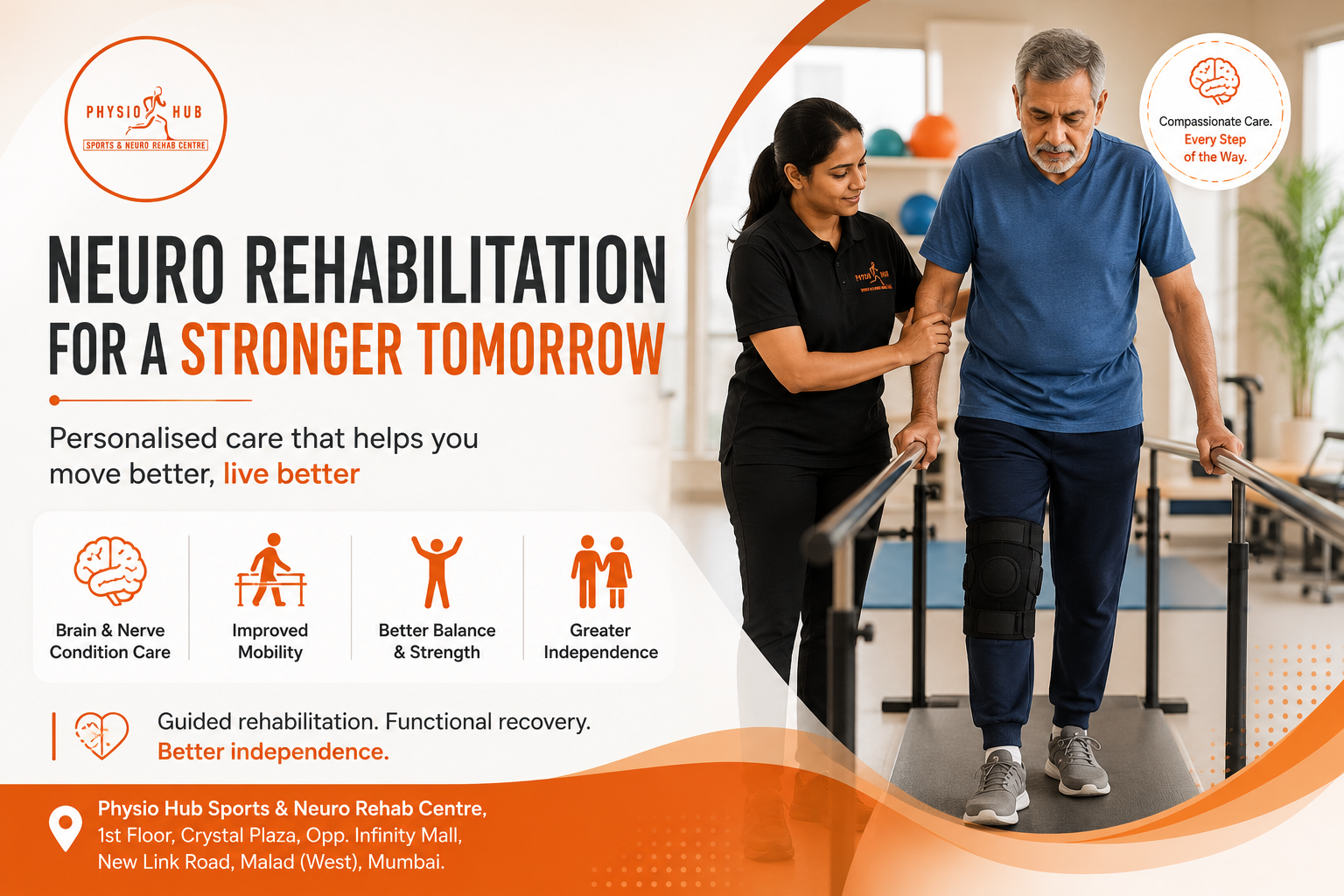
A stroke, brain injury or neurological condition can change daily life in ways that are difficult to prepare for. Simple activities such as sitting up in bed, standing from a chair, walking across a room or holding a cup may suddenly need more effort and support. For families looking for neuro rehabilitation in Malad, the right guidance can help create a safer, more structured path towards improved movement, confidence and everyday independence.

For the patient, this can feel frustrating and exhausting. For the family, it can be equally difficult to watch someone they care about struggle with movements that once felt automatic. Questions often come quickly. Will they walk again? How much support will they need? Are the exercises safe?

Neuro rehabilitation offers a structured and personalised way to work through these challenges. Rather than giving every patient the same routine, treatment focuses on the movements that matter most in that person’s life.

Recovery may not always be fast or predictable. Some days feel encouraging, while others feel slower. Still, regular practice, realistic goals and the right professional guidance can help patients move more safely and work towards greater independence.

 How Does Neuro Rehabilitation Help Patients Regain Independence?

Physiotherapy in malad| Physiohub

Neuro rehabilitation helps people with neurological conditions improve movement, balance, strength, coordination and daily function. A personalised programme may include walking practice, functional exercises, posture training and caregiver guidance, helping patients perform everyday activities more safely and with less assistance.

What Is Neuro Rehabilitation?

Neuro rehabilitation is a structured treatment programme for people whose movement or daily function has been affected by a condition involving the brain, spinal cord or nerves.

It may support people living with or recovering from:

  • Stroke
  • Traumatic brain injury
  • Spinal cord injury
  • Parkinson’s disease
  • Multiple sclerosis
  • Peripheral nerve injuries
  • Balance and coordination disorders
  • Other neurological conditions affecting movement

Rehabilitation is not only about doing exercises. It is about helping a person improve function, reduce limitations and take part in daily life as fully as possible.

A patient recovering from a stroke, for example, may need help learning how to stand safely or use one arm again. Someone with Parkinson’s disease may need support with balance, posture, turning or walking with more confidence.

Even when two people have the same diagnosis, their difficulties may be completely different. One person may struggle to sit without support. Another may be able to walk but feel unsteady while turning or climbing stairs.

That is why treatment should never be based on the diagnosis alone. A personalised assessment helps the physiotherapist understand what the patient can do now, what feels difficult and what matters most in daily life.

 Neuro rehabilitation focuses on meaningful movement. It helps patients practise everyday activities, manage physical limitations and build confidence step by step.

Why Is Neuro Rehabilitation Important?

Neurological conditions can affect much more than muscle strength. They may also change balance, sensation, posture, coordination, walking and confidence.

A person may need neuro rehabilitation because of:

  • Weakness on one side of the body
  • Difficulty sitting or standing independently
  • Poor balance or repeated falls
  • Muscle stiffness or tightness
  • Reduced coordination
  • Difficulty using an arm or hand
  • Changes in walking pattern
  • Fear of movement or falling
  • Dependence during daily activities
  • Reduced stamina after illness or hospitalisation

Imagine wanting to walk to the bathroom but feeling unsure whether your leg will support you. Or needing help every time you want to get out of bed. These challenges can affect confidence just as much as physical ability.

Neuro rehabilitation is important because it gives patients a safe and guided way to practise movement. It can also help prevent people from becoming more inactive because of fear, weakness or stiffness.

When movement is avoided for too long, muscles may become weaker and joints may feel stiffer. Confidence can also drop. The aim of rehabilitation is not to push the patient too hard. It is to help them practise at the right level, with the right amount of support.

How Does Neuro Rehabilitation Work Step by Step?

Step 1: Understanding the Patient’s Condition

The process begins with a conversation.

The physiotherapist asks about the patient’s diagnosis, medical history, symptoms and daily challenges. This is also a chance for the patient and family to explain what has changed since the illness or injury.

The physiotherapist may ask:

  • What activities have become difficult?
  • Does the patient need help at home?
  • Has the patient fallen or nearly fallen?
  • Is there pain, stiffness or fatigue?
  • Which movements matter most to the patient?

These questions help the therapist understand the person behind the diagnosis.

For example, a patient may say, “I want to walk to the kitchen without holding the wall,” or “I want to use my hand while eating.” These personal goals help make rehabilitation more practical and meaningful.

Step 2: Assessing Movement and Functional Ability

The next step is a detailed movement assessment.

A neuro physiotherapist may check:

  • Muscle strength
  • Joint movement
  • Sitting and standing balance
  • Posture
  • Coordination
  • Walking pattern
  • Transfers between bed and chair
  • Ability to use the arms and legs
  • Risk of falling
  • Ability to perform daily activities

The assessment is not about judging the patient. It is about understanding their current abilities and finding the safest place to begin.

A person may be able to stand but need help shifting weight from one leg to the other. Another may have good strength but struggle with balance. These small details guide the treatment plan.

Step 3: Setting Practical Recovery Goals

Goals should feel useful, realistic and connected to daily life.

Examples may include:

  • Sitting without support
  • Standing with less assistance
  • Walking safely inside the home
  • Using the affected hand during meals
  • Managing a step
  • Moving from the bed to a chair
  • Returning to work or social activities

A goal does not always need to be big.

For one patient, walking independently may be the long-term aim. For another, standing safely for 30 seconds may already be a meaningful first step.

When patients are involved in goal setting, they often feel more connected to the rehabilitation process. It gives them something clear to work towards.

Step 4: Creating a Personalised Treatment Plan

Once the assessment is complete, the physiotherapist creates a plan based on the patient’s needs.

The programme may include:

  • Strengthening exercises
  • Balance training
  • Walking and gait practice
  • Posture correction
  • Coordination exercises
  • Functional movement training
  • Flexibility and mobility work
  • Task-specific practice
  • Home exercise guidance
  • Caregiver education

No two plans should look exactly the same.

A patient with weak leg control may focus more on standing and stepping. Someone with poor arm function may spend more time practising reaching, gripping or using the hand during daily tasks.

The plan should also change over time. As the patient improves, the exercises may become more challenging. If fatigue or pain increases, the programme may need to be adjusted.

Step 5: Practising Real-Life Movements

Functional practice is an important part of neuro physiotherapy in Malad.

Rather than doing only isolated exercises, the patient may practise movements that are used in real life.

These may include:

  • Rolling and sitting up in bed
  • Standing from a chair
  • Reaching for an object
  • Walking through a doorway
  • Turning safely
  • Climbing a step
  • Using the affected arm
  • Moving safely in the bathroom or kitchen

Why does this matter?

Because lifting a leg during an exercise is useful, but learning how to place that foot safely while walking may be even more important. Strengthening the arm helps, but using it to hold a spoon or button a shirt may be the real goal.

Rehabilitation becomes more meaningful when the patient can connect the exercise to daily life.

Step 6: Reviewing Progress Regularly

Progress is not always dramatic.

Sometimes it is seen in small but important changes, such as:

  • Needing less physical support
  • Standing for longer
  • Taking more controlled steps
  • Using an affected limb more often
  • Feeling less afraid while moving
  • Completing a daily activity with greater ease

A patient who once needed two people to help them stand may later need only one. Someone who avoided walking may begin taking a few steps with confidence.

These changes deserve to be noticed.

Regular reviews help the physiotherapist understand what is improving, what still needs support and how the exercises should be changed.

Neuro rehabilitation usually includes assessment, goal setting, personalised treatment, real-life movement practice and regular progress reviews.

What Are the Benefits of Neuro Rehabilitation?

A personalised programme may support:

  • Better sitting and standing balance
  • Improved muscle strength
  • Safer walking
  • Better coordination
  • Improved posture and body control
  • Greater confidence during movement
  • Increased participation in daily activities
  • Reduced dependence on caregivers
  • Better understanding of safe movement
  • Practical guidance for family members

The benefits are not limited to what happens inside the clinic.

A patient may begin moving more safely at home. They may need less help getting out of bed, feel more confident walking to the bathroom or start using an affected hand during meals.

Family members may also feel more prepared because they learn how to assist without doing everything for the patient.

Results vary from person to person. The condition, its severity, the patient’s general health and regularity of practice all play a role. In some cases, a chiropractor in Malad may also be consulted as part of a wider movement and pain-management plan, depending on the patient’s condition and medical suitability.

Neuro rehabilitation should not be seen as a quick fix or guaranteed cure. It is a guided process that helps patients work towards practical and realistic improvements.

Neuro Rehabilitation vs General Exercise: What Is the Difference?

Factor Neuro rehabilitation General exercise programme
Main purpose Improve movement affected by a neurological condition Improve general fitness and strength
Assessment Detailed neurological and functional assessment Basic fitness or movement assessment
Exercise selection Based on balance, coordination, tone, weakness and function Usually based on fitness goals
Daily activities Includes task-specific practice May not focus on everyday activities
Progression Adjusted according to neurological response and safety Progressed mainly by repetitions or resistance
Caregiver guidance Often included Usually not included
Supervision Led by a trained rehabilitation professional May be supervised or performed independently

General exercise can be helpful for fitness and overall health. However, it may not address the specific movement problems caused by a neurological condition.

For example, a standard leg exercise may improve strength, but it may not teach a stroke patient how to shift weight safely before taking a step.

This is why patients should not replace a prescribed rehabilitation plan with random online exercises. A movement that is safe for one person may not be suitable for another.

Who Needs Neuro Rehabilitation?

Neuro rehabilitation may be suitable for people who experience movement or functional difficulty following:

  • Stroke
  • Brain injury
  • Spinal cord injury
  • Parkinson’s disease
  • Multiple sclerosis
  • Nerve injury
  • Neurological surgery
  • Prolonged hospitalisation linked to a neurological condition
  • Balance or coordination disorders

An assessment may also be useful when a person has:

  • New or continuing weakness
  • Difficulty walking
  • Repeated loss of balance
  • Muscle stiffness affecting movement
  • Difficulty using one arm or leg
  • Reduced independence at home
  • Fear of falling
  • Trouble completing routine activities

Many families start by searching for  physiotherapy in malad. Location is important, especially when regular sessions are needed, but it should not be the only factor.

The physiotherapist should also take time to assess the patient properly, explain the plan, set realistic goals and review progress regularly.

It is also important to know when physiotherapy is not the first step.

Sudden weakness, facial drooping, speech difficulty, severe dizziness or sudden loss of coordination may be signs of a medical emergency such as a stroke. In such cases, emergency medical care is needed immediately.

How Much Does Neuro Rehabilitation Cost?

The cost of neuro rehabilitation in Malad can vary because every patient needs a different level of care.

Pricing may depend on:

  • Complexity of the neurological condition
  • Length of each session
  • Frequency of treatment
  • One-to-one supervision required
  • Clinic-based or home-based sessions
  • Use of specialised equipment
  • Duration of the rehabilitation programme
  • Need for caregiver training
  • Number of areas requiring treatment
  • Reassessment and progress-tracking requirements

A patient who needs basic balance and strengthening support may have a different plan from someone who requires help with walking, transfers and caregiver training.

Because of this, the total cost is difficult to estimate before an assessment.

Patients and families should ask what is included in the session, how progress will be measured and whether a home programme will be provided.

A clear treatment plan can help families understand both the clinical approach and the expected time commitment.

What Are the Neuro Rehabilitation Trends in 2026?

Neuro rehabilitation in 2026 is becoming more personalised, measurable and connected to daily life.

Greater Use of Data and Outcome Tracking

Clinicians are using more structured assessments and functional goals to track progress.

This means progress may be measured through practical changes, such as how long a person can stand, how safely they can walk or how much help they need during a transfer.

The focus is moving beyond simply counting sessions.

Growth of Telerehabilitation and Hybrid Care

Some rehabilitation programmes now combine in-clinic sessions with remote guidance, home exercise reviews or digital follow-ups.

This can be useful for patients who find travel difficult. However, remote care is not suitable for everyone, especially when hands-on support or close supervision is needed.

Safety and individual suitability remain important.

Wearable Sensors and Movement Technology

Wearable devices may help track walking, joint movement, balance or activity levels.

These tools can provide helpful information, but they do not replace the observation, judgement and encouragement of a trained physiotherapist.

Technology may show how many steps a person takes. A therapist still needs to understand whether those steps are safe and well controlled.

Robotics, Virtual Reality and AI-Assisted Rehabilitation

Robotic devices, virtual reality and AI-supported tools are becoming more visible in neurological rehabilitation.

They may help patients repeat movements, receive feedback and stay engaged during exercises. Still, they are not suitable for every patient or every stage of recovery.

Their use should depend on the patient’s condition, safety, goals and access to trained supervision.

Stronger Focus on Home Independence

Modern rehabilitation is placing more attention on what happens outside the clinic.

Can the patient move safely around the home? Can they get out of bed? Can they use the bathroom with less help? Can the family assist without causing strain?

Treatment may now include home safety advice, caregiver guidance, fatigue management and practice of real-life movements.

 Key trends in 2026 include personalised goal tracking, hybrid care, wearable technology and carefully supervised use of robotics, virtual reality and AI-assisted tools.

Why Choose PhysioHub Sports & Neuro Rehab Centre in Malad?

At PhysioHub Sports & Neuro Rehab Centre, treatment begins by understanding the person, not just the diagnosis.

The team looks at the patient’s movement difficulties, daily routine, safety concerns and personal goals before planning rehabilitation.

A programme may include:

  • Balance and coordination training
  • Guided strengthening
  • Walking practice
  • Posture and movement control
  • Functional activity training
  • Home exercise guidance
  • Education for caregivers
  • Regular progress reviews

The aim is to make rehabilitation practical.

For one patient, this may mean learning to stand more safely. For another, it may mean walking indoors, using an affected hand or feeling less afraid of falling.

Patients searching for a neuro rehab centre in Malad, stroke rehabilitation in Malad or a qualified physiotherapist in Malad can begin with an assessment to understand which areas need attention.

The focus remains on safe movement, realistic goals and personalised support without making unrealistic promises.

Frequently Asked Questions

1. Can neuro rehabilitation help a patient walk again?

Neuro rehabilitation may help patients work on balance, leg strength, weight shifting, posture and stepping. Improvement depends on the diagnosis, severity of the condition, general health and individual response to treatment. A physiotherapist can assess what level of walking practice is safe and realistic.

2. When should neuro physiotherapy begin after a stroke?

Neuro physiotherapy should begin when the medical team confirms that the patient is stable and ready for rehabilitation. The timing and intensity depend on the person’s condition. Early guidance can help patients begin safe movement practice without being pushed beyond their current ability.

3. How long does neuro rehabilitation take?

There is no fixed timeline. Some people may need rehabilitation for a few weeks, while others may need longer support. Progress depends on the neurological condition, treatment goals, general health and consistency with practice. Every recovery journey is different.

4. Can family members help during neuro rehabilitation?

Yes. Family members can encourage regular practice, help maintain a safe environment and follow the physiotherapist’s guidance. They should avoid forcing movements or doing everything for the patient, as this may reduce opportunities for independent practice.

5. How do I choose a neuro physiotherapist near me?

Look for a physiotherapist who carries out a detailed assessment, explains realistic goals, provides a personalised plan and reviews progress regularly. Experience with neurological conditions and caregiver guidance can also be important when choosing a neuro physiotherapist near me.

Take the Next Step Towards Safer Movement

Living with a neurological condition can make everyday movement feel uncertain. Even simple tasks may take longer, and both patients and families may feel unsure about what to do next.

The right assessment can bring clarity.

It can help identify the patient’s current abilities, safety concerns and practical recovery goals. More importantly, it can provide a structured way forward.

For personalised neuro rehabilitation in Malad, connect with PhysioHub Sports & Neuro Rehab Centre and take the next step towards safer movement, greater confidence and better participation in daily life.

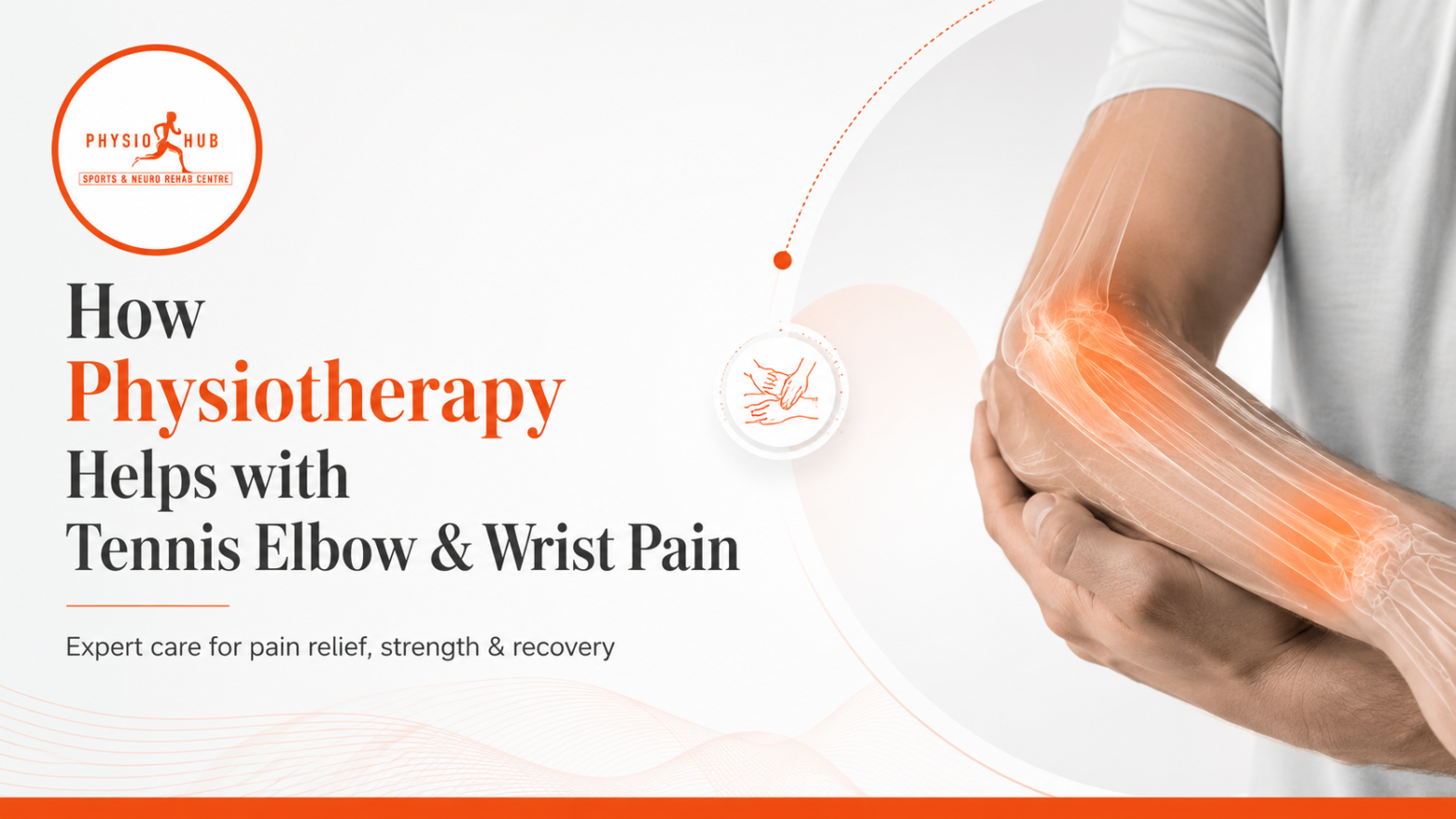
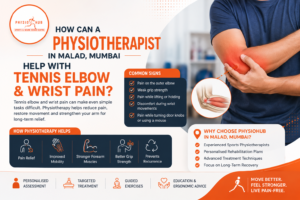
Tennis elbow and wrist pain can make even simple tasks feel difficult. Holding a cup, typing on a laptop, lifting a grocery bag, using a mouse, opening a jar, cooking, driving, or working out can suddenly become painful. If this pain keeps coming back or starts affecting your daily routine, guided Physiotherapy in Malad mumbai with a trusted physiotherapist in Malad, Mumbai can help you understand the cause, reduce strain, and begin the right recovery plan.

Many people feel confused when they hear the term “tennis elbow.” They think, “But I don’t even play tennis.” The truth is, tennis elbow is not limited to tennis players. It can affect office workers, gym-goers, homemakers, chefs, drivers, painters, mechanics, athletes, and anyone who uses the wrist and forearm repeatedly.

In the beginning, the pain may feel mild. You may rest for a day or two, apply a balm, or avoid lifting heavy things. Sometimes it settles. But what if the pain comes back every time you grip, twist, type, or lift?

That is when your elbow and wrist may need proper assessment.

A trusted physiotherapist in Malad, Mumbai can check your elbow, wrist, grip strength, posture, muscle tightness, and daily movement habits to understand the real cause of pain.

At PhysioHub in Malad, Mumbai, treatment focuses on pain relief, tendon loading, strengthening, wrist mobility, posture correction, and safe return to work, sports, and daily activities.

Physiotherapy helps tennis elbow and wrist pain by reducing pain, improving wrist and elbow mobility, strengthening forearm muscles, correcting grip and movement patterns, and guiding activity modification. A physiotherapist also checks posture, shoulder support, and work habits to prevent repeated strain and improve long-term recovery.

What is Tennis Elbow and Wrist Pain?

Physiotherapist in malad| Physiohub

Tennis elbow, also called lateral epicondylitis, is pain around the outer side of the elbow. It usually happens when the forearm muscles and tendons are overloaded. This often occurs during repeated gripping, lifting, twisting, typing, or wrist movements.

Wrist pain may also happen along with tennis elbow. This is because the wrist and elbow work closely together. The muscles that move your wrist and fingers attach near the elbow. When these muscles are strained or overused, pain may show up in both the elbow and wrist.

Common symptoms include:

  • Pain on the outer side of the elbow
  • Pain while gripping objects
  • Wrist pain during typing or lifting
  • Weak grip strength
  • Pain while opening jars or doors
  • Forearm tightness
  • Pain while using a mouse
  • Pain during gym exercises
  • Tenderness around the elbow
  • Stiffness after activity

For example, you may feel pain while lifting a water bottle, holding a pan, shaking hands, or doing bicep curls at the gym. Sometimes even pressing the computer mouse for long hours can irritate the area.

A physiotherapist in Malad, Mumbai helps identify whether the pain is due to tendon overload, muscle weakness, poor wrist posture, repeated strain, shoulder weakness, or poor work ergonomics.

Tennis elbow is outer elbow pain caused by overload of forearm muscles and tendons. Wrist pain can occur because the wrist and elbow muscles work together. Physiotherapy helps reduce strain and rebuild strength.

Why Do Tennis Elbow and Wrist Pain Happen?

Tennis elbow and wrist pain often develop slowly. It may not always be one sudden injury. In many cases, small repeated movements overload the tendons over time.

You may not notice it on the first day. But after weeks of typing, lifting, gripping, cooking, gym training, or using tools, the elbow and wrist can start feeling painful.

Common causes include:

  • Repeated typing or mouse use
  • Excessive gripping
  • Lifting heavy bags or weights
  • Poor gym technique
  • Tennis, badminton, cricket or racquet sports
  • Repeated twisting motions
  • Cooking and chopping for long hours
  • Using tools like screwdrivers or pliers
  • Poor wrist position while working
  • Weak forearm muscles
  • Weak shoulder and upper-back support
  • Sudden increase in workout load
  • Poor posture during desk work
  • Lack of rest between repeated tasks
  • Ignoring early elbow or wrist pain

Think about an office worker who spends long hours on a laptop. The wrist stays in one position, the forearm keeps working, and the shoulder posture slowly changes. After a few weeks, wrist pain may begin.

Or imagine a gym-goer doing pull-ups, deadlifts, or curls with poor grip control. The elbow starts hurting, but they continue training because the pain feels “manageable.” Later, even daily tasks become uncomfortable.

A homemaker may notice pain while lifting utensils, squeezing clothes, chopping vegetables, or carrying grocery bags. A sportsperson may feel pain while holding a racquet or bat.

Does this mean you should completely stop using your hand? Not always. But you may need the right guidance to reduce strain and help the tissues recover safely.

Many people search for Physiotherapy in Malad only after pain affects work, sports, or daily activities. Early assessment can help prevent the pain from becoming chronic.

How Does Physiotherapy for Tennis Elbow and Wrist Pain Work Step by Step?

Physiotherapy for tennis elbow and wrist pain is a structured process. The goal is not only to reduce pain, but also to improve how your elbow, wrist, shoulder, and hand work together.

A good physiotherapy plan looks at the full chain of movement. Why? Because the painful area is not always the only problem.

Step 1: Detailed Pain and Activity Assessment

The physiotherapist first understands your symptoms, routine, and activity pattern.

They may ask:

  • When did the pain start?
  • Is the pain near the elbow, wrist, or forearm?
  • Does it hurt while gripping?
  • Does typing increase pain?
  • Do you play sports?
  • Do you lift weights?
  • Is your grip weak?
  • Does pain affect daily work?
  • Have you had any past injury?
  • Does pain increase in the morning or evening?

These questions help identify what is repeatedly loading the tendon.

For example, pain after typing may need ergonomic correction. Pain during gym training may need grip and load modification. Pain during sports may need technique correction, strengthening, and return-to-play guidance.

Step 2: Elbow, Wrist and Grip Examination

The physiotherapist checks how your elbow, wrist, forearm, shoulder, and hand are functioning.

This may include:

  • Elbow movement
  • Wrist movement
  • Forearm rotation
  • Grip strength
  • Finger strength
  • Tendon tenderness
  • Muscle tightness
  • Shoulder mobility
  • Neck posture
  • Workstation posture
  • Sports or gym movement pattern

Sometimes the wrist hurts because the forearm muscles are overloaded. Sometimes the elbow hurts because the shoulder is weak and the forearm is doing extra work.

For example, if the shoulder blade is not stable during lifting, the elbow and wrist may take extra pressure. If your desk setup keeps the wrist bent for hours, the forearm muscles may stay under strain.

This is why a full assessment matters.

Step 3: Pain Relief and Load Reduction

If pain is high, the first goal is to reduce irritation and make daily tasks easier.

Treatment may include:

  • Activity modification
  • Soft tissue release
  • Gentle manual therapy
  • Taping or brace advice if needed
  • Ice or heat guidance
  • Pain-relieving modalities
  • Gentle mobility exercises
  • Wrist and elbow positioning advice

At this stage, the physiotherapist may suggest reducing painful gripping, changing your mouse position, modifying gym exercises, or using both hands while lifting objects.

This does not mean you have to stop everything. It means the painful tissues need some relief while the body starts healing.

Small changes can help. Holding objects closer to the body, reducing sudden gripping, taking short breaks during typing, or changing your workout load can reduce irritation.

Step 4: Mobility and Stretching Exercises

Once pain starts reducing, gentle movement helps prevent stiffness.

Exercises may include:

  • Wrist flexor stretches
  • Wrist extensor stretches
  • Forearm rotation exercises
  • Elbow range-of-motion exercises
  • Finger mobility exercises
  • Shoulder and upper-back mobility
  • Nerve mobility exercises if needed

These exercises should not cause sharp pain. Mild stretching may feel comfortable, but forceful stretching can irritate symptoms.

A guided plan is safer than doing random exercises online. Every person’s pain pattern is different. What helps one person may not suit another.

Step 5: Strengthening and Tendon Loading

This is one of the most important stages of recovery.

Tennis elbow often needs progressive strengthening. The tendon must slowly learn to tolerate load again. Rest alone may reduce pain for some time, but if the tendon remains weak, pain can return when you start typing, lifting, gripping, or playing again.

Exercises may include:

  • Isometric wrist exercises
  • Eccentric wrist extension exercises
  • Grip strengthening
  • Forearm strengthening
  • Shoulder blade strengthening
  • Upper-back strengthening
  • Functional lifting practice
  • Sports-specific drills

A good physiotherapist in Malad, Mumbai will progress exercises based on your pain, strength, and daily needs.

For example, an office worker may start with gentle forearm strengthening and ergonomic correction. A gym-goer may need gradual grip strengthening and modified pulling exercises. A badminton player may need sport-specific wrist and shoulder control.

Step 6: Return to Work, Gym or Sports

The final step is returning safely to normal activity.

This may include:

  • Desk setup correction
  • Mouse and keyboard advice
  • Grip correction
  • Lifting technique correction
  • Gym exercise modification
  • Racquet or sports technique guidance
  • Load progression
  • Home exercise plan
  • Prevention exercises

This stage helps you return with confidence. You learn what to avoid, what to modify, and how to progress safely.

For many people, this is the most reassuring part of physiotherapy. You do not just recover from pain; you also learn how to prevent it from coming back.

Physiotherapy for tennis elbow and wrist pain includes assessment, pain relief, movement correction, stretching, strengthening, tendon loading, and safe return to work, gym, or sports.

Benefits of Physiotherapy for Tennis Elbow and Wrist Pain

Physiotherapy can help reduce pain and improve your ability to use the hand comfortably again.

It also helps you understand why the pain started and what changes are needed in daily life.

Key benefits include:

  • Reduces elbow and wrist pain
  • Improves grip strength
  • Reduces forearm tightness
  • Improves wrist and elbow mobility
  • Helps with typing and mouse-related pain
  • Supports safe lifting
  • Corrects wrist and forearm posture
  • Helps prevent repeated strain
  • Strengthens forearm muscles
  • Improves shoulder and upper-back support
  • Helps return to gym or sports
  • Reduces dependence on painkillers
  • Provides home exercise guidance
  • Builds confidence in daily activities
  • Supports long-term recovery

For example, an office worker may need workstation correction and forearm strengthening. A gym-goer may need grip modification and load management. A badminton or tennis player may need technique correction and progressive strengthening.

For athletes and active individuals, a Sports Physiotherapist in Mumbai can help with performance-focused rehab and return-to-play planning.

Physiotherapy is not only about reducing pain for a few days. It is about helping your elbow and wrist handle daily load better.

Physiotherapy vs Other Options for Tennis Elbow and Wrist Pain

Option Main Focus Best For Limitation
Physiotherapy Pain relief, tendon loading, strengthening, movement correction Recurring elbow and wrist pain Needs consistency
Rest Reduces short-term irritation Mild early pain Does not rebuild tendon strength
Painkillers Temporary pain control Short-term discomfort Does not correct overload
Brace Reduces strain during activity Selected tennis elbow cases Does not fix weakness alone
Massage Relaxes tight muscles Forearm tightness Relief may be temporary
Steroid injection Short-term pain reduction Selected severe cases Repeated use may weaken tissue
Surgery Structural repair Rare long-term cases Usually considered after failed conservative care

Many people try rest, painkillers, massage, or a brace first. These may help reduce discomfort for a short time. But what happens when pain returns as soon as you start lifting, typing, or gripping again?

That usually means the root cause still needs attention.

Many people also search for a Chiropractor in Malad or osteopathy in Malad when pain is linked to posture, neck stiffness, or upper-limb movement issues. These approaches may help in selected cases after proper assessment.

However, Physiotherapy in Malad is often preferred for tennis elbow and wrist pain because it includes exercise-based recovery, tendon loading, ergonomic correction, and functional strengthening.

Rest may reduce pain for a few days. But if the tendon remains weak, pain can return when you lift, type, grip, or play again.

Who Needs Physiotherapy for Tennis Elbow and Wrist Pain?

You may need physiotherapy if elbow or wrist pain is affecting your work, exercise, sleep, or daily comfort.

You may need physiotherapy if you have:

  • Pain on the outside of the elbow
  • Wrist pain during typing
  • Pain while using a mouse
  • Weak grip strength
  • Pain while lifting a cup or bag
  • Pain while opening jars
  • Pain during gym exercises
  • Pain while playing tennis or badminton
  • Forearm tightness
  • Pain that keeps coming back
  • Difficulty doing daily tasks
  • Numbness or tingling with wrist pain
  • Pain after repetitive work
  • Pain that affects work or sleep

You should get checked early if pain lasts more than a few days, affects grip, or keeps returning after rest.

For example, if opening a bottle hurts every time, or your hand feels weak while lifting a bag, it is better to get assessed. If wrist pain makes typing difficult at work, ignoring it may make recovery slower.

People with sports-related elbow or wrist strain may benefit from a Sports Physiotherapist in Mumbai.

Patients with nerve-related symptoms, weakness, or post-stroke hand issues may need support from a Neuro rehab centre in Malad or Neuro physio therapy in Malad.

A trusted physiotherapist in Mumbai can help decide whether your pain needs basic rehab, sports rehab, ergonomic correction, or advanced assessment.

Cost and Pricing Factors for Tennis Elbow and Wrist Pain Physiotherapy

The cost of physiotherapy for tennis elbow and wrist pain depends on the cause, severity, and recovery goals.

Not every elbow or wrist pain case needs the same treatment plan. Mild early pain may need fewer sessions, while long-standing pain with weak grip may need a more structured rehab program.

Common pricing factors include:

  • Duration of pain
  • Pain severity
  • Grip weakness
  • Wrist stiffness
  • Tendon irritation level
  • Need for manual therapy
  • Need for strengthening program
  • Workstation correction needs
  • Sports or gym rehab needs
  • Number of sessions required
  • Use of modalities
  • Therapist expertise
  • Clinic-based or home-based care
  • Home exercise plan follow-up

For example, mild wrist strain from typing may need fewer sessions. Long-standing tennis elbow with weak grip and repeated pain may need a longer strengthening program.

A person who wants to return to daily work may need a different plan than a sportsperson returning to racquet sports or a gym-goer returning to heavy lifting.

The best way to understand cost is to consult a physiotherapist in Malad, Mumbai for assessment. Once the cause is clear, the therapist can explain the plan and expected session frequency.

Industry Trends in 2026

In 2026, care for tennis elbow and wrist pain is becoming more active, ergonomic, and prevention-focused.

People no longer want only temporary pain relief. They want to keep working, training, playing, and using their hands without fear of pain returning.

Important trends include:

  • Tendon loading programs
  • Grip strength assessment
  • Ergonomic correction for desk workers
  • Sports-specific elbow rehab
  • Gym load management
  • Wearable-supported activity tracking
  • Home exercise monitoring
  • Manual therapy with active rehab
  • Shockwave therapy in selected tendon cases
  • Digital posture and workstation education
  • Prevention-focused physiotherapy

With more people using laptops, phones, and fitness training routines, elbow and wrist pain is being seen in both office workers and active people.

Another trend is patient education. People want to know what they can do at home, how to adjust their desk, and how to return to workouts safely.

The future of rehab is not about saying “stop everything.” It is about modifying load, building strength, improving technique, and returning safely.

In 2026, tennis elbow and wrist pain rehab focuses on tendon loading, ergonomic correction, grip strength, sports rehab, load management, and long-term prevention.

Why Choose PhysioHub as the Best Physiotherapist in Malad, Mumbai?

PhysioHub offers personalized physiotherapy care for tennis elbow, wrist pain, sports injuries, posture-related pain, neuro rehab, and movement recovery in Malad, Mumbai.

If you are looking for a trusted physiotherapist in Malad, Mumbai, PhysioHub provides assessment-based care focused on pain relief, strength, mobility, and long-term recovery.

Why patients choose PhysioHub:

  • Detailed elbow and wrist assessment
  • Personalized treatment plan
  • Pain relief and mobility care
  • Forearm and grip strengthening
  • Ergonomic correction guidance
  • Sports injury rehabilitation
  • Gym injury support
  • Neuro rehabilitation support
  • Patient-friendly care
  • Convenient location in Malad, Mumbai

PhysioHub supports patients looking for Physiotherapy in Malad, physiotherapist in Mumbai, Sports Physiotherapist in Mumbai, Neuro rehab centre in Malad, Neuro physio therapy in Malad, Chiropractor in Malad, osteopathy in Malad, and acl rehab in Malad.

The goal is simple: help you reduce pain, improve grip, move better, and return to work, sports, and daily activities with confidence.

At PhysioHub, the focus is not only on pain relief. The aim is to help you understand your body, correct the cause, and reduce the chances of repeated pain.

FAQs

1. Can physiotherapy help tennis elbow?

Yes. Physiotherapy can help tennis elbow by reducing pain, improving mobility, strengthening forearm muscles, correcting movement patterns, and guiding safe return to daily tasks, gym, or sports.

2. Why does tennis elbow cause wrist pain?

Tennis elbow can cause wrist pain because the forearm muscles that move the wrist and fingers attach near the elbow. When these muscles are overloaded, pain may be felt in both the elbow and wrist.

3. When should I see a physiotherapist for wrist pain?

You should see a physiotherapist if wrist pain lasts more than a few days, affects typing or gripping, causes weakness, keeps returning, or spreads toward the elbow or forearm.

4. Is rest enough for tennis elbow?

Rest may reduce pain temporarily, but it may not rebuild tendon strength or correct the cause. Physiotherapy helps with strengthening, load management, and long-term recovery.

5. Can tennis elbow happen without playing tennis?

Yes. Tennis elbow can happen without playing tennis. It is common in people who do repetitive gripping, typing, lifting, tool use, cooking, gym training, or racquet spo

Elbow or wrist pain should not stop you from working, lifting, typing, cooking, exercising, or enjoying your daily routine.

Visit PhysioHub in Malad, Mumbai and consult a trusted physiotherapist in Malad, Mumbai for tennis elbow, wrist pain, grip weakness, sports rehab, and personalized physiotherapy care.

Book your consultation today and take the first step toward stronger, pain-free movement.

Chronic shoulder pain is a common condition affecting people of all ages, often caused by overuse, injury, or poor posture. It can disrupt daily activities, sports, and work life. Fortunately, treatments like shockwave therapy, physiotherapy machines, and targeted exercises can offer significant relief, restoring mobility and reducing pain.

At Physio Hub, a leading neuro and sports rehab centre in Malad, Mumbai, we specialize in helping individuals manage and recover from shoulder pain. Our approach combines modern techniques with personalized care to ensure optimal recovery.

What is Chronic Shoulder Pain?
neuro and sports rehab centre in malad

Chronic shoulder pain refers to long-lasting pain that persists for several weeks or months. It can stem from various causes such as muscle strain, rotator cuff injuries, or shoulder impingement. Typically, shoulder pain becomes chronic when the underlying issue is not addressed properly, leading to persistent inflammation and reduced mobility.

Key facts about chronic shoulder pain:

  • Duration: Typically lasts more than 3 months.
  • Common causes: Overuse, injury, poor posture, and muscle imbalances.
  • Result: Reduced shoulder movement, stiffness, and persistent discomfort.

Treatment options like shockwave therapy, physiotherapy machines, and exercise regimens can provide relief and help restore normal shoulder function. At Physio Hub, we use these therapies to treat shoulder conditions effectively.

Who Needs Chronic Shoulder Pain Treatment?

Chronic shoulder pain can affect anyone, but certain groups are more prone to it:

  • Athletes: Sports like tennis, cricket, swimming, and weightlifting can put excessive strain on the shoulder.
  • Housewives: Repetitive tasks like lifting heavy objects or reaching overhead can cause shoulder issues.
  • Office workers: Sitting for prolonged hours with poor posture or repetitive arm movements can lead to shoulder discomfort.
  • Seniors: Age-related wear and tear on shoulder joints increases the risk of chronic pain.

If you experience any of the following, you may benefit from treatment:

  • Persistent pain or discomfort in the shoulder
  • Difficulty reaching overhead or lifting objects
  • Stiffness in the shoulder joint
  • Pain that interferes with daily activities or sports

Symptoms / Causes of Chronic Shoulder Pain

Understanding the symptoms and causes of shoulder pain is key to finding the right treatment. Some of the common symptoms include:

Symptoms of Chronic Shoulder Pain

  • Persistent aching or sharp pain in the shoulder
  • Limited range of motion
  • Pain when raising the arm overhead
  • Tenderness or swelling around the shoulder joint
  • Discomfort during or after physical activity

Causes of Shoulder Pain

  • Rotator cuff injuries: Damage to the tendons or muscles around the shoulder.
  • Frozen shoulder: Stiffness and pain restricting movement.
  • Tendinitis: Inflammation of the shoulder tendons.
  • Shoulder impingement: Compression of the tendons or bursa in the shoulder joint.
  • Bursitis: Inflammation of the fluid-filled sacs in the shoulder.

At Physio Hub, our sports physiotherapy in Malad focuses on identifying the root cause of the pain, so we can provide an effective treatment plan tailored to your needs.

Benefits of Shockwave Therapy, Physiotherapy Machines, and Exercises
make image of this describtion add no text

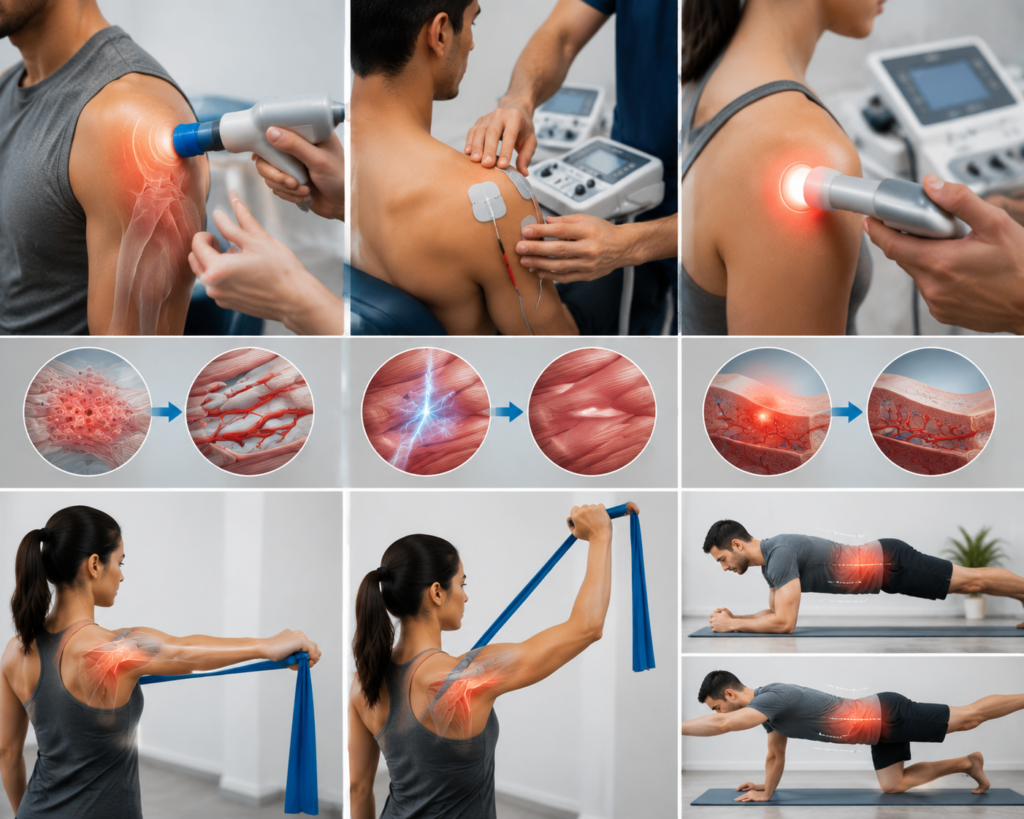
Here’s how shockwave therapy, physiotherapy machines, and exercises work together to help cure chronic shoulder pain:

Shockwave Therapy

  • Non-invasive treatment that uses sound waves to reduce pain and promote healing in damaged tissues.
  • Stimulates blood flow, accelerating tissue repair.
  • Breaks down scar tissue and adhesions, improving mobility.
  • Reduces inflammation and muscle tightness.

Physiotherapy Machines

  • Machines like ultrasound therapy, electrotherapy, and laser therapy help in pain reduction and muscle relaxation.
  • Electrotherapy uses electrical impulses to relieve muscle spasms and enhance tissue healing.
  • Laser therapy promotes healing by increasing blood flow and reducing inflammation in the affected area.

Targeted Shoulder Exercises

  • Strengthening exercises for the rotator cuff muscles help stabilize the shoulder joint.
  • Stretching exercises improve range of motion and reduce stiffness.
  • Core-strengthening exercises reduce the burden on the shoulder joint by improving overall posture and muscle balance.

Procedure Explained Initial Assessment:

1. At Physio Hub,
our physiotherapists conduct a thorough assessment of your shoulder pain, identifying the root cause and designing a personalized treatment plan.

      2.Shockwave Therapy:

A gel is applied to the affected area, and a handheld device emits high-frequency sound waves to stimulate healing. This session typically lasts 15-20 minutes.

      3.Physiotherapy Machine Treatment:

Sessions may include electrotherapy or laser therapy, each lasting about 20-30 minutes, depending on the severity of the pain.

      4.Exercise Plan:

We provide a customized exercise routine designed to target specific muscles, improve shoulder mobility, and prevent future injuries. The plan is designed for at-home and in-clinic rehabilitation.

Recovery Time

The recovery time for chronic shoulder pain treatment varies depending on the severity of the condition and the therapy used:

  • Shockwave therapy: Most patients feel relief after 2-3 sessions, but full recovery may take 4-6 weeks.
  • Physiotherapy machines: Typically, patients notice significant improvements within 2-3 weeks of consistent treatment.
  • Exercise rehabilitation: Regular exercise can improve strength and mobility in 2-4 weeks, but full recovery may take 6-8 weeks.

Cost of Shoulder Pain Treatment in Malad

The cost of chronic shoulder pain treatment in Malad varies depending on the type of treatment chosen. Below is an estimate:

  • Shockwave Therapy: ₹1,500 – ₹3,000 per session.
  • Physiotherapy Sessions: ₹800 – ₹1,500 per session.
  • Complete Rehabilitation Package: ₹8,000 – ₹15,000 for a 5-10 session plan.

The total cost will depend on the specific therapies recommended by your physiotherapist.

Comparison: Physiotherapy vs Surgery

Treatment Benefits Downsides
Physiotherapy Non-invasive, promotes natural healing, less expensive Requires consistent effort, may take time
Surgery Provides fast relief for severe cases Expensive, involves recovery time, potential risks

In most cases, physiotherapy is the preferred option, as it is less invasive and offers long-term benefits without the risks of surgery.

Risks or Safety

  • Shockwave therapy is generally safe but may cause mild discomfort during treatment. It should not be used on individuals with certain conditions like blood clot disorders or pregnancy.
  • Physiotherapy and exercise treatments are also safe, but it’s important to follow the prescribed regimen to avoid strain or injury.
  • Chiropractor care may also help with shoulder pain, but it should be used in combination with other treatments to achieve optimal results.

FAQs

1. How does shockwave therapy help with shoulder pain?

Shockwave therapy uses high-frequency sound waves to stimulate healing, reduce inflammation, and break down scar tissue in the shoulder.

2. Is physiotherapy effective for shoulder pain?

Yes, physiotherapy can effectively treat shoulder pain by improving mobility, strengthening muscles, and addressing postural issues.

3. How long does it take to recover from shoulder pain?

Recovery time varies, but with proper treatment (shockwave therapy, physiotherapy, and exercises), significant improvements can be seen in 4-6 weeks.

4. Can I avoid surgery for chronic shoulder pain?

Yes, most shoulder pain can be managed with physiotherapy and shockwave therapy, which may eliminate the need for surgery.

Conclusion: Book Your Shoulder Pain Treatment Today!

Chronic shoulder pain can significantly impact your quality of life. But with the right treatment at Physio Hub, you can get back to pain-free movement. Whether through shockwave therapy, physiotherapy machines, or targeted exercises, we offer comprehensive solutions tailored to your needs.

If you’re searching for the best physiotherapy for shoulder pain, book a consultation with us today and start your journey to recovery!

Book Your Appointment Now at Physio Hub Malad!