
Plot No. 5, Evershine Nagar, Next To Landmark, Link Road, Malad West
Blog Category

Have you noticed small changes in your movement lately? Maybe walking feels slightly different, your balance is not as steady as before or simple daily tasks require more effort than they used to.

Many people ignore these signs thinking they are temporary. But when changes in strength, coordination or mobility start affecting daily life, getting the right guidance early can make a meaningful difference.

Neurological conditions, injuries or health changes can impact how the brain, nerves and muscles communicate with each other. This can lead to difficulty with walking, maintaining balance, controlling movements or performing routine activities.

A detailed assessment by a physiotherapist in Malad Mumbai can help understand the reason behind these challenges and create a personalised rehabilitation plan.

At Physiohub, neuro physiotherapy focuses on improving movement, strength, balance and functional independence through structured therapy approaches. Whether someone is recovering after a stroke, dealing with nerve-related weakness or facing mobility difficulties, the right rehabilitation support can help improve quality of life.

What is Neuro Physiotherapy Assessment?

A neuro physiotherapy assessment evaluates movement, muscle strength, balance, coordination and functional abilities in individuals experiencing neurological challenges. It helps identify specific limitations and creates a personalised rehabilitation plan to improve mobility, independence and daily functioning.


What is Neuro Physiotherapy Assessment?

A neuro physiotherapy assessment is a detailed evaluation process designed for individuals experiencing movement difficulties due to neurological conditions.

The nervous system controls how we move, balance and perform everyday activities. When communication between the brain, spinal cord, nerves and muscles is affected, it may result in weakness, stiffness, poor coordination or difficulty controlling movements.

During an assessment, a physiotheraphy in Malad West   studies how these changes are affecting daily activities and identifies areas that need attention.

The assessment may include:

  • Muscle strength evaluation
  • Balance and coordination testing
  • Walking and movement analysis
  • Posture assessment
  • Range of motion evaluation
  • Functional activity assessment

The goal is not only to identify the problem but also to understand how it impacts a person’s routine.

For example, a person recovering from a stroke may struggle with walking independently, while someone with a neurological condition may experience difficulty maintaining balance. A customised rehabilitation approach can address these specific concerns.


Why is a Neuro Physiotherapy Assessment Needed?

Small movement changes can sometimes indicate that the body needs additional support.

A professional assessment can help identify:

  • Changes in walking pattern or stability
  • Muscle weakness affecting daily activities
  • Difficulty maintaining balance
  • Reduced coordination
  • Stiffness or abnormal muscle tone
  • Challenges in performing routine movements
  • Reduced confidence while moving independently

Common conditions where neuro physiotherapy may help:

  • Stroke rehabilitation
  • Parkinson’s disease
  • Spinal cord injuries
  • Brain injuries
  • Multiple sclerosis
  • Nerve injuries
  • Balance disorders
  • Neurological movement problems

Ignoring these changes may make daily activities more challenging over time. Early evaluation allows therapists to understand the condition and provide suitable rehabilitation support.

Neuro physiotherapy helps with:

✓ Improving movement control
✓ Building strength and balance
✓ Supporting recovery after neurological conditions
✓ Enhancing independence in daily activities


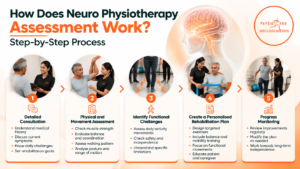
How Does Neuro Physiotherapy Assessment Work? Step-by-Step Process
neuro- physiotherapist | Physiohub

A neuro rehabilitation journey begins with understanding the person’s current abilities and challenges.

1. Detailed Consultation

The physiotherapist first discusses:

  • Medical history
  • Previous injuries or conditions
  • Current symptoms
  • Daily movement difficulties
  • Personal rehabilitation goals

This helps create a complete picture of the individual’s condition.

2. Physical and Movement Assessment

The therapist evaluates:

  • Muscle strength
  • Joint movements
  • Balance ability
  • Coordination
  • Walking pattern
  • Posture and body control

Every person’s movement pattern is different, so the assessment is personalised.

3. Identifying Functional Challenges

The focus is not only on exercises but also on daily activities.

For example:

  • Can the person walk safely?
  • Can they climb stairs?
  • Can they maintain sitting or standing balance?
  • Can they perform regular household activities?

4. Creating a Personalised Rehabilitation Plan

Based on the assessment, the physiotherapist develops a treatment approach that may include:

  • Therapeutic exercises
  • Balance training
  • Mobility exercises
  • Strengthening techniques
  • Functional movement training
  • Patient and caregiver education

5. Progress Monitoring

Recovery goals are reviewed regularly to understand improvement and modify the rehabilitation plan when needed.


Benefits of Neuro Physiotherapy

Neuro physiotherapy focuses on helping individuals regain better control over their movements and improve daily function.

Key benefits include:

  • Improved balance and coordination
  • Better muscle strength and flexibility
  • Enhanced walking ability
  • Increased confidence during movement
  • Improved functional independence
  • Better posture and body control
  • Support in returning to daily activities

For many patients and families, rehabilitation is not only about physical improvement. It is also about feeling more confident while performing everyday tasks.


Neuro Physiotherapy vs General Physiotherapy: Understanding the Difference

Aspect Neuro Physiotherapy General Physiotherapy
Main Focus Neurological movement challenges Musculoskeletal injuries and pain
Conditions Treated Stroke, nerve conditions, brain injuries Back pain, sports injuries, joint problems
Assessment Focuses on balance, coordination and nervous system function Focuses on muscles, joints and movement patterns
Treatment Goal Improve mobility and independence Reduce pain and restore physical function

Both approaches aim to improve movement, but the treatment strategy depends on the individual’s condition.

A specialised neuro physiotherapy in Malad approach is designed for people who require neurological rehabilitation support.


Who Needs a Neuro Physiotherapy Assessment?

A neuro physiotherapy assessment may be suitable for individuals experiencing:

  • Difficulty walking independently
  • Frequent balance problems
  • Weakness on one side of the body
  • Reduced coordination
  • Changes after stroke
  • Difficulty controlling movements
  • Muscle stiffness or unusual tightness
  • Problems with daily activities due to neurological conditions

Family members may also notice changes before the person experiencing them does.

For example, someone may start avoiding stairs, walking slower than usual or needing extra support during routine tasks. These small changes can be worth discussing with a professional.

A neuro rehab centre in Malad Mumbai can provide specialised evaluation and rehabilitation support based on individual needs.


Cost of Neuro Physiotherapy Assessment: Factors That Influence Pricing

The cost of neuro physiotherapy assessment and rehabilitation can vary depending on:

  • Type of neurological condition
  • Assessment complexity
  • Duration of therapy required
  • Treatment frequency
  • Rehabilitation goals
  • Techniques used during therapy

A detailed evaluation is important because every patient’s requirements are different. The focus should be on receiving appropriate care based on individual needs rather than following a standard approach.


Neuro Physiotherapy Trends in 2026

Neuro rehabilitation is becoming more personalised with advancements in assessment techniques and therapy methods.

Some emerging trends include:

  • Greater focus on personalised rehabilitation programs
  • Technology-supported movement assessment
  • Functional training based on real-life activities
  • Early rehabilitation approaches after neurological events
  • Increased awareness about preventive care and mobility support

Modern physiotherapy is moving beyond basic exercises. The focus is now on helping individuals regain confidence and independence in everyday life.


Why Choose Physiohub for Neuro Physiotherapy in Malad Mumbai?

Choosing the right rehabilitation centre matters when dealing with movement and neurological challenges.

Physiohub provides personalised physiotherapy services in Malad, Mumbai with a focus on assessment-based treatment planning.

The approach includes:

  • Detailed movement evaluation
  • Individualised rehabilitation programs
  • Advanced physiotherapy techniques
  • Patient-focused care
  • Guidance for improving daily movement patterns

At Physiohub, treatment is designed around individual movement needs with specialised services like Chiropractor in Malad, Osteopathy in Malad , and neuro rehab centre in Malad Mumbai  Whether you are dealing with spinal discomfort, joint mobility issues or recovering after an ACL injury, our personalised approach focuses on improving movement, strength and overall function. Along with Chiropractor in Mumbai, osteopathy in Malad, and sports rehabilitation support, Physiohub helps patients work towards better mobility with expert physiotherapy guidance. For quality physiotherapy in Malad Mumbai, a trusted physiotherapist in Malad West, or a reliable physiotherapist near me in Mumbai, Physiohub provides comprehensive rehabilitation solutions.

Whether you are looking for a physiotherapist in Mumbai, a specialised neuro rehab centre in Mumbai or support for neurological movement challenges, getting the right assessment is an important first step.


FAQs About Neuro Physiotherapy Assessment

1. What does a neuro physiotherapy assessment include?

A neuro physiotherapy assessment includes evaluation of muscle strength, balance, coordination, posture, walking ability and functional movements to understand rehabilitation needs.

2. When should someone visit a neuro physiotherapist?

A person should consider visiting a neuro physiotherapist if they experience balance issues, weakness, difficulty walking, coordination problems or changes in daily movement abilities.

3. Can neuro physiotherapy help after a stroke?

Yes, neuro physiotherapy can support stroke recovery by focusing on improving movement control, strength, balance and independence in daily activities.

4. How long does neuro rehabilitation take?

The duration depends on factors such as the condition, severity, individual progress and rehabilitation goals. A physiotherapist can suggest a suitable plan after assessment.

5. Where can I find a neuro physiotherapist near me in Malad?

If you are looking for a physiotherapist near me { POOJA MEHTA G POST LINK }or neuro rehabilitation support, Physiohub provides assessment and physiotherapy services in Malad Mumbai.


Take the First Step Towards Better Movement

Small changes in movement should not be ignored when they begin affecting everyday life.

A timely assessment can help understand the cause and guide the right rehabilitation approach.

Connect with Physiohub, your trusted physiotherapist in Malad, Mumbai, for personalised neuro physiotherapy assessment and movement support.

Book your consultation today and take a step towards improved mobility and confidence.

For more information contact:

PhysioHub

Can Physiotherapy Help Balance Problems? For many people, the answer depends on what is causing the unsteadiness in the first place. Feeling unstable while walking, stumbling often, or worrying about falling can slowly affect confidence and independence. These issues may be linked to muscle weakness, reduced coordination, joint stiffness, neurological conditions, or changes in walking patterns.Balance problems can happen because of muscle weakness, reduced coordination, joint stiffness, neurological conditions, or changes in walking patterns. If you are looking for a Physiotherapist in Malad Mumbai for Balance Problems, an assessment can help identify what is affecting your stability and movement.

Balance problems are not always caused by age alone. Muscle weakness, reduced coordination, joint stiffness, poor vision, nerve problems, neurological conditions, medication effects, and changes in walking patterns can all contribute.

Globally, falls remain a major health concern. The World Health Organization estimates that around 37.3 million falls each year are serious enough to require medical attention, with adults over 60 experiencing the greatest number of fatal falls.

Working with a physiotherapist in Malad, Mumbai can help identify the movement-related factors affecting your stability. At PhysioHub, rehabilitation is planned around the individual rather than using the same set of exercises for everyone.

The goal is simple: help you move with more control, confidence, and independence.

 Can Physiotherapy Help With Balance Problems and Frequent Falls?

Yes. Physiotherapy can help people with balance problems by assessing strength, walking, coordination, mobility, and movement control. Treatment may include balance exercises, strengthening, gait training, functional exercises, and neurological rehabilitation. The exact programme depends on the cause of the balance problem, the person’s abilities, and their individual rehabilitation goals.

What is Balance Rehabilitation for Frequent Falls?

Balance rehabilitation is a structured physiotherapy approach designed to improve the way your body controls movement while standing, walking, turning, reaching, or changing direction.

Good balance depends on several systems working together. Your muscles need enough strength to support your body, while your joints require good mobility for controlled movement. At the same time, the brain and nerves process information from the eyes, inner ear, and body position to help maintain balance.

When one or more of these systems are affected, a person may feel unstable.

A physiotherapist in Malad, Mumbai may therefore assess more than whether you can simply “stand on one leg.” The assessment can look at walking speed, turning, lower-limb strength, coordination, posture, reaction to movement, and your confidence during everyday activities.

For people living with neurological conditions, Neuro physiotherapy in Malad may also focus on retraining movement patterns and improving functional independence.

What Causes Balance Problems and Frequent Falls?

There is rarely one reason that applies to everyone. Common factors include:

  • Weakness in the legs, hips, or core muscles
  • Reduced ankle or hip mobility
  • Difficulty coordinating movements
  • Changes after a stroke or neurological condition
  • Parkinson’s disease and other movement disorders
  • Peripheral nerve problems
  • Reduced sensation in the feet
  • Poor posture or altered walking patterns
  • Joint pain that changes the way a person walks
  • Vision or inner-ear problems
  • Fear of falling after a previous fall
  • Reduced activity following illness, surgery, or prolonged bed rest
  • Certain medicines or multiple medical conditions

Current NICE guidance recommends considering factors such as gait, balance, mobility, muscle strength, neurological findings, vision, hearing, medication, footwear, long-term conditions, and concerns about falling when a comprehensive falls assessment is required.

This matters because giving everyone the same “balance exercises” may miss the actual reason they are struggling.

Imagine someone who feels fine walking straight ahead but becomes unsteady whenever they turn quickly. Another person may struggle mainly when getting out of a chair. Their rehabilitation needs may be very different.

How Does Physiotherapy for Balance Problems Work?

Physiotherapist in malad mumbai | Physiohub

Treatment usually starts with understanding why you are losing balance.

Step 1: Discuss your symptoms and fall history

Your physiotherapist may ask:

  • When did the balance problem begin?
  • Have you fallen recently?
  • Do you feel dizzy or simply unstable?
  • Does the problem happen indoors, outdoors, or on stairs?
  • Are you recovering from a stroke or another neurological condition?
  • Has your confidence in walking changed?

Even a fall that did not cause an injury can be worth discussing.

Step 2: Assess your movement

The assessment may include:

  • Walking pattern
  • Standing balance
  • Lower-limb strength
  • Joint mobility
  • Coordination
  • Transfers such as sitting to standing
  • Turning and changing direction
  • Ability to step over obstacles
  • Functional activities related to your daily routine

If neurological symptoms are present, a Neuro rehab centre in Malad may provide a more focused assessment of movement control and functional ability.

Step 3: Identify the main problems

For one person, weak hip muscles may be a major factor. For another, the challenge may be coordination after a stroke.

Understanding the cause allows rehabilitation to become more specific.

Step 4: Begin progressive exercises

Exercises may include:

  • Supported standing activities
  • Weight shifting
  • Stepping exercises
  • Strength training
  • Walking practice
  • Direction changes
  • Coordination exercises
  • Functional tasks
  • Controlled obstacle practice

Modern falls guidance supports progressive exercise programmes tailored to a person’s abilities and goals, with attention to balance, coordination, strength, and power.

Step 5: Gradually increase difficulty

Holding onto a support may be appropriate at first. As control improves, the task may be progressed safely.

The goal is not to perform complicated exercises for the sake of it. The goal is to make daily movement easier and safer. Balance rehabilitation usually involves assessment, identifying the cause of instability, targeted exercises, walking practice, and regular progression. The programme should match the person’s condition, confidence, and everyday movement needs.

What Are the Benefits of Physiotherapy for Balance Problems?

A personalised Physiotherapy in Malad programme may help with:

  • Improving leg and core strength
  • Developing better standing control
  • Improving coordination
  • Practising safer walking
  • Building confidence while turning or changing direction
  • Improving sit-to-stand movements
  • Practising stairs and everyday tasks
  • Improving mobility after neurological conditions
  • Reducing fear around movement
  • Supporting greater independence

One important benefit is confidence.

Someone who has fallen before may begin avoiding activity because they are worried it will happen again. But less movement can sometimes lead to further weakness.

Professional rehabilitation can create a safer environment to gradually rebuild movement confidence rather than simply telling someone to “be more careful.”

Physiotherapy vs Other Options for Balance Problems

Different treatments serve different purposes.

Approach Main Focus When It May Be Considered
Physiotherapy Strength, balance, walking and functional movement Weakness, reduced mobility, altered gait and movement problems
Neuro physiotherapy Movement affected by neurological conditions Stroke, Parkinson’s disease and other neurological problems
Medical assessment Identifying medical causes New symptoms, unexplained falls, dizziness or medication-related concerns
Occupational therapy Daily activities and home safety Difficulty managing daily tasks or environmental fall risks
Chiropractic care Mainly musculoskeletal assessment and management Selected joint or mechanical musculoskeletal concerns
Osteopathy Musculoskeletal assessment and manual approaches Selected mobility and musculoskeletal problems

A Chiropractor in Malad,Mumbai or osteopathy in Malad may be appropriate for certain musculoskeletal concerns, but they are not automatically substitutes for neurological or falls assessment.

Similarly, a Sports Physiotherapist in Mumbai may be especially relevant when balance or movement problems are related to a sports injury rather than a neurological condition.

The right approach depends on what is actually causing the problem.

Who Needs Physiotherapy for Balance Problems?

Consider an assessment if you or a family member:

  • Has fallen more than once
  • Frequently trips or stumbles
  • Feels unstable while walking
  • Needs furniture or walls for support
  • Has difficulty turning quickly
  • Feels unsure on stairs
  • Has become weaker after hospitalisation
  • Has reduced mobility after stroke
  • Has Parkinson’s disease or another neurological condition
  • Avoids going outside because of fear of falling
  • Has difficulty standing up from a chair
  • Has noticed a major change in walking

The 2025 NICE falls guideline recommends comprehensive assessment for certain higher-risk people, including those with two or more falls in the previous year, and gait and balance assessment when impairment is present

However, sudden severe balance problems should not simply be treated as a physiotherapy issue. New one-sided weakness, facial drooping, speech difficulty, loss of consciousness, sudden severe headache, or sudden inability to walk requires urgent medical evaluation.

How Much Does Balance Physiotherapy Cost in Malad?

There is no single price that applies to every patient because rehabilitation needs can differ considerably.

Pricing may depend on:

  • Initial assessment duration
  • Complexity of the condition
  • Whether neurological rehabilitation is required
  • Length of each session
  • Frequency of treatment
  • Need for specialised equipment
  • Home-based versus clinic-based sessions
  • Duration of the rehabilitation programme

For example, someone with mild weakness after a period of inactivity may need a very different plan from someone recovering from a stroke.

A consultation with a physiotherapist in Malad, Mumbai can help determine the type and likely frequency of rehabilitation before committing to a longer programme.

Treatment packages should ideally follow an assessment rather than being chosen only by session count.

What Are the Balance Rehabilitation Trends in 2026?

Balance rehabilitation is becoming increasingly personalised rather than relying only on general exercise sheets.

1. More objective movement tracking

Wearable devices and movement sensors are being explored for monitoring mobility, balance, and fall-related movement patterns.

A 2026 review of fall-detection and prevention technologies highlighted growing use of wearable and environmental sensors for fall-related monitoring

2. Wearable feedback during rehabilitation

Research published in 2025 also described smart wearable systems that can provide movement data and real-time feedback during balance rehabilitation, although accessibility, accuracy, and cost remain important considerations.

3. More individualised exercise plans

Current clinical guidance emphasises progressive exercise based on a person’s specific needs, preferences, abilities, and goals rather than using the same programme for everyone

4. Greater focus on real-life movement

Modern rehabilitation increasingly connects exercises with daily tasks—getting out of a chair, turning, walking outdoors, climbing steps, or navigating obstacles.

Technology can support rehabilitation, but it does not replace clinical assessment. The person’s needs still come first.

Why Choose PhysioHub in Malad, Mumbai?

At PhysioHub, balance rehabilitation begins by understanding the person behind the symptoms.

Someone recovering after a stroke may want to walk independently around their home again. An older adult may simply want to feel confident visiting the market without worrying about falling. These goals matter because rehabilitation should connect with real life.

PhysioHub provides access to Physiotherapy in Malad and neurological rehabilitation with treatment plans based on assessment, movement ability, and individual goals.

Patients looking for a Neuro rehab centre in Malad , Mumbai or Neuro physio therapy in Malad can receive structured rehabilitation focused on mobility, strength, coordination, walking, and functional independence.

PhysioHub also provides broader rehabilitation services for people searching for a physiotherapist in Mumbai, including sports rehabilitation and ACL rehab in Malad,Mumbai  Where appropriate for separate musculoskeletal concerns, services such as a Chiropractor in Malad and osteopathy in Malad, Mumbai may form part of a broader care approach.

The aim is not simply to complete exercises. It is to help patients use those improvements when standing, walking, working, exercising, or managing everyday activities.

FAQs

1. Can physiotherapy improve poor balance?

Yes. Physiotherapy can address movement-related factors such as weakness, coordination, walking difficulty, reduced mobility, and poor postural control. The treatment plan depends on the underlying cause.

2. What exercises are used for balance problems?

Exercises may include weight shifting, strengthening, stepping, controlled standing, walking practice, direction changes, coordination work, and functional activities. Exercises should be selected and progressed according to the individual’s ability.

3. When should I see a physiotherapist after a fall?

Consider an assessment if you have repeated falls, ongoing unsteadiness, difficulty walking, reduced confidence, or weakness after a fall. Falls involving injury, loss of consciousness, or sudden neurological symptoms require appropriate medical assessment.

4. Can neuro physiotherapy help after a stroke?

Neuro physiotherapy can support recovery of movement, strength, coordination, walking, balance, and functional activities after stroke. Progress varies depending on the type and severity of neurological impairment and other individual factors.

5. How long does balance rehabilitation take?

There is no fixed timeline. Someone with mild weakness may progress differently from a person recovering from a neurological condition. Your physiotherapist can reassess progress and adjust the programme as your abilities change.

Take the First Step Towards Better Balance

You should not have to accept repeated falls or constant unsteadiness as something you simply have to live with.

If walking feels less secure, you have experienced repeated falls, or a neurological condition has affected your movement, consider an assessment with a physiotherapist in Malad, Mumbai at PhysioHub.

A personalised rehabilitation plan can focus on the areas that matter most to you—whether that means walking more confidently, improving strength, managing stairs, or becoming more independent in everyday life.

Book an appointment with PhysioHub in Malad West, Mumbai, for personalised balance, mobility, and neuro rehabilitation support.

Dealing with back pain, neck stiffness, joint discomfort, or a sports injury can make even simple daily activities feel difficult. Many people also get confused about whether they should visit a chiropractor or choose physiotherapy first. Understanding Chiropractic Care vs Physiotherapy in Malad can help you make a better decision based on your symptoms, movement problems, and recovery goals. Chiropractic care usually focuses more on improving joint and spinal mobility through hands-on techniques, while physiotherapy often combines exercises, strengthening, mobility work, movement correction, and rehabilitation.

If you are searching for a physiotherapist in Malad, Mumbai, the right treatment should not be chosen only by the name of the therapy. It should begin with a proper assessment of your strength, flexibility, posture, movement, pain triggers, and daily routine.

At PhysioHub in Malad Mumbai, treatment is planned around the individual. Whether you need physiotherapy, chiropractic care, sports rehabilitation, or neuro rehabilitation, the aim is to help you move better and return to your daily activities with greater confidence.

That is often when people begin searching for a physiotherapist in Malad, Mumbai or wondering whether they should visit a chiropractor instead.

Both chiropractic care and physiotherapy can support movement and recovery, but they work in different ways. Chiropractic treatment often focuses more on joint and spinal mobility through hands-on techniques. Physiotherapy usually takes a broader rehabilitation approach involving exercises, strength, mobility, balance, movement training, education, and functional recovery.

So which one should you choose?

The answer depends on your symptoms, physical assessment, activity level, medical history, and goals. At PhysioHub in Malad Mumbai, the aim is to first understand why movement has become difficult and then choose the right combination of care for your needs.

Chiropractic Care vs Physiotherapy

Chiropractic care mainly focuses on improving joint and spinal mobility using hands-on techniques, while physiotherapy combines exercise, strengthening, mobility work, movement correction, education, and rehabilitation. The right option depends on your symptoms, injury, physical assessment, activity level, and recovery goals. In some cases, both approaches may complement each other.

What is Chiropractic Care vs Physiotherapy?

Chiropractic care is a hands-on approach commonly used for musculoskeletal problems involving the spine, joints, and restricted movement. Depending on the person, treatment may include joint mobilisation, manipulation, soft-tissue techniques, and movement advice.

Physiotherapy focuses on improving movement, strength, physical function, and independence. A therapist may use exercises, strengthening, manual therapy, balance work, mobility training, gait training, posture correction, and activity-specific rehabilitation.

Imagine someone who works at a desk for eight hours every day and develops recurring neck stiffness.

Hands-on treatment may help improve restricted joint movement. But what if weak upper-back muscles, long sitting hours, and poor movement habits are also contributing to the problem? In that case, exercise and lifestyle changes may be just as important.

This is why good Physiotherapy in Malad does not focus only on the painful area. It looks at how your whole body moves and what may be keeping the problem going.

Why Does the Difference Between Chiropractic Care and Physiotherapy Matter?

The difference matters because the same symptom can have different causes.

Two people may both complain of lower back pain, but one may have limited spinal movement while the other may have weakness, poor lifting technique, reduced activity tolerance, or a combination of these factors.

Your treatment may depend on:

  • Type of problem: A sports injury needs a different plan from long-term neck stiffness.
  • Muscle strength: Weak muscles may reduce joint control during everyday movement.
  • Joint mobility: Restricted movement may make tasks such as turning, bending, or reaching uncomfortable.
  • Balance: Balance training may be important after neurological conditions or injury.
  • Work habits: Long sitting hours, repetitive work, and poor movement variety can influence symptoms.
  • Previous surgery: Recovery often requires gradual strengthening and functional training.
  • Sports demands: A runner, footballer, or gym-goer may need sport-specific rehabilitation.
  • Neurological conditions: Stroke or other neurological problems may affect walking, coordination, and movement control.

For example, someone searching for a Chiropractor in Malad ,Mumbai  because their back feels stiff every week may need more than repeated hands-on treatment. Strengthening, mobility exercises, movement education, and activity changes may also be useful.

The best approach is usually the one based on assessment rather than assumptions.

How Do Chiropractic Care and Physiotherapy Work?

 Physiotherapist in malad mumbai | Physiohub

Treatment should begin by understanding the problem before deciding what technique to use.

Step 1: Your symptoms are discussed

Your therapist may ask:

  • When did the pain or stiffness begin?
  • What movements make it worse?
  • Does anything relieve it?
  • Have you had an injury or surgery?
  • Does the problem affect work, sleep, walking, or exercise?
  • What would you like to return to comfortably?

These questions may sound simple, but they help build a clearer picture of what is affecting you.

Step 2: Your movement is assessed

Depending on your condition, the therapist may check:

  • Joint movement
  • Muscle strength
  • Flexibility
  • Balance
  • Walking pattern
  • Posture
  • Functional activities
  • Sports movements
  • Neurological function

A Sports Physiotherapist in Mumbai, for example, may assess jumping, running, landing, or change-of-direction ability before deciding whether an athlete is ready to return to sport.

Step 3: Contributing factors are identified

Pain is not always coming from one isolated area.

Knee pain during running may sometimes be influenced by hip strength, ankle mobility, training load, or movement control.

Likewise, shoulder pain may involve weakness, limited mobility, repetitive overhead work, or poor load management.

Step 4: Treatment is personalised

Physiotherapy may include:

  • Strengthening exercises
  • Mobility exercises
  • Manual therapy
  • Movement retraining
  • Balance exercises
  • Gait training
  • Home exercises
  • Return-to-work or return-to-sport planning

Chiropractic care may include joint mobilisation or manipulation where suitable after assessment.

For lower back pain, NICE guidance recommends considering manual therapy such as mobilisation or spinal manipulation only as part of a treatment package that also includes exercise.

Step 5: Treatment progresses with you

Rehabilitation should not stay the same from the first visit to the last.

As your strength, confidence, and movement improve, exercises can gradually become more challenging.

Someone completing ACL rehab in Malad, for example, may move from early knee mobility and muscle activation to strength work, balance drills, jumping, running, and eventually sport-specific movements.

Chiropractic care often focuses on restoring joint and spinal mobility, while physiotherapy usually combines movement, strengthening, exercise, and rehabilitation. In many cases, hands-on care works best when it is supported by active rehabilitation.

What Are the Benefits of Chiropractic Care and Physiotherapy?

The exact benefits depend on your condition and treatment plan, but rehabilitation may help you:

  • Improve joint mobility
  • Build muscle strength
  • Improve flexibility
  • Improve balance and coordination
  • Move with greater confidence
  • Return to work or daily activity
  • Recover after sports injuries
  • Improve walking ability
  • Regain function after surgery
  • Prepare safely for return to sport
  • Understand movements that trigger symptoms
  • Reduce repeated overload during daily activities

For a person recovering from a neurological condition, the goals may look very different.

At a Neuro rehab centre in Malad,Mumbai  treatment may focus on walking, balance, coordination, muscle control, transfers, and functional independence.

WHO estimates that around one in three people worldwide lives with a condition that could benefit from rehabilitation, showing how broad the need for rehabilitation has become.

Chiropractic Care vs Physiotherapy: What’s the Difference?

Area Chiropractic Care Physiotherapy
Main focus Joint and spinal mobility Movement, strength and function
Common methods Mobilisation, manipulation, manual techniques Exercise, strengthening, mobility, manual therapy and rehabilitation
Exercise May be included Usually a major part of treatment
Sports rehabilitation May support mobility Commonly includes progressive sports rehabilitation
Post-surgery rehabilitation Usually not the main focus Frequently used
Neurological rehabilitation Generally limited A major area within physiotherapy
Balance and gait training Less commonly used Common where required
Long-term approach Mobility and movement support Strength, function, independence and movement capacity

Neither approach automatically replaces the other.

For some people, improving joint mobility may be useful first. For others, strength and movement training may be the bigger priority.

The important question is not, “Which one is better?”

A better question is, “What does my body actually need?”

Who Is a Good Candidate / Who Needs This?

You may benefit from assessment if you are dealing with:

  • Recurring back or neck discomfort
  • Joint stiffness
  • Restricted movement
  • Sports injuries
  • Muscle weakness
  • Balance problems
  • Walking difficulties
  • Reduced confidence after injury
  • Recovery after orthopaedic surgery
  • Neurological movement problems
  • Difficulty returning to exercise
  • Posture-related discomfort
  • Repeated ankle or knee injuries

Someone recovering from ligament surgery may need structured ACL rehab in Malad, Mumbai 

A person recovering after a stroke may benefit more from Neuro physiotherapy in Malad, Mumbai  where the focus may include repeated movement practice, walking, strength, balance, and functional activities.

Someone with stiffness or movement restriction may also ask about osteopathy in Malad or chiropractic care as part of a broader rehabilitation plan.

When should you seek medical care first?

Some symptoms should not be treated like routine muscle pain.

Seek medical assessment if you develop severe or rapidly increasing weakness, loss of bladder or bowel control, major trauma, unexplained fever, unexplained weight loss, or worsening neurological symptoms.

What Does Chiropractic Care or Physiotherapy Cost in Malad, Mumbai?

There is no standard price that applies to every patient because rehabilitation needs vary.

The cost of seeing a physiotherapist in Malad, Mumbai may depend on:

  • Initial assessment
  • Type of injury
  • Complexity of the condition
  • Session duration
  • Sports rehabilitation requirements
  • Neurological rehabilitation needs
  • Manual treatment required
  • Equipment or technology used
  • Number of sessions
  • One-to-one rehabilitation needs

A person with mild neck stiffness may need a very different plan from someone recovering after ACL surgery or stroke.

Instead of looking only at the price per session, ask what the treatment includes.

Will your strength be assessed? How will progress be tracked? Can your exercise plan change as you improve?

Those details often matter more than simply comparing session rates.

What Are the Physiotherapy and Rehabilitation Trends in 2026?

Physiotherapy in 2026 is increasingly moving toward personalised, active, and goal-based rehabilitation.

Patients are no longer expected to simply receive passive treatment while lying on a treatment table. Modern care often encourages people to become active participants in their recovery.

Important trends include:

  • Exercise-led rehabilitation: Strength and gradual loading are becoming central parts of many treatment plans.
  • Movement assessment: Therapists increasingly assess how people walk, run, lift, squat, or perform sport-specific tasks.
  • Return-to-sport testing: Athletes may be assessed for strength, balance, movement control, and confidence before returning.
  • Technology-supported rehabilitation: Digital exercise tracking and objective testing can help monitor progress.
  • Integrated care: Physiotherapy, chiropractic care, manual therapy, and osteopathy in Malad, Mumbai  may be combined where clinically appropriate.
  • Growing neurological rehabilitation needs: Stroke and neurological conditions continue to increase the need for structured rehabilitation.

WHO reports that low back pain affected about 619 million people globally in 2020 and remains the leading cause of disability worldwide.

This is one reason rehabilitation is increasingly focused not only on temporary pain relief, but also on restoring movement and function.

Why Choose PhysioHub in Malad, Mumbai?

At PhysioHub, treatment begins with understanding the person, not simply naming the painful body part.

Someone visiting for back stiffness may need a very different plan from an athlete returning after injury.

A desk professional may require mobility work, strengthening, manual therapy, and changes to daily habits.

An athlete may need support from a Sports Physiotherapist in Mumbai with progressive strength work and return-to-sport training.

A person recovering after stroke may need structured rehabilitation through a Neuro rehab centre in Malad, focusing on balance, walking, coordination, and independence.

PhysioHub provides access to services including Physiotherapy in Malad, Chiropractor in Malad, osteopathy in Malad, sports rehabilitation, ACL rehab in Malad, and Neuro physio therapy in Malad.

If you are searching for a physiotherapist in Mumbai, it helps to choose a clinic where progress is assessed and treatment can evolve as your body improves.

The goal is simple: help you return to the activities that matter to you with better movement, strength, and confidence.

If you’re searching for physiotherapy near me, PhysioHub in Malad West offers personalised care for back pain, neck pain, sports injuries, post-surgery recovery, and movement problems. A proper assessment helps identify what is causing the issue so the right mix of exercises, mobility work, manual therapy, and rehabilitation can be planned for your recovery.

FAQs

1. Should I see a chiropractor or physiotherapist for back pain?

It depends on what is contributing to your pain. Chiropractic care may focus on joint and spinal mobility, while physiotherapy commonly includes exercise, strengthening, mobility work, and education. An assessment can help identify the most appropriate approach.

2. Can physiotherapy and chiropractic care be combined?

Yes. For some patients, hands-on techniques may help improve mobility while physiotherapy exercises work on strength, movement control, and long-term function.

3. Is chiropractic care only used for back pain?

No. Chiropractic techniques may also be used for certain musculoskeletal and joint mobility concerns. However, treatment should always depend on assessment and clinical suitability.

4. How many physiotherapy sessions will I need?

There is no fixed number. The duration of treatment depends on the condition, how long symptoms have been present, strength, activity level, surgery history, rehabilitation goals, and how you respond to treatment.

5. When should I see a sports physiotherapist?

Consider seeing a sports physiotherapist if pain or injury is limiting training, strength, running, jumping, or performance. A Sports Physiotherapist in Mumbai can assess the problem and guide a gradual return to activity.

Start Your Recovery With PhysioHub

Still wondering whether you need physiotherapy, chiropractic care, sports rehabilitation, osteopathy, or neurological rehabilitation?

You do not need to figure it out alone.

Start with a proper assessment at PhysioHub in Malad Mumbai. Your symptoms, movement, strength, lifestyle, and goals can be assessed before a personalised rehabilitation plan is recommended.

If you are looking for a trusted physiotherapist in Malad, Mumbai, contact PhysioHub and take the next step toward moving more comfortably and confidently.

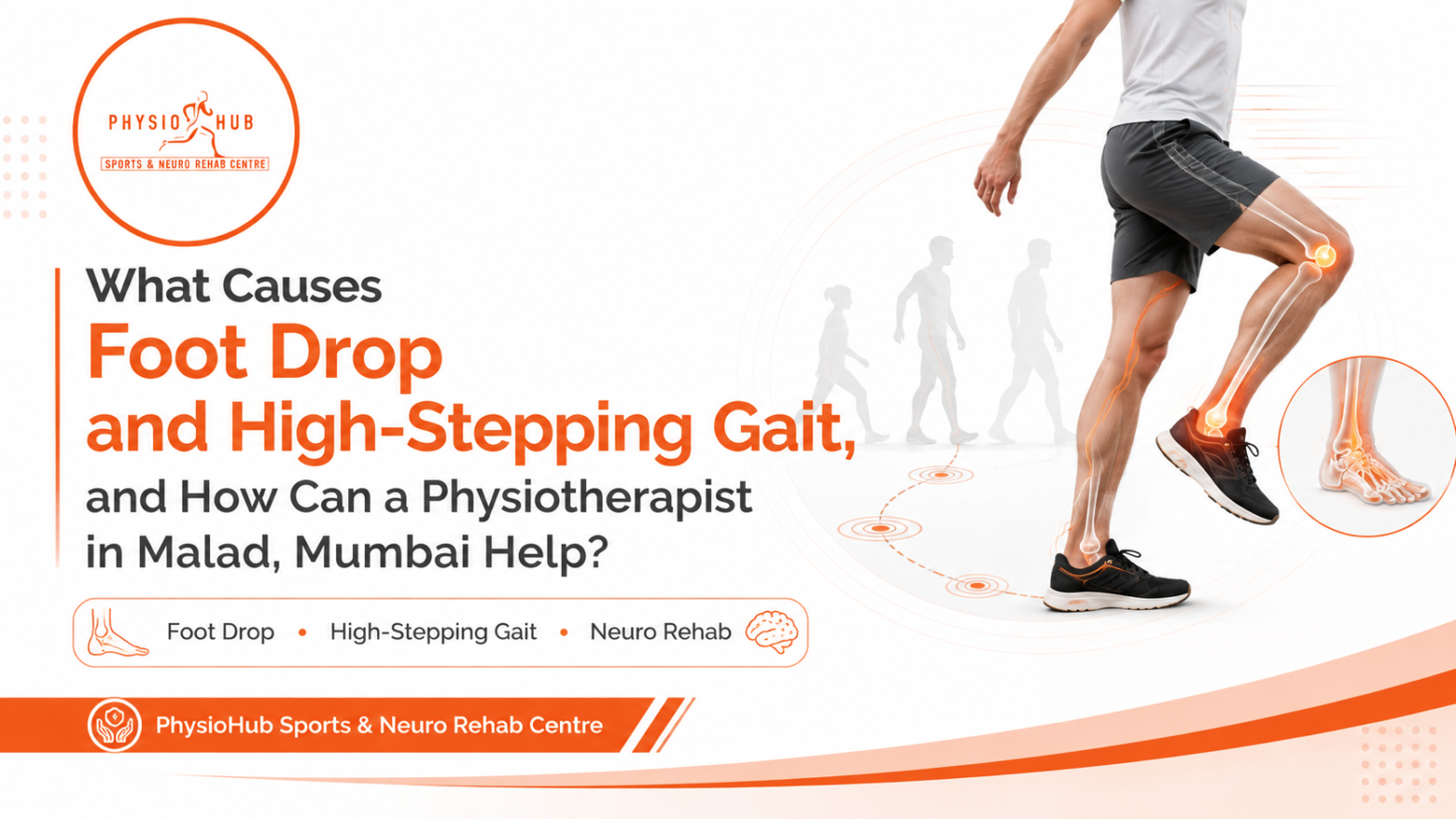
Have you noticed your toes catching the floor while walking? Maybe one foot feels difficult to lift, or you find yourself raising your knee unusually high just to take a normal step.A qualified physiotherapist in Malad, Mumbai can assess walking mechanics, strength, balance and mobility and, when appropriate, work alongside medical specialists to build a personalised rehabilitation programme.

These changes can sometimes point to foot drop, a movement problem in which lifting the front of the foot becomes difficult. To compensate, a person may lift the hip and knee higher while walking. This is often called a high-stepping or steppage gait.

It can feel frustrating—and even frightening—when something as automatic as walking suddenly requires concentration. Some people begin avoiding stairs, outdoor walks or crowded areas because they are worried about tripping.

Foot drop is not a disease by itself. It can develop because of nerve injury, muscle weakness, spinal problems or neurological conditions. That is why assessment matters.

Can Physiotherapy Help Foot Drop and High-Stepping Gait?

Physiotherapy can help some people with foot drop by improving muscle strength, ankle mobility, balance and walking control. Treatment may include gait retraining, strengthening, stretching, balance exercises, orthotic support and, in selected neurological cases, electrical stimulation. The right treatment depends on what is causing the foot drop.

What Is Foot Drop and High-Stepping Gait?

Foot drop means that a person has difficulty lifting the front of the foot upward during walking. As the leg swings forward, the toes may drag or catch the floor.

To prevent this, the body often creates a compensation: the person bends the hip and knee more than usual to lift the foot higher. This altered walking style is called steppage gait or high-stepping gait

You may also notice:

  • Toes dragging while walking
  • One foot making a slapping sound
  • Difficulty clearing the floor
  • Frequent stumbling
  • Increased knee lifting
  • Weakness around the ankle
  • Numbness over the foot in some cases
  • Reduced confidence when walking

Foot drop can affect one foot or both feet depending on its cause. Because several different nerves, muscles and neurological pathways can be involved, simply strengthening the ankle without understanding the cause may not be enough.

What Causes Foot Drop and Why Should You Get It Assessed?

Foot drop can develop for several reasons. Some are related to the peripheral nerves, while others involve the brain, spinal cord or muscles.

Common causes include:

  • Peroneal or fibular nerve injury: The nerve responsible for helping control muscles that lift the foot can become compressed or injured.
  • Lumbar nerve problems: Irritation or compression involving the L4 or L5 nerve roots may contribute to weakness affecting the foot.
  • Stroke: Weakness and poor motor control after stroke may lead to toe dragging or foot drop.
  • Multiple sclerosis: Changes in nervous-system control can affect the muscles required for safe foot clearance.
  • Spinal cord injury: Damage affecting signals travelling from the brain to the leg may change walking mechanics.
  • Peripheral neuropathy: Nerve damage can affect strength, sensation and balance.
  • Neuromuscular disorders: Certain conditions affecting muscles or nerves may result in progressive weakness.
  • Trauma or surgery: Injury around the knee, leg or nerve pathway may sometimes affect ankle control.

The National Institute of Neurological Disorders and Stroke notes that treatment should be based on the specific cause of foot drop.

New or worsening foot drop should therefore be medically assessed rather than treated as simple muscle tightness.

How Does Physiotherapy for Foot Drop Work Step by Step?

Physiotherapy in malad | Physiohub

A good rehabilitation programme begins with understanding why the walking pattern has changed.

Step 1: Detailed movement assessment

A physiotherapist observes how you stand and walk.

They may look at:

  • Toe clearance
  • Ankle movement
  • Knee control
  • Hip movement
  • Step length
  • Balance
  • Walking speed
  • Muscle strength
  • Sensation
  • Compensatory movements

Imagine someone who keeps tripping because the right toes catch the floor. The problem may appear to be in the foot, but assessment could reveal weakness further up the nerve pathway. That difference changes the rehabilitation plan.

Step 2: Strength and mobility testing

The muscles that lift the ankle, extend the toes and stabilise the leg are assessed.

The therapist may also check whether tight calf muscles or restricted ankle movement are making walking harder.

Step 3: Identify whether further medical testing is needed

Physiotherapy assessment does not replace neurological diagnosis.

Depending on the findings, a patient may need evaluation from a neurologist, orthopaedic specialist or another doctor. Tests such as nerve-conduction studies, EMG or imaging may sometimes be used to identify where nerve damage is occurring.

Step 4: Begin targeted rehabilitation

Treatment may involve:

  • Ankle dorsiflexor strengthening
  • Hip and knee strengthening
  • Calf stretching
  • Balance exercises
  • Coordination exercises
  • Functional movement training
  • Gait retraining
  • Stair practice
  • Walking endurance training

Step 5: Add supportive technology when appropriate

Some patients may benefit from an ankle-foot orthosis, commonly called an AFO, which helps position the foot while walking.

Functional electrical stimulation, or FES, may also be considered for selected neurological patients. It delivers electrical stimulation at specific points during walking to assist foot clearance Foot drop rehabilitation is not one exercise for everyone. Assessment identifies the cause and movement problem first. Physiotherapy then combines strengthening, mobility work, balance training, gait practice and, when appropriate, supportive devices or technology.

What Are the Benefits of Physiotherapy for Foot Drop?

Depending on the cause and severity, personalised rehabilitation may help to:

  • Improve foot clearance while walking
  • Strengthen weak leg and ankle muscles
  • Improve balance and coordination
  • Maintain ankle flexibility
  • Reduce compensatory walking patterns
  • Improve confidence during everyday movement
  • Make stairs and community walking easier
  • Reduce the likelihood of toes repeatedly catching the floor
  • Improve overall functional independence

Physical therapy is recognised as one of the treatment approaches used to strengthen muscles and maintain joint movement in people with foot drop.

The goal is not simply to make the ankle stronger. It is to help the entire walking pattern become safer and more efficient.

Physiotherapy vs Other Foot Drop Treatment Options

Approach Main Purpose When It May Be Considered
Neuro Physiotherapy Strength, balance, motor control and gait retraining Neurological weakness and altered walking patterns
AFO / Brace Holds the ankle and foot in a safer position When additional foot clearance or stability is required
Functional Electrical Stimulation Stimulates selected nerves and muscles during walking Selected neurological causes such as stroke or MS
Medical Management Treats the underlying neurological, spinal or systemic cause When foot drop results from disease, nerve compression or another medical condition
Surgery Nerve repair, decompression, tendon transfer or joint procedures Selected structural or persistent cases

An AFO and FES should not be viewed as automatic replacements for rehabilitation. Research comparing the two has found that both can positively affect walking in selected neurological populations, while the best choice depends on the individual.

People searching for a Chiropractor in Malad or osteopathy in Malad because of leg or back symptoms should also remember that true foot drop may involve the nervous system. A proper neurological and movement assessment is important before deciding which treatment approach is appropriate.

Who Needs Physiotherapy for Foot Drop or High-Stepping Gait?

Assessment may be useful if you notice:

  • One foot dragging while walking
  • Repeated toe catching
  • A sudden change in walking pattern
  • One knee lifting much higher than the other
  • Foot slapping when it reaches the floor
  • Weakness after stroke
  • Difficulty walking after nerve injury
  • Reduced ankle control
  • Frequent trips or near-falls
  • Loss of confidence outdoors
  • Difficulty climbing stairs

A Neuro rehab centre in malad may be particularly relevant for people recovering from stroke, neurological injury or other conditions affecting gait.

At the same time, foot drop should not be self-diagnosed. New weakness, especially if it appears suddenly or is getting worse, deserves prompt medical assessment.

What Does Foot Drop Physiotherapy Cost in Malad?

There is no single cost that applies to every patient because rehabilitation requirements vary.

Pricing may depend on:

  • Complexity of the condition
  • Cause of the foot drop
  • Initial assessment requirements
  • Number of sessions needed
  • One-to-one supervision
  • Need for gait training
  • Equipment used during rehabilitation
  • Duration of the programme
  • Whether neurological rehabilitation is required
  • Need for an orthosis or specialist referral

For this reason, it is usually more useful to begin with an assessment rather than choosing treatment based only on a per-session price.

The same applies to other programmes such as acl rehab in malad, sports rehabilitation or post-operative therapy—the plan should reflect the individual’s movement goals and clinical needs.

What Are the Neuro Rehabilitation Trends in 2026?

Neuro rehabilitation is becoming increasingly data-driven and personalised.

Research published during 2025–2026 has continued to explore technologies such as functional electrical stimulation, wearable gait monitoring and robot-assisted gait training.

A 2025 systematic review found that combining robot-assisted gait training with conventional rehabilitation can support motor and functional recovery after stroke, although treatment still needs to be individualised.

Current developments include:

  • Wearable gait sensors for analysing step patterns and movement
  • Functional electrical stimulation timed with different phases of walking
  • Robot-assisted gait training for selected neurological patients
  • Objective progress tracking using measurable walking parameters
  • Task-specific rehabilitation based on real-life activities
  • More personalised treatment plans based on the patient’s neurological presentation

Technology is useful, but it does not replace clinical reasoning. The important question remains: Which intervention is right for this particular patient?

Why Choose PhysioHub in Malad, Mumbai?

PhysioHub in Malad West provides physiotherapy for musculoskeletal, sports and neurological rehabilitation under Dr. Pooja Mehta, Sports Physio, Chiropractor and Osteopath. The clinic states that its neuro physiotherapy service includes gait retraining, strength work, balance rehabilitation and advanced robotic rehabilitation for selected neurological conditions.

Patients looking for a physiotheraphy in Malad, Mumbai can receive an individual assessment focused on movement rather than following the same exercise routine as everyone else.

PhysioHub also provides services related to:

  • Physiotherapy in malad
  • Neuro physiotherapy in malad
  • Sports injury rehabilitation
  • Post-surgery rehabilitation
  • Chiropractic care
  • Osteopathic approaches
  • Gait and balance rehabilitation

For athletes and active individuals searching for a Sports Physiotherapist in mumbai, treatment can also focus on restoring strength, movement control and safe return to activity. PhysioHub lists sports physiotherapy among its specialised services.

The aim is simple: understand what is limiting your movement, build a realistic rehabilitation plan and help you return to everyday activity with greater confidence.

FAQs About Foot Drop and High-Stepping Gait

1. Can a physiotherapist treat foot drop?

A physiotherapist can help manage many movement problems associated with foot drop through strengthening, stretching, balance work and gait retraining. However, treatment depends on the cause, and some patients need neurological or orthopaedic investigation first.

2. Why do people with foot drop lift their knee so high?

When the front of the foot cannot lift properly, the toes may catch the ground. The person compensates by lifting the hip and knee higher. This creates the characteristic high-stepping or steppage gait.

3. Can foot drop recover completely?

Recovery depends on the underlying cause, severity of nerve or muscle involvement and whether the cause can be treated. Some cases improve significantly, while others may require long-term rehabilitation or supportive devices.

4. What exercises are used for foot drop?

Exercises may focus on ankle dorsiflexion, leg strength, calf flexibility, balance and walking control. The programme should be personalised because the right exercise depends on the reason for the weakness.

5. When should I visit a physiotherapist in Malad, Mumbai for walking problems?

Consider an assessment if your toes repeatedly drag, your foot slaps the floor, your walking pattern has changed or you are frequently tripping. New or worsening weakness should also be medically evaluated to identify the underlying cause.

Take the First Step Towards Safer, More Confident Walking

Dragging your foot or lifting your knee unusually high may seem like a small walking change at first, but it can be your body compensating for weakness or reduced nerve control.

Instead of relying on random exercises, get the cause assessed.

If you are searching for a physiotherapist in Malad, Mumbai for foot drop, gait problems or neurological rehabilitation, contact PhysioHub to schedule an assessment and discuss a personalised rehabilitation plan focused on safer movement, better control and greater independence.

An ACL tear can feel like a sudden halt to your active life, but at

Continue reading “Beyond Surgery: Mastering ACL Recovery at PhysioHub Mumbai”