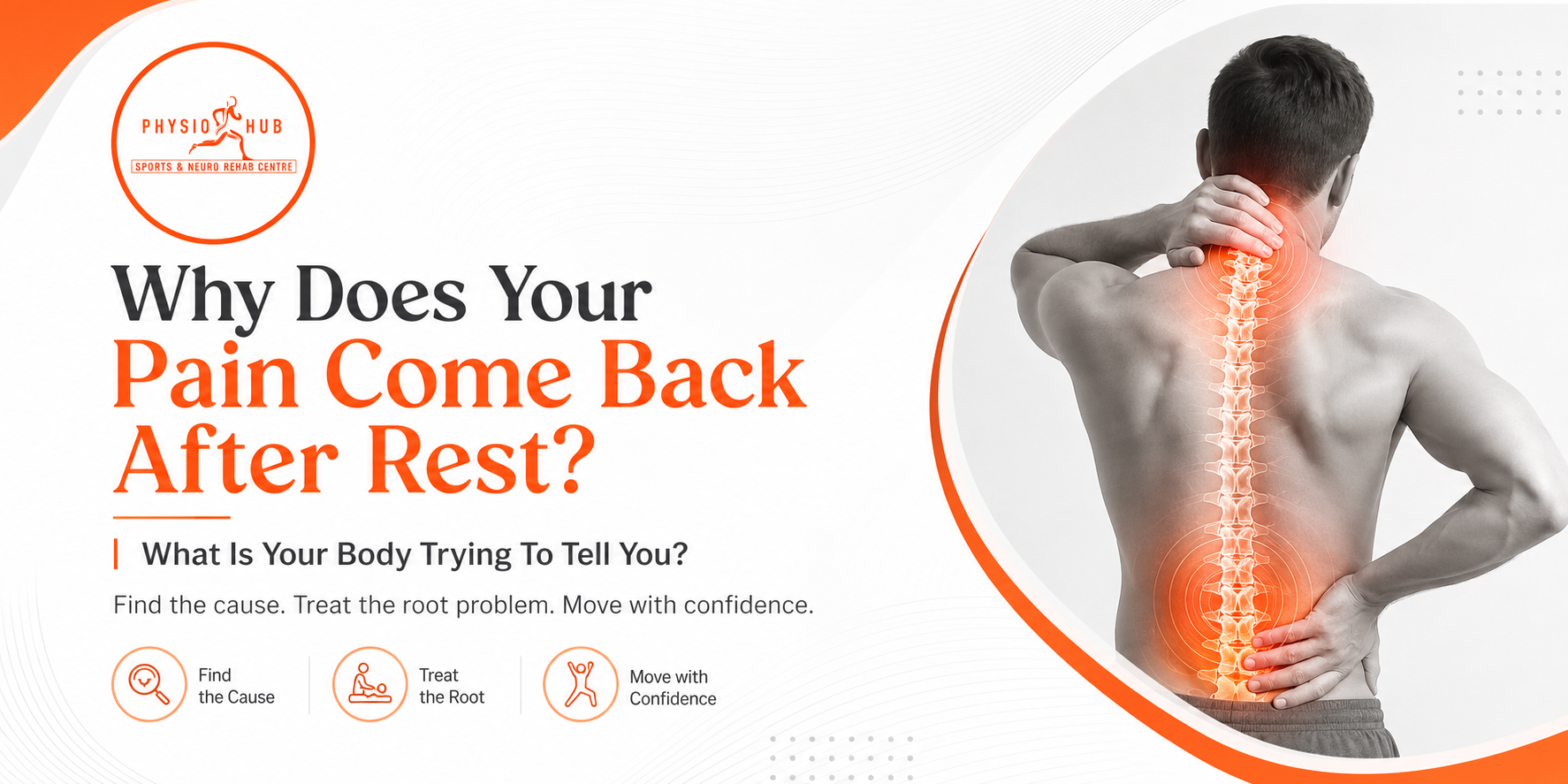
Pain that settles with rest but returns again can feel confusing and frustrating. You rest for a couple of days, avoid heavy activity, use a hot pack, or even consider visiting a physiotherapist in Malad, Mumbai and feel like things are finally getting better. Then you go back to work, climb stairs, lift a bag, sit for long hours, or restart exercise—and the same pain comes back.
This can happen with back pain, knee pain, neck stiffness, shoulder pain, sports injuries, and old injury areas. Many people think, “Maybe I just need more rest.” But if the pain keeps returning, rest may only be calming the symptoms for a short time. It may not be fixing the real reason behind the pain.
Your body may be trying to tell you something important. There may be muscle weakness, poor posture, joint stiffness, poor movement habits, overuse, nerve irritation, or incomplete recovery.
A trusted physiotherapist in Malad, Mumbai can help find out why your pain returns after rest and guide you with the right treatment plan. At Physio Hub in Malad, Mumbai, physiotherapy focuses on pain relief, movement correction, strengthening, and long-term recovery so you can get back to daily life with more confidence.
Pain may come back after rest because rest can reduce symptoms temporarily but may not correct the root cause. Recurring pain can be linked to muscle weakness, stiffness, poor posture, overuse, injury, nerve irritation or poor movement patterns. Physiotherapy helps by assessing the cause, improving strength, mobility and movement control.
What is Recurring Pain After Rest?
Recurring pain after rest means pain that improves when you stop activity but returns when you start moving again. It may feel like an ache, stiffness, sharp pain, tightness, burning, pulling, or weakness.
This type of pain can affect:
- Lower back
- Neck
- Shoulder
- Knee
- Hip
- Ankle
- Wrist
- Spine
- Muscles and joints
Rest can calm irritation for some time. That is why you may feel better after sleeping, taking a break, or avoiding movement. But rest alone does not always improve strength, posture, joint mobility, flexibility, balance, or movement control.
For example, if your back pain is linked to weak core muscles, resting may reduce pain for a few days. But once you sit at work for long hours again, the same stress returns.
If knee pain is linked to weak hips or poor knee alignment, rest may feel helpful for a short time. But climbing stairs, walking fast, or returning to workouts can bring the pain back.
A physiotherapist in Malad, Mumbai looks beyond the painful spot. The goal is to understand how your whole body moves and why the same area keeps getting irritated. Recurring pain after rest means the symptoms reduce temporarily but return when your body faces load again. Physiotherapy helps find and treat the root cause.
Why Does Pain Come Back After Rest?

Pain often comes back after rest because the body has not fully rebuilt its ability to handle movement, load, and daily activity.
Rest may reduce irritation. But it may not solve weakness, stiffness, posture issues, or poor movement habits.
Common reasons include:
- Weak muscles
- Poor posture
- Joint stiffness
- Poor movement patterns
- Reduced flexibility
- Lack of strength training
- Incomplete injury recovery
- Overuse after returning too quickly
- Nerve irritation
- Poor sitting or lifting habits
- Sports overload
- Poor balance or coordination
- Weak core muscles
- Muscle imbalance
- Reduced hip, shoulder, or ankle mobility
- Old injuries that were never fully rehabilitated
Think about someone with neck pain from laptop work. They rest on Sunday and feel better. But by Monday evening, after six hours of screen time, the stiffness returns. The issue was not only tired muscles. It may also be posture, weak shoulder muscles, poor workstation setup, and lack of movement breaks.
Or imagine a runner with knee pain. They stop running for a week, feel better, and then restart with the same distance and speed. The pain comes back. Why? Because the knee may not have regained strength, control, or load tolerance yet.
The body needs gradual loading, not just rest.
Physical activity guidelines commonly recommend regular activity and muscle-strengthening exercises for adults because strength supports long-term movement health. Adults are advised to include muscle-strengthening activities involving major muscle groups on at least two days a week.
For low back pain, clinical guidance often encourages people to remain active within comfort instead of relying only on bed rest. Activity and exercise are commonly part of long-term recovery and recurrence prevention.
So, if pain keeps coming back after rest, your body may be saying, “I need strength, mobility, and better movement support.”
How Does Physiotherapy Help Step by Step?
Physiotherapy helps by finding why pain returns and then building a plan that helps your body tolerate daily movement again.
It is not about giving random exercises. It is about understanding your body, your routine, your pain triggers, and your recovery goals.
Step 1: Detailed Pain Assessment
The physiotherapist first understands your pain pattern.
They may ask:
- When does the pain come back?
- Does rest reduce it?
- What activity triggers it?
- Is pain worse after sitting, walking, lifting, or exercise?
- Did it start after injury?
- Is there tingling, numbness, or weakness?
- Does the pain affect sleep or daily work?
- Have you tried medicines, massage, or home remedies?
These questions help identify whether the pain may be linked to muscles, joints, nerves, posture, or movement habits.
For example, pain after sitting may point toward posture, weak core muscles, or spinal stiffness. Pain after stairs may suggest weak hips, poor knee control, or reduced ankle mobility. Pain after lifting may show poor lifting technique or lack of trunk stability.
Step 2: Movement and Posture Check
The therapist then checks how your body moves during simple daily actions.
This may include:
- Walking
- Sitting posture
- Bending
- Squatting
- Lifting
- Shoulder movement
- Neck movement
- Stair climbing
- Balance testing
- Core control
Sometimes, the pain is in one area, but the reason is somewhere else.
Knee pain may be linked to weak hips. Back pain may be linked to poor core strength. Shoulder pain may be linked to weak shoulder blade muscles or rounded posture.
This is why a full movement check matters. Without it, people often treat only the painful area and miss the actual cause.
Step 3: Pain Relief and Mobility Care
If pain is high, the first goal is to reduce discomfort and make movement easier.
Physiotherapy may include:
- Manual therapy
- Soft tissue release
- Joint mobility work
- Stretching guidance
- Pain-relieving modalities
- Posture correction
- Activity modification
This stage helps calm pain and reduce stiffness.
But pain relief is not the final goal. It is the starting point. If the root cause is not corrected, the pain may return as soon as you increase activity again.
Step 4: Strengthening Weak Areas
Strengthening is often the missing piece in recurring pain.
If muscles are weak, the body may not support joints properly. Other muscles may overwork. This can create stress and repeated pain.
Exercises may focus on:
- Core muscles
- Glutes and hips
- Thigh muscles
- Calves
- Shoulder stabilizers
- Neck stabilizers
- Back muscles
- Foot and ankle muscles
Common exercises may include:
- Bridges
- Wall squats
- Step-ups
- Resistance band exercises
- Calf raises
- Core activation
- Shoulder blade strengthening
- Balance drills
A good physiotherapist in Malad, Mumbai will not give the same exercises to everyone. Your plan should match your pain, age, strength, activity level, lifestyle, and goals.
For example, an office worker with back pain needs a different plan than a runner with knee pain. A senior citizen with balance issues needs a different plan than a sportsperson returning after injury.
Step 5: Movement Correction
Pain often returns when the body keeps repeating the same poor movement pattern.
The therapist may correct:
- Sitting posture
- Lifting technique
- Walking pattern
- Knee alignment
- Running form
- Shoulder movement
- Neck posture
- Workstation habits
- Exercise technique
Small changes can make a big difference.
Learning how to lift correctly can reduce back strain. Improving knee control while climbing stairs can reduce knee pain. Correcting laptop posture can reduce neck and shoulder discomfort.
The goal is to help your body move with less stress.
Step 6: Home Exercise and Prevention Plan
Physiotherapy works best when progress continues outside the clinic.
The therapist may guide you on:
- Home exercises
- Work breaks
- Warm-up routines
- Safe return to exercise
- Sitting and standing habits
- Load management
- Prevention tips
This helps your body stay stronger even after the pain reduces.
Many people stop exercises once they feel better. But if recurring pain has been happening for months, consistency is important. A simple home plan can help maintain progress and reduce the chance of the pain coming back.
Physiotherapy helps recurring pain by assessing the cause, reducing pain, improving mobility, strengthening weak areas, correcting movement, and preventing repeated strain.
Benefits of Physiotherapy for Recurring Pain: Guidance from a Physiotherapist in Malad, Mumbai
Physiotherapy can help reduce repeated pain and improve how your body functions in daily life.
Key benefits include:
- Identifies the root cause of pain
- Reduces pain and stiffness
- Improves muscle strength
- Improves joint mobility
- Corrects posture
- Improves movement control
- Reduces re-injury risk
- Supports safe return to work
- Helps with sports recovery
- Improves balance and coordination
- Reduces dependence on painkillers
- Supports long-term pain management
- Helps prevent pain from returning
- Builds confidence in movement
- Supports better daily function
Imagine an office worker who gets recurring back pain every week. Rest may help for a day or two. But if the real issue is long sitting, weak core muscles, and poor posture, the pain may keep returning.
A runner with recurring knee pain may need hip strengthening, calf loading, and training-load correction.
A senior citizen with repeated pain or balance problems may need strength and balance training. For neurological weakness or walking difficulty, care at a Neuro rehab centre in Malad or Neuro physio therapy in Malad may help improve movement and independence.
For athletes or active people, a Sports Physiotherapist in Mumbai can help plan safe strengthening, mobility, and return-to-sport progression.
The real benefit of physiotherapy is not just “less pain.” It is being able to trust your body again.
Physiotherapy vs Other Options for Recurring Pain
| Care Option | Main Focus | Best For | Limitation |
|---|---|---|---|
| Physiotherapy | Pain relief, strength, mobility, movement correction | Recurring pain, weakness, stiffness, injury rehab | Needs consistency |
| Rest only | Temporary symptom reduction | Short-term flare-ups | Does not correct root cause |
| Painkillers | Temporary pain control | Short-term pain relief | Does not improve strength or movement |
| Massage | Relaxation and tightness relief | Muscle soreness | May not prevent recurrence |
| General exercise | Fitness | Healthy individuals | May worsen pain if not customized |
| Chiropractic care | Spine and joint alignment focus | Selected spine-related concerns | Not suitable for every condition |
| Osteopathy | Whole-body mobility and manual care | Posture and movement concerns | Needs proper assessment |
Many people search for a Chiropractor in Malad or osteopathy in Malad when pain comes back after rest. These approaches may help in selected cases after proper evaluation.
However, Physiotherapy in malad is often more structured for recurring pain because it combines assessment, pain relief, strengthening, movement correction, and prevention.
Rest may make pain feel better for a few days. Painkillers may reduce discomfort. Massage may relax tight muscles. But if weakness, stiffness, or poor movement is still present, the same pain can return once you go back to normal activity.
Physiotherapy helps you understand why the pain is returning and what your body needs to recover better.
Who Needs Physiotherapy for Recurring Pain?
You may need physiotherapy if:
- Pain improves with rest but returns again
- Back pain comes back after sitting
- Neck pain returns after laptop work
- Knee pain returns after stairs
- Shoulder pain returns after lifting
- Pain keeps affecting work or sleep
- You feel stiffness after inactivity
- You have recurring sports injuries
- You have weakness after surgery
- You feel pain during workouts
- You have poor posture
- You have nerve symptoms like tingling or numbness
- You are afraid to move after injury
- You keep depending on painkillers
- You want long-term recovery, not temporary relief
You do not have to wait until the pain becomes severe.
If pain keeps returning, changes how you move, or stops you from doing normal activities, it is worth getting assessed.
Athletes and active people may need support from a Sports Physiotherapist in Mumbai for safer return to sport.
Patients recovering from knee ligament injuries may need acl rehab in Malad for structured strengthening and stability training.
People recovering after stroke, neurological weakness, or balance problems may need care from a Neuro rehab centre in Malad.
A trusted physiotherapist in mumbai can help guide safe recovery based on the patient’s condition.
Cost and Pricing Factors for Physiotherapy
The cost of physiotherapy for recurring pain depends on the condition and the treatment plan.
Common pricing factors include:
- Type of pain
- Cause of recurring symptoms
- Severity of pain
- Duration of the problem
- Need for manual therapy
- Need for strengthening
- Sports rehabilitation requirements
- ACL rehab requirements
- Neuro rehabilitation needs
- Use of equipment or modalities
- Clinic-based or home-based care
- Number of sessions required
- Therapist expertise
- Patient goals and activity level
For example, mild posture-related pain may need fewer sessions. Long-standing back pain, sports injury, ACL recovery, or neuro rehabilitation may need a longer plan.
Some patients may need basic strengthening and posture correction. Others may need advanced balance training, gait training, or sport-specific rehabilitation.
The best way to understand expected cost is to book an assessment with a physiotherapist in Malad, Mumbai. After evaluation, the therapist can explain the treatment plan clearly.
Industry Trends in 2026
In 2026, physiotherapy is becoming more focused on prevention, strength, and personalized recovery.
Patients no longer want only temporary pain relief. They want to understand why pain keeps coming back and how to stop the cycle.
Important trends include:
- Movement-based assessment
- Strength-focused rehabilitation
- Posture and ergonomic education
- Sports-specific rehab
- ACL recovery programs
- Neuro rehab with gait training
- Home exercise tracking
- Wearable-supported progress monitoring
- Patient education for prevention
- Personalized exercise plans
- Early physiotherapy for recurring pain
Technology is also becoming part of rehabilitation. Recent research has explored movement-analysis systems for low-back pain rehabilitation, showing how digital tools may support exercise monitoring and feedback in clinical rehab settings.
Still, technology cannot replace personal assessment. Pain is connected to lifestyle, movement habits, strength, stress, sleep, work routine, and confidence.
A good physiotherapy plan needs human understanding and safe progression. It should not only reduce pain today but also prepare your body for tomorrow.
Physiotherapy in 2026 focuses on finding root causes, improving strength, correcting movement, preventing recurrence, and using technology to support guided rehab.
Why Choose Physio Hub in Malad, Mumbai?
Physio Hub provides personalized physiotherapy care for recurring pain, muscle weakness, sports injuries, neuro rehabilitation, and movement recovery in Malad, Mumbai.
If you are searching for a trusted physiotherapist in Malad, Mumbai, Physio Hub offers assessment-based care focused on pain relief, strengthening, mobility, and long-term prevention.
Why patients choose Physio Hub:
- Personalized assessment
- Pain relief and mobility care
- Strength-based rehabilitation
- Posture and movement correction
- Sports injury rehabilitation
- ACL rehabilitation support
- Neuro rehabilitation support
- Balance and gait training
- Patient-friendly approach
- Convenient location in Malad, Mumbai
Physio Hub supports patients looking for Physiotherapy in malad, Sports Physiotherapist in Mumbai, acl rehab in Malad, physiotherapist in mumbai, Neuro rehab centre in malad, Neuro physio therapy in malad, osteopathy in malad, and Chiropractor in malad.
The goal is simple: help you understand why your pain returns, treat the cause, and move with more confidence.
At Physio Hub, the focus is not only on temporary relief. It is on helping you move better, recover stronger, and feel safer in daily life.
FAQs
1. Why does my pain come back after rest?
Pain may come back after rest because rest reduces symptoms temporarily but does not fix the root cause. Weak muscles, stiffness, poor posture, nerve irritation, or poor movement patterns can trigger pain again when activity starts.
2. Is rest enough for back pain or knee pain?
Rest may help during a short flare-up, but it is not always enough. If pain keeps returning, physiotherapy can help identify the cause and guide strengthening, mobility, and movement correction.
3. Can physiotherapy stop recurring pain?
Physiotherapy can help reduce recurring pain by treating the reason behind it. This may include muscle strengthening, posture correction, mobility work, balance training, and activity modification.
4.When Should I Visit a Physiotherapist in Malad, Mumbai, for Recurring Pain?
You should visit a physiotherapist if pain keeps returning, affects daily work, causes weakness, changes how you move, or does not improve with rest. Early care can prevent the problem from becoming worse.
5. Can pain return because of weak muscles?
Yes. Weak muscles can reduce joint support and increase pressure on other areas. This can cause repeated pain in the back, neck, shoulder, knee, hip, or ankle.
Does your pain feel better after rest but return again when you move?
Visit Physio Hub in Malad, Mumbai and consult a trusted physiotherapist in Malad, Mumbai for personalized assessment, strengthening, and rehabilitation.
Book your consultation today and take the first step toward long-term pain relief, better movement, and stronger recovery.