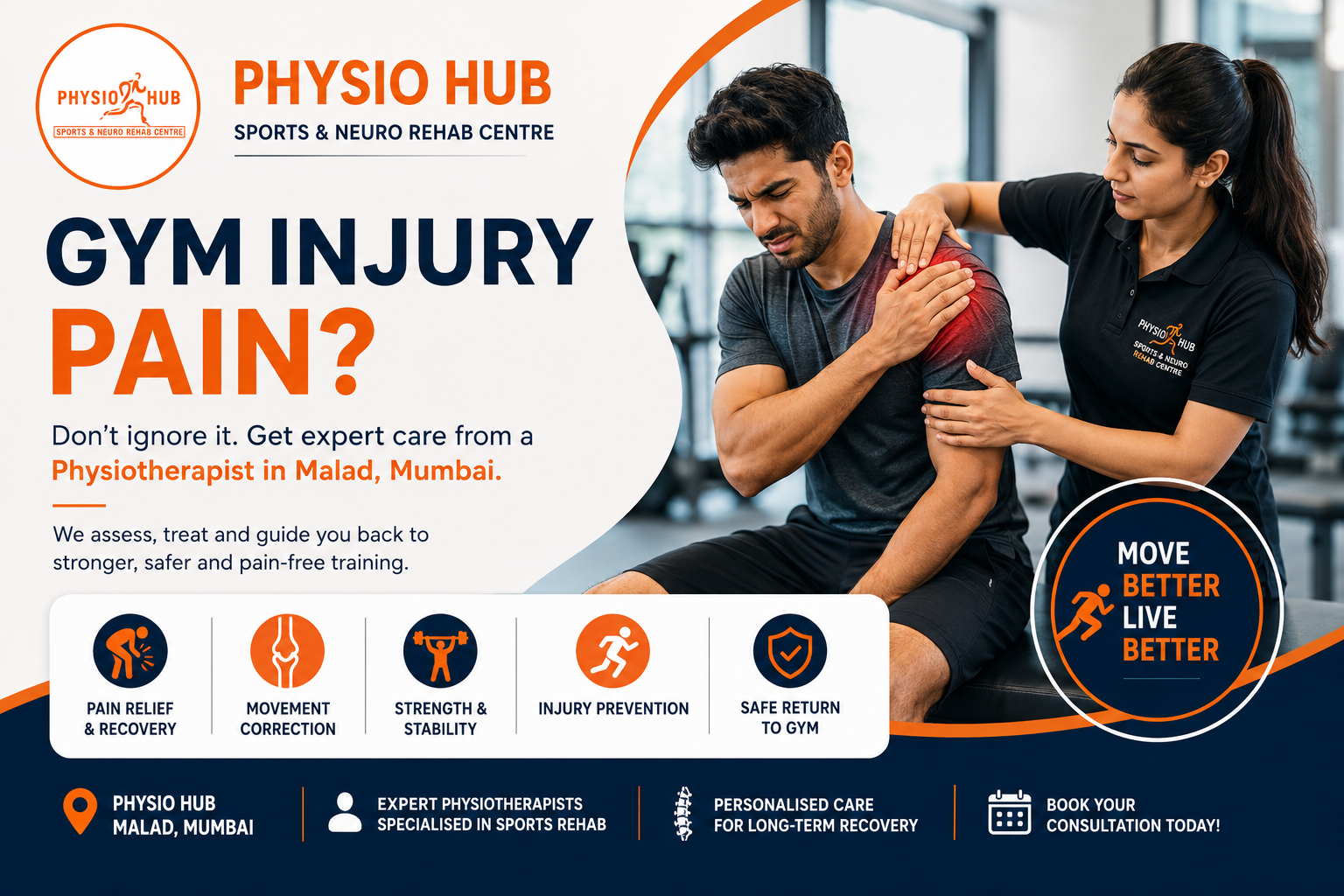
Gym injuries can happen to anyone. You may be new to workouts, lifting heavier than usual, trying a new exercise, or training regularly for strength and fitness. Sometimes, one wrong movement is enough. Other times, pain slowly builds because of repeated strain, poor form, or not giving the body enough recovery. If the pain keeps returning or affects your movement, consulting a trusted physiotherapist in Malad, Mumbai can help you understand the cause and recover safely.
At first, it is easy to ignore the pain. Many people say, “It is just soreness,” or “I will rest for two days and start again.” Sometimes that works. But what if the pain comes back every time you squat, lift, run, push, pull, or stretch?
That is when your body may need proper attention.
Gym soreness is common after a tough workout. But sharp pain, swelling, weakness, numbness, joint instability, or pain that keeps returning is not something to push through.
A trusted physiotherapist in Malad, Mumbai can help you understand whether your gym pain is normal soreness, poor technique, overuse, or an injury that needs rehab.
At Physio Hub in Malad, Mumbai, physiotherapy focuses on pain relief, movement correction, strength rebuilding, and safe return to workouts.
Gym injuries should be checked by a physiotherapist if pain is sharp, keeps returning, causes swelling, limits movement, affects walking or lifting, or feels worse during exercise. Physiotherapy helps assess the injury, reduce pain, correct technique, rebuild strength and guide safe return to gym training.
What is Physiotherapy for Gym Injuries?
Physiotherapy for gym injuries is a planned treatment and rehabilitation approach for pain or injury caused by workouts. This may include weight training, cardio, functional training, sports drills, or general fitness exercises.
It helps you understand why the pain started and what your body needs to recover safely.
The goal is not just to stop pain for a few days. The goal is to help you move better, train smarter, and reduce the risk of the same injury happening again.
Gym injuries may affect:
- Shoulder
- Neck
- Lower back
- Knee
- Hip
- Wrist
- Elbow
- Ankle
- Tendons
- Muscles
- Ligaments
A physiotherapist in Mumbai may check how your body moves during exercises like squats, lunges, deadlifts, push-ups, overhead presses, planks, running, or jumping.
For example, shoulder pain during an overhead press may be linked to poor shoulder blade control. Knee pain during squats may come from weak hips or poor knee alignment. Back pain during deadlifts may happen because of poor lifting form, weak core control, stiff hips, or sudden overload.Physiotherapy for gym injuries helps treat pain, correct movement faults and guide safe return to workouts without repeated injury.
Why Do Gym Injuries Happen?
Gym injuries usually happen when the body is asked to do more than it is ready for. Sometimes it is a sudden strain. Sometimes it is a small mistake repeated again and again.
Common causes include:
- Lifting too heavy too soon
- Poor exercise technique
- Skipping warm-up
- Overtraining without enough rest
- Weak core muscles
- Poor shoulder or hip mobility
- Muscle imbalance
- Poor squat or deadlift form
- Incorrect posture during lifting
- Returning to gym too early after injury
- Lack of supervision
- Repeating the same workout too often
- Ignoring early pain signals
- Poor footwear during training
- Weak glutes, calves or shoulder stabilizers
Think of someone who increases deadlift weight quickly because they feel motivated. The first few sets may feel fine. But later, the lower back starts hurting. Or imagine a person doing shoulder workouts daily without enough recovery. Slowly, overhead movements become painful.
Does that mean gym training is bad? Not at all.
Exercise is helpful. Strength training is important. But the body needs good form, gradual progress, rest, mobility, and balanced strength.
The problem is not exercise. The problem is often poor progression, poor form, or ignoring pain for too long.
How Does Physiotherapy for Gym Injuries Work Step by Step with a Physiotherapist in Malad, Mumbai
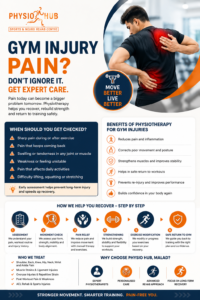
Physiotherapy for gym injuries starts by understanding the pain and how it affects your workout. A good physiotherapist will not simply tell you to stop everything. The aim is to help you recover safely and return to training with confidence.
Step 1: Injury and Pain Assessment
The physiotherapist first understands your pain pattern.
They may ask:
- When did the pain start?
- Which exercise triggered it?
- Is the pain sharp or dull?
- Does it happen during or after workouts?
- Is there swelling or weakness?
- Does pain affect daily activity?
- Did you increase weight recently?
- Have you had this injury before?
These questions help identify whether the pain is due to overload, poor technique, weakness, stiffness, or a specific injury.
For example, pain that starts suddenly during a heavy lift may need a different approach than pain that slowly builds over weeks. Pain with swelling may need more caution than mild post-workout soreness.
Step 2: Movement and Technique Check
The therapist may assess basic gym movements to see how your body is loading the joints and muscles.
This can include:
- Squat pattern
- Deadlift movement
- Lunge control
- Shoulder press movement
- Push-up form
- Plank control
- Hip mobility
- Ankle mobility
- Shoulder blade movement
- Core stability
- Balance and coordination
Sometimes, the painful area is not the real cause.
For example, knee pain during squats may come from weak hips or poor ankle mobility. Shoulder pain during lifting may be linked to weak upper-back muscles. Lower back pain may happen because the hips are stiff and the spine is doing extra work.
This is why proper movement assessment matters. Without it, people may keep treating the painful area while missing the actual reason.
Step 3: Pain Relief and Mobility Care
If pain is high, the first goal is to reduce discomfort and make movement safer.
Physiotherapy may include:
- Manual therapy
- Soft tissue release
- Joint mobility work
- Stretching guidance
- Pain-relieving modalities
- Taping if needed
- Activity modification
- Exercise technique correction
This stage helps calm the pain and reduce stiffness.
But pain relief is only the beginning. If the injury happened because of poor form, weakness, or overload, those issues must also be corrected. Otherwise, pain may return when you restart training.
Step 4: Strength and Stability Training
Once pain reduces, strengthening becomes an important part of rehab.
Exercises may focus on:
- Core muscles
- Glutes and hips
- Shoulder stabilizers
- Quadriceps and hamstrings
- Calves
- Upper back
- Neck stabilizers
- Foot and ankle muscles
The plan is progressed slowly, based on pain, control, and confidence.
A good physiotherapist in Malad, Mumbai will not simply say, “Stop gym forever.” Instead, they guide you on what to pause, what to modify, and when to progress.
For example, if squats hurt, you may start with controlled bodyweight movements before adding load again. If overhead press hurts, shoulder mobility and stability may be improved first.
Step 5: Exercise Modification
This is one of the most practical parts of physiotherapy.
The physiotherapist may suggest temporary changes such as:
- Reducing load
- Reducing range of motion
- Avoiding painful exercises temporarily
- Improving warm-up
- Changing grip or stance
- Adjusting workout frequency
- Adding mobility work
- Using controlled tempo
- Improving recovery time
This allows you to stay active without repeatedly irritating the injured area.
For many gym-goers, this feels reassuring. You do not always have to stop everything. You just need the right modification at the right time.
Step 6: Return-to-Gym Plan
The final stage is returning to full training safely.
This may include:
- Gradual load progression
- Form correction
- Strength testing
- Mobility checks
- Workout planning
- Pain monitoring
- Injury prevention exercises
- Sport-specific or gym-specific drills
A return-to-gym plan helps you avoid doing too much too soon. It also gives you clarity. You know what exercise to start with, how much weight to use, and when to progress.
Physiotherapy helps gym injuries through assessment, pain relief, movement correction, strengthening, exercise modification and safe return-to-training planning.
Benefits of Physiotherapy for Gym Injuries by a Physiotherapist in Malad, Mumbai
Physiotherapy can help you recover safely and avoid repeated setbacks.
Key benefits include:
- Reduces pain and stiffness
- Identifies the root cause of injury
- Corrects poor exercise technique
- Improves muscle strength
- Improves joint mobility
- Helps prevent re-injury
- Supports safe return to gym
- Improves posture and movement control
- Reduces fear of lifting again
- Improves balance and coordination
- Helps after ligament or tendon injury
- Supports sports performance
- Builds long-term body confidence
- Reduces dependence on painkillers
- Helps you train smarter
For example, someone with shoulder pain during bench press may need shoulder blade strengthening, mobility work, and load correction.
Someone with back pain during deadlifts may need hip mobility, core control, and lifting technique correction.
A person with knee pain after gym squats may need hip strengthening, ankle mobility, and squat pattern training.
For athletes and active individuals, a Sports Physiotherapist in Mumbai can help with safe return-to-training and performance-focused rehab.
The goal is not only to reduce pain. It is to help you feel confident in your body again.
Physiotherapy vs Other Options for Gym Injuries
| Option | Main Focus | Best For | Limitation |
|---|---|---|---|
| Physiotherapy | Pain relief, movement correction, strengthening and rehab | Gym injuries, recurring pain, return to workouts | Needs consistency |
| Rest only | Temporary symptom relief | Mild pain or fatigue | Does not correct form or weakness |
| Painkillers | Short-term pain control | Temporary discomfort | Does not treat root cause |
| Massage | Muscle relaxation | Tightness and soreness | May not fix movement faults |
| General gym training | Fitness and strength | Healthy individuals | May worsen injury if not modified |
| Chiropractic care | Spine and joint alignment focus | Selected spine-related issues | Not suitable for every gym injury |
| Osteopathy | Whole-body mobility and manual care | Posture and movement concerns | Needs proper assessment |
Many people search for a Chiropractor in Malad or osteopathy in Malad when they have gym-related pain, stiffness, or posture concerns. These may help in selected cases after proper evaluation.
However, Physiotherapy in Malad is often more complete for gym injuries because it includes pain care, strength training, movement correction, and return-to-exercise guidance.
Rest may make pain better for a few days. Massage may relax tight muscles. Painkillers may reduce discomfort. But if the cause is poor form, weakness, or overload, the pain can return once training starts again.
If your goal is to lift, run, squat, push, pull, or train again safely, physiotherapy gives a structured path.
Who Needs Physiotherapy for Gym Injuries?
You may need physiotherapy if you have:
- Sharp pain during exercise
- Pain that keeps returning
- Swelling after workout
- Shoulder pain while lifting
- Lower back pain during deadlifts
- Knee pain during squats
- Wrist pain during push-ups
- Neck pain after upper-body workouts
- Pain that affects daily activities
- Weakness after injury
- Difficulty returning to gym
- Pain after increasing weights
- Poor movement control
- Fear of re-injury
- Old injury that flares up again
You should stop and get checked if pain changes your form, causes limping, makes you avoid movement, or feels worse with each workout.
For example, if knee pain makes you shift weight to one side during squats, that is a sign to pause and assess. If shoulder pain makes you avoid overhead movement, do not keep pushing through it.
Patients with ligament injuries may need acl rehab in Malad for structured strengthening and knee stability training.
People with balance, walking, or neurological movement issues may need support from a Neuro rehab centre in Malad or Neuro physio therapy in Malad.
A trusted physiotherapist in Mumbai can help decide whether the injury needs basic rehab, sports rehab, or advanced recovery support.
Cost and Pricing Factors for Gym Injury Physiotherapy
The cost of physiotherapy for gym injuries depends on the type and severity of the injury.
Common pricing factors include:
- Type of injury
- Pain severity
- Duration of symptoms
- Muscle weakness
- Joint stiffness
- Need for manual therapy
- Need for sports rehabilitation
- ACL or ligament rehab needs
- Use of equipment or modalities
- Number of sessions required
- Clinic-based or home-based care
- Therapist expertise
- Return-to-gym goals
- Exercise technique correction needs
For example, mild shoulder stiffness may need fewer sessions. Long-standing back pain, ACL recovery, or recurring sports injury may need a longer plan.
A person who wants to return to basic fitness may need a different plan from an athlete or serious gym-goer who wants to return to heavy lifting.
The best way to understand the cost is to book an assessment with a physiotherapist in Malad, Mumbai. After evaluation, the therapist can explain the treatment plan clearly.
Industry Trends in 2026
In 2026, gym injury rehab is becoming more movement-focused, strength-based, and prevention-oriented.
People no longer want only pain relief. They want to return to training safely and avoid repeated setbacks.
Important trends include:
- Movement screening for gym-goers
- Strength-based rehabilitation
- Load management education
- Technique correction for lifting
- Sports-specific rehab
- ACL prevention and recovery programs
- Wearable-supported training load tracking
- Home exercise monitoring
- Mobility and stability testing
- Personalized return-to-gym plans
- Injury prevention education
Gym-goers are also becoming more aware of recovery. Sleep, warm-up, mobility, training load, and exercise technique are now seen as part of performance, not extras.
The future of gym injury rehab is not about stopping people from training. It is about helping them train better, safer, and smarter.
Technology can support progress tracking, but clinical assessment still matters. Pain is personal. Movement quality, injury history, strength, and confidence need expert guidance.
Gym injury rehab in 2026 focuses on movement screening, strength, technique correction, load management and safe return to training.
Why Choose Physio Hub a physiotherapist in Malad, Mumbai?
Physio Hub provides personalized physiotherapy care for gym injuries, sports rehab, pain relief, and movement recovery in Malad, Mumbai.
If you are looking for a trusted physiotherapist in Malad, Mumbai, Physio Hub offers assessment-based care for pain relief, strengthening, mobility, and safe return to workouts.
Why patients choose Physio Hub:
- Personalized injury assessment
- Gym injury rehab support
- Pain relief and mobility care
- Strength-based rehabilitation
- Posture and technique correction
- Sports injury rehabilitation
- ACL rehabilitation support
- Neuro rehabilitation support
- Balance and gait training
- Patient-friendly approach
- Convenient location in Malad, Mumbai
Physio Hub supports patients looking for Physiotherapy in Malad, Sports Physiotherapist in Mumbai, acl rehab in Malad, physiotherapist in Mumbai, Neuro rehab centre in Malad, Neuro physio therapy in Malad, osteopathy in Malad and Chiropractor in Malad.
The goal is simple: help you recover safely, train smarter, and return to movement with confidence.
At Physio Hub, the focus is not just on getting you out of pain. It is on helping you understand your body and avoid the same injury again.
FAQs
1. When should I stop exercising because of pain?
You should stop exercising if pain is sharp, increasing, causes swelling, changes your form, causes weakness or affects daily movement. Mild soreness is common, but pain that feels unusual should be checked.
2. Can physiotherapist in Malad, Mumbai,help gym injuries?
Yes. Physiotherapy can help gym injuries by reducing pain, improving mobility, strengthening weak areas, correcting exercise technique and guiding safe return to training.
3. Is muscle soreness the same as injury?
No. Muscle soreness usually feels like general stiffness or tenderness after exercise. Injury pain may feel sharp, localized, swollen, unstable or painful during specific movements.
4. Should I rest completely after a gym injury?
Complete rest may be needed for some acute injuries, but many cases need modified activity and guided rehab. A physiotherapist can suggest what to avoid and what can be done safely.
5. How long does gym injury recovery take?
Recovery depends on the injury type, pain severity, strength, mobility and consistency with rehab. Mild strains may improve faster, while ligament injuries, tendon pain or recurring injuries may need longer care.
Dealing with pain after gym workouts or worried about an injury?
Visit Physio Hub in Malad, Mumbai and consult a trusted physiotherapist in Malad, Mumbai for personalized gym injury assessment, treatment and safe return-to-training guidance.
Book your consultation today and start moving stronger, safer and pain-free.