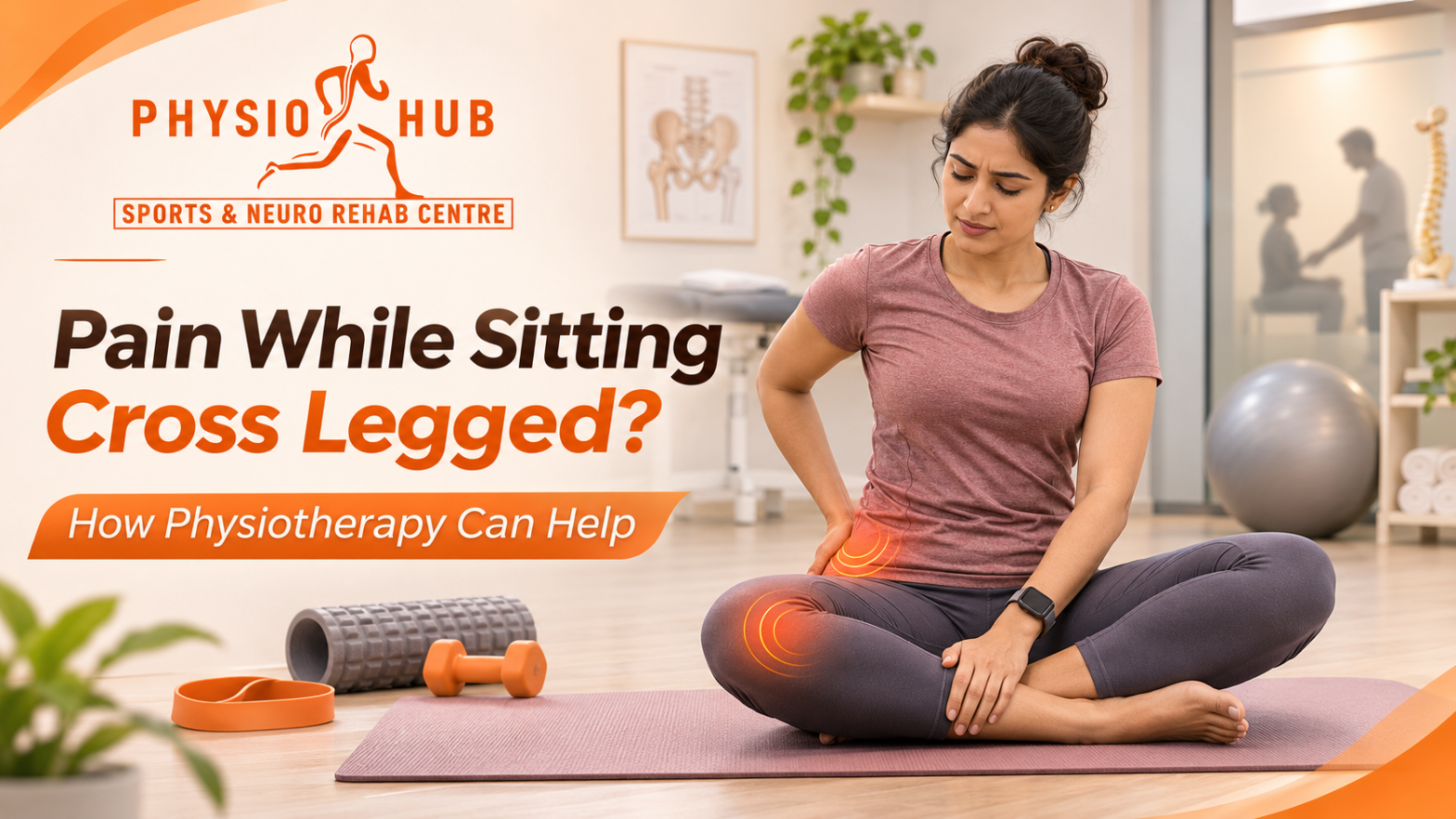
Pain while sitting cross legged is a common concern experienced by individuals of different age groups. In India, sitting on the floor is often a part of everyday activities such as eating, praying, practising yoga, meditating and attending family gatherings. However, these simple activities may become uncomfortable when stiffness or pain is experienced in the hips, knees or lower back.
For many individuals, discomfort may initially be noticed after sitting for a few minutes. Over time, difficulty folding the legs, maintaining the position or getting up from the floor may also be experienced.
These limitations may be associated with reduced joint mobility, muscle tightness, prolonged sitting, previous injuries or age-related changes. Although temporary relief may be obtained through rest or stretching, the underlying cause may remain unaddressed.
By consulting a physiotherapist in Malad, movement restrictions can be assessed, and a personalised rehabilitation programme can be recommended. Through appropriate physiotherapy, joint mobility, muscle flexibility and functional strength may be improved, making everyday activities more comfortable and manageable.
How Can Physiotherapy Help With Pain While Sitting Cross Legged?
Pain while sitting cross legged can be managed through physiotherapy by addressing restricted hip mobility, knee stiffness, muscle tightness and reduced joint stability. Through targeted exercises, gentle joint mobilisation, muscle strengthening and functional movement training, discomfort may be reduced and the ability to sit comfortably on the floor may be improved.
What Is Pain While Sitting Cross Legged?
Pain while sitting cross legged refers to discomfort experienced around the hips, knees, ankles or lower back when the legs are folded in a seated position.
A combination of hip rotation, knee flexion, pelvic stability and muscle flexibility is required to maintain this posture comfortably.
When movement is restricted in one or more joints, additional stress may be placed on surrounding muscles and tissues.
Common symptoms include:
-
Hip pain while sitting on the floor
-
Knee pain when folding the legs
-
Tightness around the inner thighs
-
Lower back discomfort
-
Difficulty lowering the knees towards the floor
-
Stiffness when getting up
-
Discomfort on one side of the body
The location and intensity of discomfort may vary depending on the underlying condition.
What Causes Pain While Sitting Cross Legged?
Several factors may contribute to discomfort during cross-legged sitting.
-
Restricted hip mobility: When outward hip rotation is limited, additional pressure may be placed on the knees and surrounding tissues.
-
Muscle tightness: Tightness in the inner thighs, gluteal muscles and hip flexors may restrict comfortable movement.
-
Knee joint problems: Arthritis, meniscus injuries or previous ligament injuries may cause discomfort when the knees are folded.
-
Prolonged sitting: Reduced movement variety associated with desk jobs and sedentary lifestyles may contribute to joint stiffness.
-
Weak hip and core muscles: Reduced muscular support may affect pelvic stability and sitting comfort.
-
Previous injuries: Movement restrictions may remain following sports injuries, accidents or surgical procedures.
-
Age-related joint changes: Reduced flexibility and joint mobility may gradually be experienced with ageing.
-
Lower back problems: Certain spinal or muscular conditions may contribute to discomfort during floor sitting.
An individual physical assessment is recommended to identify which factors are responsible for the pain.
How Is Pain While Sitting Cross Legged Treated Through Physiotherapy?
A systematic rehabilitation approach is followed to address the underlying causes of discomfort rather than providing temporary pain relief alone.
Step 1: Detailed Physical Assessment
A physical examination is performed to understand the patient’s movement limitations, medical history and symptoms.
The following areas are assessed:
-
Hip and knee range of motion
-
Muscle strength and flexibility
-
Joint stability
-
Pelvic alignment
-
Sitting posture and movement patterns
Based on the findings, an appropriate treatment programme is developed.
Step 2: Hip Mobility Exercises
Controlled hip mobility exercises may be introduced to improve joint movement and outward rotation.
Through gradual practice, movement restrictions may be reduced without placing unnecessary pressure on the knees.
Step 3: Targeted Muscle Stretching
Gentle stretching exercises may be recommended for the inner thighs, hip flexors, hamstrings and gluteal muscles.
The intensity of stretching is adjusted according to individual flexibility, pain levels and joint health.
Step 4: Muscle Strengthening Exercises
Targeted exercises are prescribed to strengthen the muscles surrounding the hips, knees and lower back.
Improved muscular support may help reduce excessive stress on the joints during everyday movements.
Step 5: Manual Therapy and Joint Mobilisation
Where clinically appropriate, manual therapy and gentle joint mobilisation may be included to address stiffness and improve movement.
These techniques are generally combined with active rehabilitation exercises.
Step 6: Functional Movement Training
Supported floor sitting, gradual leg folding and controlled sit-to-stand movements may be introduced.
Through personalised physiotherapy in Malad, progress can be monitored and exercises can be modified according to individual recovery.
Quick Summary: How Physiotherapy Helps
| Problem | Physiotherapy approach |
|---|---|
| Hip stiffness | Hip mobility exercises |
| Knee discomfort | Joint mobility and strengthening |
| Muscle tightness | Targeted stretching |
| Reduced stability | Hip and core strengthening |
| Difficulty sitting on the floor | Functional movement training |
Important: Cross-legged sitting should not be forced through sharp or persistent pain.
What Are the Benefits of Physiotherapy for Pain While Sitting Cross Legged?
When an appropriate rehabilitation programme is followed, several functional benefits may be experienced.
-
Improved hip and knee mobility
-
Reduced muscle stiffness and tightness
-
Better flexibility and movement control
-
Improved muscular strength and joint stability
-
Reduced discomfort during floor-sitting activities
-
Improved ability to get up from the floor
-
Greater independence during everyday activities
-
Better understanding of safe movement techniques
Rather than focusing only on pain reduction, greater importance is placed on restoring comfortable and functional movement.
Physiotherapy vs Other Treatments for Cross-Legged Sitting Pain
Different approaches may be considered for managing discomfort. However, treatment suitability is determined by the underlying cause.
| Treatment approach | Primary purpose | Considerations |
|---|---|---|
| Physiotherapy | Improves mobility, strength and functional movement | Personalised assessment and regular practice are required |
| Pain medication | Provides symptom relief | Underlying movement restrictions may remain |
| Massage therapy | Helps relieve muscle tension | Joint mobility and strength may not be adequately addressed |
| General stretching | Improves muscle flexibility | May not address specific joint conditions |
| Yoga | Supports flexibility and body awareness | Certain postures may need modification |
| Chiropractic care | Provides manual treatment for selected musculoskeletal conditions | Suitability depends on the clinical condition |
When a chiropractor in Malad or physiotherapy services are being considered, the treatment approach should be selected according to individual symptoms and assessment findings.
Who Should Consider Physiotherapy for Cross-Legged Sitting Pain?
Physiotherapy may be beneficial for individuals experiencing persistent discomfort or restricted movement during floor-sitting activities.
It may be considered by:
-
Office professionals experiencing hip stiffness
-
Senior citizens with reduced joint mobility
-
Individuals experiencing knee pain while folding their legs
-
Athletes recovering from lower limb injuries
-
Individuals with sedentary lifestyles
-
Yoga practitioners experiencing restricted flexibility
-
Individuals recovering from hip or knee surgery, following medical clearance
For injury-related movement restrictions, rehabilitation may be provided by a sports physiotherapist in Malad.
When mobility limitations are associated with neurological conditions, specialised neuro physiotherapy in malad may also be considered.
Medical attention should be sought if sudden swelling, severe pain, joint locking or an inability to bear weight is experienced.
How Much Does Physiotherapy for Cross-Legged Sitting Pain Cost?
The cost of physiotherapy may vary according to the severity of symptoms and individual rehabilitation requirements.
Pricing is generally influenced by the following factors:
-
Initial physical assessment
-
Underlying medical condition
-
Number of sessions required
-
Treatment techniques recommended
-
Previous injuries or surgical history
-
Duration of rehabilitation
While searching for physiotherapy near me, importance should be given to professional qualifications, personalised treatment and clinical assessment rather than cost alone.
An accurate treatment estimate can be provided following an initial consultation.
What Are the Latest Physiotherapy Trends in 2026?
In 2026, physiotherapy continues to be influenced by personalised rehabilitation, functional movement assessment and emerging healthcare technologies.
Some important approaches include:
-
Functional movement assessment: Everyday movements are assessed alongside joint mobility and pain levels.
-
Personalised rehabilitation: Exercises are selected according to individual physical abilities and recovery goals.
-
Preventive physiotherapy: Movement restrictions are addressed before further functional limitations develop.
-
Digital rehabilitation: Home exercise programmes and progress monitoring may be supported through digital platforms.
-
AI-assisted physiotherapy: Emerging technologies are being explored to support clinical assessment and rehabilitation planning.
In October 2026, World Physiotherapy held a global summit on artificial intelligence and subsequently developed guiding principles for its responsible use in physiotherapy.
World Physiotherapy+1
Professional assessment and patient-specific treatment remain essential components of rehabilitation.
Why Choose Physio Hub – Dr. Pooja Mehta in Malad?
At Physio Hub – Dr. Pooja Mehta, emphasis is placed on understanding the underlying causes of pain, stiffness and restricted movement.
Personalised physiotherapy programmes are designed according to individual physical conditions, lifestyle requirements and functional goals.
Specialised services include:
-
Musculoskeletal physiotherapy
-
Sports injury rehabilitation
-
Neurological rehabilitation
-
Chiropractic care
-
Joint mobility and strengthening exercises
-
Neck and shoulder pain treatment
-
Functional rehabilitation
Whether discomfort is experienced while sitting cross-legged, walking, exercising or performing everyday activities, appropriate treatment options can be recommended following a detailed physical assessment.
Frequently Asked Questions (FAQs)
1. Why do I experience knee pain while sitting cross legged?
Knee pain may be caused by restricted hip mobility, knee stiffness, previous injuries or joint conditions such as arthritis. The underlying cause can be identified through a physical assessment.
2. Why does my hip hurt when I sit cross legged?
Hip discomfort may be associated with restricted outward rotation, muscle tightness or hip joint problems. Physiotherapy may help improve mobility and address suitable movement-related causes.
3. Can physiotherapy reduce pain while sitting cross legged?
Yes, discomfort may be reduced through targeted mobility exercises, muscle strengthening, stretching and functional rehabilitation, depending on the underlying condition.
4. Is pain while sitting cross legged a sign of arthritis?
Not necessarily. Although arthritis may contribute to discomfort, muscle tightness, reduced flexibility, previous injuries and joint stiffness may also be responsible.
5. How can I make cross-legged sitting more comfortable?
Discomfort may be reduced by using a supportive cushion, avoiding prolonged sitting and gradually improving hip mobility. Persistent pain should be assessed by a qualified physiotherapist near me before specific exercises are attempted.
Take the First Step Towards Pain-Free Movement
Pain while sitting cross legged should not be ignored, especially when everyday activities are affected.
Through timely assessment, personalised exercises and appropriate rehabilitation, movement restrictions may be addressed and everyday mobility may be improved.
Consult a physiotherapist in Malad at Physio Hub – Dr. Pooja Mehta and take the first step towards more comfortable and confident movement.