Plot No. 5, Evershine Nagar, Next To Landmark, Link Road, Malad West
Blog Category

Tennis elbow and wrist pain can make even simple tasks feel difficult. Holding a cup, typing on a laptop, lifting a grocery bag, using a mouse, opening a jar, cooking, driving, or working out can suddenly become painful. If this pain keeps coming back or starts affecting your daily routine, guided Physiotherapy in Malad mumbai with a trusted physiotherapist in Malad, Mumbai can help you understand the cause, reduce strain, and begin the right recovery plan.

Many people feel confused when they hear the term “tennis elbow.” They think, “But I don’t even play tennis.” The truth is, tennis elbow is not limited to tennis players. It can affect office workers, gym-goers, homemakers, chefs, drivers, painters, mechanics, athletes, and anyone who uses the wrist and forearm repeatedly.

In the beginning, the pain may feel mild. You may rest for a day or two, apply a balm, or avoid lifting heavy things. Sometimes it settles. But what if the pain comes back every time you grip, twist, type, or lift?

That is when your elbow and wrist may need proper assessment.

A trusted physiotherapist in Malad, Mumbai can check your elbow, wrist, grip strength, posture, muscle tightness, and daily movement habits to understand the real cause of pain.

At PhysioHub in Malad, Mumbai, treatment focuses on pain relief, tendon loading, strengthening, wrist mobility, posture correction, and safe return to work, sports, and daily activities.

Physiotherapy helps tennis elbow and wrist pain by reducing pain, improving wrist and elbow mobility, strengthening forearm muscles, correcting grip and movement patterns, and guiding activity modification. A physiotherapist also checks posture, shoulder support, and work habits to prevent repeated strain and improve long-term recovery.

What is Tennis Elbow and Wrist Pain?
Physiotherapist in malad| Physiohub

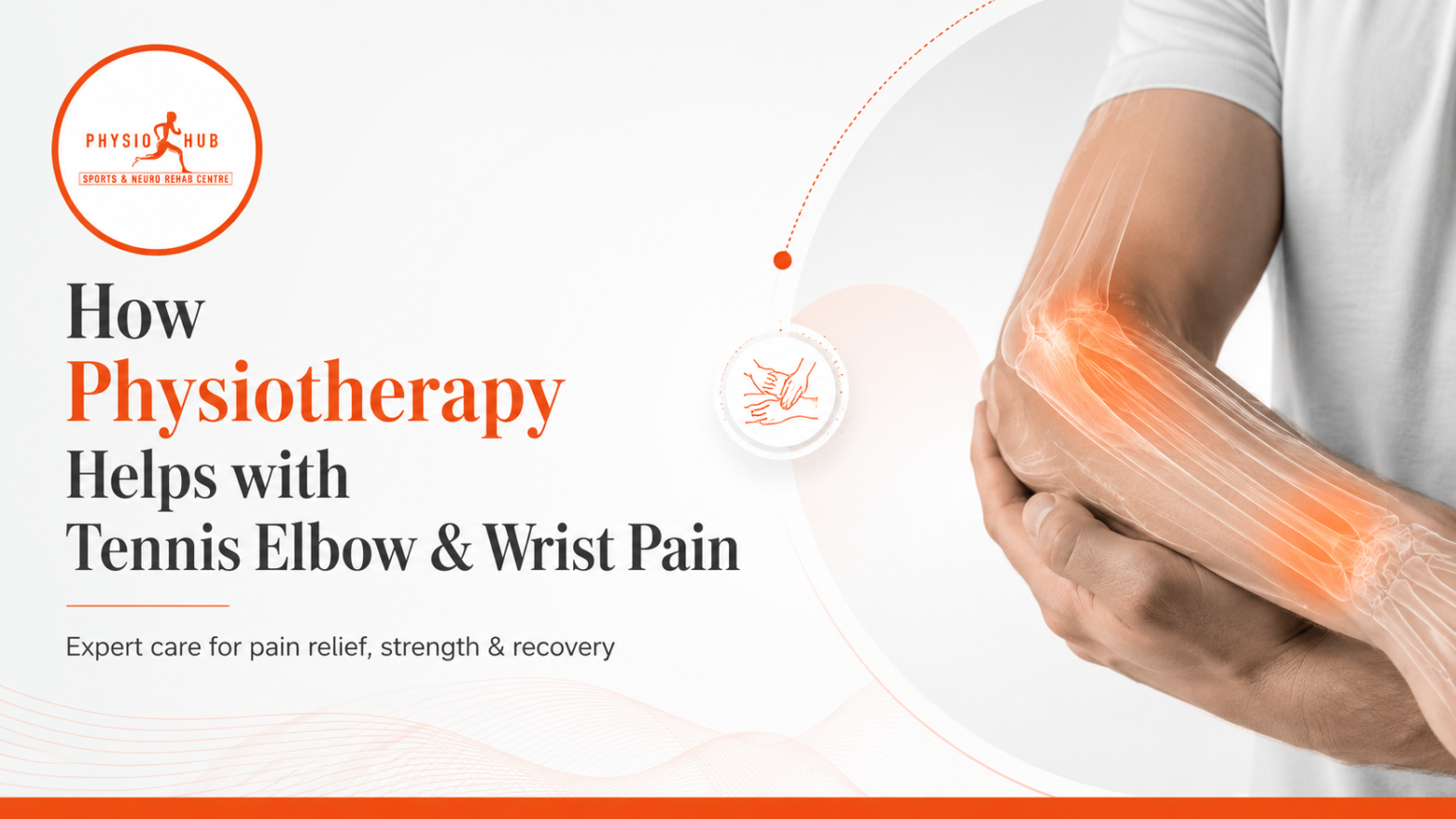
Tennis elbow, also called lateral epicondylitis, is pain around the outer side of the elbow. It usually happens when the forearm muscles and tendons are overloaded. This often occurs during repeated gripping, lifting, twisting, typing, or wrist movements.

Wrist pain may also happen along with tennis elbow. This is because the wrist and elbow work closely together. The muscles that move your wrist and fingers attach near the elbow. When these muscles are strained or overused, pain may show up in both the elbow and wrist.

Common symptoms include:

  • Pain on the outer side of the elbow
  • Pain while gripping objects
  • Wrist pain during typing or lifting
  • Weak grip strength
  • Pain while opening jars or doors
  • Forearm tightness
  • Pain while using a mouse
  • Pain during gym exercises
  • Tenderness around the elbow
  • Stiffness after activity

For example, you may feel pain while lifting a water bottle, holding a pan, shaking hands, or doing bicep curls at the gym. Sometimes even pressing the computer mouse for long hours can irritate the area.

A physiotherapist in Malad, Mumbai helps identify whether the pain is due to tendon overload, muscle weakness, poor wrist posture, repeated strain, shoulder weakness, or poor work ergonomics.

Tennis elbow is outer elbow pain caused by overload of forearm muscles and tendons. Wrist pain can occur because the wrist and elbow muscles work together. Physiotherapy helps reduce strain and rebuild strength.

Why Do Tennis Elbow and Wrist Pain Happen?

Tennis elbow and wrist pain often develop slowly. It may not always be one sudden injury. In many cases, small repeated movements overload the tendons over time.

You may not notice it on the first day. But after weeks of typing, lifting, gripping, cooking, gym training, or using tools, the elbow and wrist can start feeling painful.

Common causes include:

  • Repeated typing or mouse use
  • Excessive gripping
  • Lifting heavy bags or weights
  • Poor gym technique
  • Tennis, badminton, cricket or racquet sports
  • Repeated twisting motions
  • Cooking and chopping for long hours
  • Using tools like screwdrivers or pliers
  • Poor wrist position while working
  • Weak forearm muscles
  • Weak shoulder and upper-back support
  • Sudden increase in workout load
  • Poor posture during desk work
  • Lack of rest between repeated tasks
  • Ignoring early elbow or wrist pain

Think about an office worker who spends long hours on a laptop. The wrist stays in one position, the forearm keeps working, and the shoulder posture slowly changes. After a few weeks, wrist pain may begin.

Or imagine a gym-goer doing pull-ups, deadlifts, or curls with poor grip control. The elbow starts hurting, but they continue training because the pain feels “manageable.” Later, even daily tasks become uncomfortable.

A homemaker may notice pain while lifting utensils, squeezing clothes, chopping vegetables, or carrying grocery bags. A sportsperson may feel pain while holding a racquet or bat.

Does this mean you should completely stop using your hand? Not always. But you may need the right guidance to reduce strain and help the tissues recover safely.

Many people search for Physiotherapy in Malad only after pain affects work, sports, or daily activities. Early assessment can help prevent the pain from becoming chronic.

How Does Physiotherapy for Tennis Elbow and Wrist Pain Work Step by Step?

Physiotherapy for tennis elbow and wrist pain is a structured process. The goal is not only to reduce pain, but also to improve how your elbow, wrist, shoulder, and hand work together.

A good physiotherapy plan looks at the full chain of movement. Why? Because the painful area is not always the only problem.

Step 1: Detailed Pain and Activity Assessment

The physiotherapist first understands your symptoms, routine, and activity pattern.

They may ask:

  • When did the pain start?
  • Is the pain near the elbow, wrist, or forearm?
  • Does it hurt while gripping?
  • Does typing increase pain?
  • Do you play sports?
  • Do you lift weights?
  • Is your grip weak?
  • Does pain affect daily work?
  • Have you had any past injury?
  • Does pain increase in the morning or evening?

These questions help identify what is repeatedly loading the tendon.

For example, pain after typing may need ergonomic correction. Pain during gym training may need grip and load modification. Pain during sports may need technique correction, strengthening, and return-to-play guidance.

Step 2: Elbow, Wrist and Grip Examination

The physiotherapist checks how your elbow, wrist, forearm, shoulder, and hand are functioning.

This may include:

  • Elbow movement
  • Wrist movement
  • Forearm rotation
  • Grip strength
  • Finger strength
  • Tendon tenderness
  • Muscle tightness
  • Shoulder mobility
  • Neck posture
  • Workstation posture
  • Sports or gym movement pattern

Sometimes the wrist hurts because the forearm muscles are overloaded. Sometimes the elbow hurts because the shoulder is weak and the forearm is doing extra work.

For example, if the shoulder blade is not stable during lifting, the elbow and wrist may take extra pressure. If your desk setup keeps the wrist bent for hours, the forearm muscles may stay under strain.

This is why a full assessment matters.

Step 3: Pain Relief and Load Reduction

If pain is high, the first goal is to reduce irritation and make daily tasks easier.

Treatment may include:

  • Activity modification
  • Soft tissue release
  • Gentle manual therapy
  • Taping or brace advice if needed
  • Ice or heat guidance
  • Pain-relieving modalities
  • Gentle mobility exercises
  • Wrist and elbow positioning advice

At this stage, the physiotherapist may suggest reducing painful gripping, changing your mouse position, modifying gym exercises, or using both hands while lifting objects.

This does not mean you have to stop everything. It means the painful tissues need some relief while the body starts healing.

Small changes can help. Holding objects closer to the body, reducing sudden gripping, taking short breaks during typing, or changing your workout load can reduce irritation.

Step 4: Mobility and Stretching Exercises

Once pain starts reducing, gentle movement helps prevent stiffness.

Exercises may include:

  • Wrist flexor stretches
  • Wrist extensor stretches
  • Forearm rotation exercises
  • Elbow range-of-motion exercises
  • Finger mobility exercises
  • Shoulder and upper-back mobility
  • Nerve mobility exercises if needed

These exercises should not cause sharp pain. Mild stretching may feel comfortable, but forceful stretching can irritate symptoms.

A guided plan is safer than doing random exercises online. Every person’s pain pattern is different. What helps one person may not suit another.

Step 5: Strengthening and Tendon Loading

This is one of the most important stages of recovery.

Tennis elbow often needs progressive strengthening. The tendon must slowly learn to tolerate load again. Rest alone may reduce pain for some time, but if the tendon remains weak, pain can return when you start typing, lifting, gripping, or playing again.

Exercises may include:

  • Isometric wrist exercises
  • Eccentric wrist extension exercises
  • Grip strengthening
  • Forearm strengthening
  • Shoulder blade strengthening
  • Upper-back strengthening
  • Functional lifting practice
  • Sports-specific drills

A good physiotherapist in Malad, Mumbai will progress exercises based on your pain, strength, and daily needs.

For example, an office worker may start with gentle forearm strengthening and ergonomic correction. A gym-goer may need gradual grip strengthening and modified pulling exercises. A badminton player may need sport-specific wrist and shoulder control.

Step 6: Return to Work, Gym or Sports

The final step is returning safely to normal activity.

This may include:

  • Desk setup correction
  • Mouse and keyboard advice
  • Grip correction
  • Lifting technique correction
  • Gym exercise modification
  • Racquet or sports technique guidance
  • Load progression
  • Home exercise plan
  • Prevention exercises

This stage helps you return with confidence. You learn what to avoid, what to modify, and how to progress safely.

For many people, this is the most reassuring part of physiotherapy. You do not just recover from pain; you also learn how to prevent it from coming back.

Physiotherapy for tennis elbow and wrist pain includes assessment, pain relief, movement correction, stretching, strengthening, tendon loading, and safe return to work, gym, or sports.

Benefits of Physiotherapy for Tennis Elbow and Wrist Pain

Physiotherapy can help reduce pain and improve your ability to use the hand comfortably again.

It also helps you understand why the pain started and what changes are needed in daily life.

Key benefits include:

  • Reduces elbow and wrist pain
  • Improves grip strength
  • Reduces forearm tightness
  • Improves wrist and elbow mobility
  • Helps with typing and mouse-related pain
  • Supports safe lifting
  • Corrects wrist and forearm posture
  • Helps prevent repeated strain
  • Strengthens forearm muscles
  • Improves shoulder and upper-back support
  • Helps return to gym or sports
  • Reduces dependence on painkillers
  • Provides home exercise guidance
  • Builds confidence in daily activities
  • Supports long-term recovery

For example, an office worker may need workstation correction and forearm strengthening. A gym-goer may need grip modification and load management. A badminton or tennis player may need technique correction and progressive strengthening.

For athletes and active individuals, a Sports Physiotherapist in Mumbai can help with performance-focused rehab and return-to-play planning.

Physiotherapy is not only about reducing pain for a few days. It is about helping your elbow and wrist handle daily load better.

Physiotherapy vs Other Options for Tennis Elbow and Wrist Pain

Option Main Focus Best For Limitation
Physiotherapy Pain relief, tendon loading, strengthening, movement correction Recurring elbow and wrist pain Needs consistency
Rest Reduces short-term irritation Mild early pain Does not rebuild tendon strength
Painkillers Temporary pain control Short-term discomfort Does not correct overload
Brace Reduces strain during activity Selected tennis elbow cases Does not fix weakness alone
Massage Relaxes tight muscles Forearm tightness Relief may be temporary
Steroid injection Short-term pain reduction Selected severe cases Repeated use may weaken tissue
Surgery Structural repair Rare long-term cases Usually considered after failed conservative care

Many people try rest, painkillers, massage, or a brace first. These may help reduce discomfort for a short time. But what happens when pain returns as soon as you start lifting, typing, or gripping again?

That usually means the root cause still needs attention.

Many people also search for a Chiropractor in Malad or osteopathy in Malad when pain is linked to posture, neck stiffness, or upper-limb movement issues. These approaches may help in selected cases after proper assessment.

However, Physiotherapy in Malad is often preferred for tennis elbow and wrist pain because it includes exercise-based recovery, tendon loading, ergonomic correction, and functional strengthening.

Rest may reduce pain for a few days. But if the tendon remains weak, pain can return when you lift, type, grip, or play again.

Who Needs Physiotherapy for Tennis Elbow and Wrist Pain?

You may need physiotherapy if elbow or wrist pain is affecting your work, exercise, sleep, or daily comfort.

You may need physiotherapy if you have:

  • Pain on the outside of the elbow
  • Wrist pain during typing
  • Pain while using a mouse
  • Weak grip strength
  • Pain while lifting a cup or bag
  • Pain while opening jars
  • Pain during gym exercises
  • Pain while playing tennis or badminton
  • Forearm tightness
  • Pain that keeps coming back
  • Difficulty doing daily tasks
  • Numbness or tingling with wrist pain
  • Pain after repetitive work
  • Pain that affects work or sleep

You should get checked early if pain lasts more than a few days, affects grip, or keeps returning after rest.

For example, if opening a bottle hurts every time, or your hand feels weak while lifting a bag, it is better to get assessed. If wrist pain makes typing difficult at work, ignoring it may make recovery slower.

People with sports-related elbow or wrist strain may benefit from a Sports Physiotherapist in Mumbai.

Patients with nerve-related symptoms, weakness, or post-stroke hand issues may need support from a Neuro rehab centre in Malad or Neuro physio therapy in Malad.

A trusted physiotherapist in Mumbai can help decide whether your pain needs basic rehab, sports rehab, ergonomic correction, or advanced assessment.

Cost and Pricing Factors for Tennis Elbow and Wrist Pain Physiotherapy

The cost of physiotherapy for tennis elbow and wrist pain depends on the cause, severity, and recovery goals.

Not every elbow or wrist pain case needs the same treatment plan. Mild early pain may need fewer sessions, while long-standing pain with weak grip may need a more structured rehab program.

Common pricing factors include:

  • Duration of pain
  • Pain severity
  • Grip weakness
  • Wrist stiffness
  • Tendon irritation level
  • Need for manual therapy
  • Need for strengthening program
  • Workstation correction needs
  • Sports or gym rehab needs
  • Number of sessions required
  • Use of modalities
  • Therapist expertise
  • Clinic-based or home-based care
  • Home exercise plan follow-up

For example, mild wrist strain from typing may need fewer sessions. Long-standing tennis elbow with weak grip and repeated pain may need a longer strengthening program.

A person who wants to return to daily work may need a different plan than a sportsperson returning to racquet sports or a gym-goer returning to heavy lifting.

The best way to understand cost is to consult a physiotherapist in Malad, Mumbai for assessment. Once the cause is clear, the therapist can explain the plan and expected session frequency.

Industry Trends in 2026

In 2026, care for tennis elbow and wrist pain is becoming more active, ergonomic, and prevention-focused.

People no longer want only temporary pain relief. They want to keep working, training, playing, and using their hands without fear of pain returning.

Important trends include:

  • Tendon loading programs
  • Grip strength assessment
  • Ergonomic correction for desk workers
  • Sports-specific elbow rehab
  • Gym load management
  • Wearable-supported activity tracking
  • Home exercise monitoring
  • Manual therapy with active rehab
  • Shockwave therapy in selected tendon cases
  • Digital posture and workstation education
  • Prevention-focused physiotherapy

With more people using laptops, phones, and fitness training routines, elbow and wrist pain is being seen in both office workers and active people.

Another trend is patient education. People want to know what they can do at home, how to adjust their desk, and how to return to workouts safely.

The future of rehab is not about saying “stop everything.” It is about modifying load, building strength, improving technique, and returning safely.

In 2026, tennis elbow and wrist pain rehab focuses on tendon loading, ergonomic correction, grip strength, sports rehab, load management, and long-term prevention.

Why Choose PhysioHub as the Best Physiotherapist in Malad, Mumbai?

PhysioHub offers personalized physiotherapy care for tennis elbow, wrist pain, sports injuries, posture-related pain, neuro rehab, and movement recovery in Malad, Mumbai.

If you are looking for a trusted physiotherapist in Malad, Mumbai, PhysioHub provides assessment-based care focused on pain relief, strength, mobility, and long-term recovery.

Why patients choose PhysioHub:

  • Detailed elbow and wrist assessment
  • Personalized treatment plan
  • Pain relief and mobility care
  • Forearm and grip strengthening
  • Ergonomic correction guidance
  • Sports injury rehabilitation
  • Gym injury support
  • Neuro rehabilitation support
  • Patient-friendly care
  • Convenient location in Malad, Mumbai

PhysioHub supports patients looking for Physiotherapy in Malad, physiotherapist in Mumbai, Sports Physiotherapist in Mumbai, Neuro rehab centre in Malad, Neuro physio therapy in Malad, Chiropractor in Malad, osteopathy in Malad, and acl rehab in Malad.

The goal is simple: help you reduce pain, improve grip, move better, and return to work, sports, and daily activities with confidence.

At PhysioHub, the focus is not only on pain relief. The aim is to help you understand your body, correct the cause, and reduce the chances of repeated pain.

FAQs

1. Can physiotherapy help tennis elbow?

Yes. Physiotherapy can help tennis elbow by reducing pain, improving mobility, strengthening forearm muscles, correcting movement patterns, and guiding safe return to daily tasks, gym, or sports.

2. Why does tennis elbow cause wrist pain?

Tennis elbow can cause wrist pain because the forearm muscles that move the wrist and fingers attach near the elbow. When these muscles are overloaded, pain may be felt in both the elbow and wrist.

3. When should I see a physiotherapist for wrist pain?

You should see a physiotherapist if wrist pain lasts more than a few days, affects typing or gripping, causes weakness, keeps returning, or spreads toward the elbow or forearm.

4. Is rest enough for tennis elbow?

Rest may reduce pain temporarily, but it may not rebuild tendon strength or correct the cause. Physiotherapy helps with strengthening, load management, and long-term recovery.

5. Can tennis elbow happen without playing tennis?

Yes. Tennis elbow can happen without playing tennis. It is common in people who do repetitive gripping, typing, lifting, tool use, cooking, gym training, or racquet spo

Elbow or wrist pain should not stop you from working, lifting, typing, cooking, exercising, or enjoying your daily routine.

Visit PhysioHub in Malad, Mumbai and consult a trusted physiotherapist in Malad, Mumbai for tennis elbow, wrist pain, grip weakness, sports rehab, and personalized physiotherapy care.

Book your consultation today and take the first step toward stronger, pain-free movement.

Recurring pain can feel very tiring. One day your back feels fine, and suddenly it starts hurting again after sitting too long. Your knee feels okay during the day, but climbing stairs brings the pain back. Your neck gets better after rest, but after a few hours on the laptop, the stiffness returns.

Have you noticed this pattern?

Many people manage it by taking a painkiller, applying a spray, or resting for a day or two. It may help for some time. But if the real cause is still there, the pain usually comes back.

Repeated pain is often a sign that your body needs proper care. It may be due to weak muscles, poor posture, stiff joints, old injuries, wrong movement habits, or incomplete rehab.

This is where Physiotherapy in malad can make a real difference. A physiotherapist looks beyond the painful area. They check how your body moves, find why the pain keeps returning, and guide you with the right exercises, manual therapy, posture correction, and prevention plan.

At physiohub, the focus is not just quick relief. The goal is long-term recovery, better movement, and fewer repeated injuries. Whether you need sports injury care, acl rehab in malad, or Neuro physio therapy in malad, physiotherapy helps you move with more strength and confidence.

Physiotherapy helps prevent recurring pain and injuries by treating the root cause, improving strength, correcting posture, restoring mobility, and teaching safe movement habits. With the right assessment and rehab plan, Physiotherapy in malad can reduce repeated pain episodes and help patients return to daily activities with better confidence.

What is Physiotherapy for Preventing Recurring Pain and Injuries?

physiotherapist in Malad, Mumbai | physiohub


Physiotherapy for preventing recurring pain and injuries is a planned treatment approach that helps your body heal properly and move safely again.

It is not only about reducing pain for a few days. It is about understanding why the pain keeps coming back in the first place.

For example, lower back pain may not always be just a back problem. It may happen because of weak core muscles, tight hips, long sitting hours, or poor lifting habits. Knee pain may be linked to weak thigh muscles, poor balance, or an old ligament injury that never recovered fully.

A physiotherapist checks your posture, strength, flexibility, joint movement, balance, and daily habits. Based on this, they create a treatment plan that suits your condition and lifestyle.

Physiotherapy may include:

  • Pain relief techniques
  • Manual therapy
  • Mobility exercises
  • Strength training
  • Balance correction
  • Posture education
  • Sports-specific rehab
  • Walking and movement retraining
  • Home exercise planning

Recurring pain is often a sign that the root cause is still present. Physiotherapy in malad helps treat the cause, improve body mechanics, and reduce the chances of repeated pain or injury.

Why Do Recurring Pain and Injuries Happen?

Pain often returns when the body has not fully recovered. Sometimes the pain reduces, but the weakness, stiffness, or poor movement pattern remains.

That is why the same problem may come back after a few days or weeks.

Common causes include:

  • Weak muscles after injury or rest
  • Poor posture during work or daily activity
  • Joint stiffness
  • Lack of flexibility
  • Muscle imbalance
  • Returning to sports too early
  • Incomplete post-surgery rehab
  • Poor lifting or bending habits
  • Repeated strain from desk work
  • Wrong exercise technique
  • Balance or coordination issues
  • Old injuries that were never treated properly
  • Nerve-related movement problems
  • Poor footwear or walking pattern

Recurring pain is not only common in athletes. It can happen to office workers, senior citizens, homemakers, students, gym-goers, and people recovering from surgery.

Think of someone who had knee pain and stopped exercising for a few days. The pain reduced, so they started running again. But because the hips and thighs were still weak, the pain returned.

Or imagine an office worker with neck stiffness. They rest on Sunday and feel better. But by Monday evening, after hours on a laptop, the same pain comes back.

This is why proper physiotherapy matters. It helps correct the reason behind repeated pain instead of only managing the symptoms.

How Does Physiotherapy Work Step by Step?

At physiohub, physiotherapy starts with understanding your pain story. Every patient is different, so the treatment should also be personal.

Two people may have the same back pain, but the reason may be completely different. One may have poor posture. Another may have weak muscles. Someone else may have nerve irritation or an old injury.

That is why a step-by-step approach is important.

Step 1: Detailed Assessment

The physiotherapist checks your pain, posture, movement, strength, flexibility, balance, and daily activity pattern.

They may ask questions like:

  • When does the pain return?
  • What movement triggers it?
  • Does it happen during work, sports, or sleep?
  • Have you had an old injury?
  • Did you stop rehab midway earlier?
  • Are you taking painkillers often?

These questions help your physiotherapist understand what your body is trying to say.

Step 2: Finding the Root Cause

The next step is finding why the pain keeps returning.

For example:

  • Back pain may come from weak core muscles
  • Knee pain may come from poor hip control
  • Shoulder pain may come from stiffness or weak stabilizing muscles
  • Neck pain may come from poor screen posture
  • Sports injuries may come from poor movement mechanics

This step is very important because pain relief alone is not enough. If the root cause is not treated, the pain may come back again.

Step 3: Pain Relief and Mobility Work

If the pain is active, the first goal is to reduce discomfort and help you move better.

Treatment may include:

  • Manual therapy
  • Soft tissue release
  • Gentle mobility exercises
  • Stretching
  • Heat or cold therapy
  • Electrotherapy if needed
  • Posture correction

This stage helps your body feel more comfortable. It also prepares you for strengthening and movement correction.

Step 4: Strength and Stability Training

Once pain starts reducing, strengthening becomes very important.

Weak muscles are one of the main reasons pain returns. When muscles are not strong enough, joints take extra stress. This can lead to repeated pain or injury.

Strength training may include:

  • Core exercises
  • Hip strengthening
  • Knee stability exercises
  • Shoulder control exercises
  • Balance training
  • Resistance exercises
  • Functional movement drills

For ligament injuries, guided acl rehab in malad can help rebuild knee strength, balance, stability, and confidence. This is especially important before returning to running, gym, or sports.

Step 5: Prevention and Home Plan

The final step is teaching you how to protect your body in daily life.

Your physiotherapist may guide you with:

  • Home exercises
  • Safe lifting techniques
  • Sitting posture tips
  • Warm-up and cool-down guidance
  • Return-to-sport planning
  • Workstation correction
  • Activity modification

This is where physiotherapy becomes more powerful. It does not only help you feel better inside the clinic. It also teaches you how to stay better outside the clinic.

What Are the Benefits of Physiotherapy?

Physiotherapy offers long-term benefits when followed properly and consistently.

Key benefits include:

  • Reduces repeated pain episodes
  • Treats the root cause of pain
  • Improves flexibility and mobility
  • Builds strength and stability
  • Corrects posture and movement habits
  • Helps prevent sports injuries
  • Supports safe post-surgery recovery
  • Improves walking and balance
  • Reduces fear of movement
  • Helps patients return to work or sports
  • Supports neuro rehabilitation
  • Reduces dependence on temporary pain relief
  • Improves confidence in daily activities

For many patients, the biggest improvement is not only physical. It is emotional too.

When pain keeps coming back, people often become scared of movement. They may avoid stairs, walking, gym, bending, or even simple household work. Slowly, pain starts controlling their routine.

Physiotherapy helps rebuild trust in the body. Step by step, patients learn what movements are safe, what needs to improve, and how to prevent the same problem from returning.

Physiotherapy vs Painkillers vs Other Treatment Options

Option Main Focus Limitation Best For
Painkillers Temporary pain relief Does not fix weakness, posture, or movement issues Short-term relief under medical advice
Rest Allows short-term recovery Too much rest can increase stiffness and weakness Mild acute pain
Chiropractor in malad Spinal and joint adjustment May not include full strength and rehab planning Joint stiffness and mobility concerns
Osteopathy in malad Whole-body manual approach May vary based on condition Mobility and body alignment support
Physiotherapy Pain relief, strength, movement, posture, and prevention Needs consistency and active effort Long-term recovery and injury prevention

Painkillers, rest, chiropractic care, and osteopathy may help in selected cases. But if pain keeps returning, physiotherapy usually gives a more complete plan.

A Chiropractor in malad may help with spinal stiffness and joint mobility. Osteopathy in malad may support body alignment and mobility.

But physiotherapy focuses on pain, strength, posture, movement, balance, function, and long-term prevention. A trained physiotherapist in mumbai will look at your full movement pattern, not just the painful area.

That is why Physiotherapy in malad is often helpful for people who want recovery that lasts longer than temporary relief.

Who Needs Physiotherapy for Recurring Pain?

You may need physiotherapy if your pain keeps returning or starts affecting your routine.

Physiotherapy can help people with:

  • Repeated back pain
  • Neck pain from screen use
  • Knee pain while climbing stairs
  • Shoulder pain or frozen shoulder
  • Sports injuries
  • Muscle strains
  • Ligament injuries
  • ACL injury or post-ACL surgery rehab
  • Poor posture
  • Sciatica or slip disc symptoms
  • Post-surgery weakness
  • Balance issues
  • Stroke recovery needs
  • Walking difficulty
  • Pain after gym or running
  • Stiffness after long sitting

You do not need to wait until the pain becomes unbearable. Early physiotherapy can often make recovery easier and faster.

For example, if your back pain appears only after long sitting, that is already a sign to get checked. If your knee hurts only on stairs, that is the right time to act. Waiting too long may make the problem more difficult to manage.

A Sports Physiotherapist in mumbai can help athletes and active people return safely after injury. A Neuro rehab centre in malad can support patients who need balance training, walking practice, and movement retraining after neurological conditions.

What Are the Cost and Pricing Factors?

The cost of physiotherapy depends on your condition, treatment type, and number of sessions needed.

Pricing may depend on:

  • Severity of pain
  • Acute or chronic condition
  • Type of injury
  • Manual therapy needs
  • Exercise rehab requirements
  • Sports injury rehab
  • Neuro rehab needs
  • Post-surgery recovery
  • ACL rehab plan
  • Use of advanced equipment
  • Clinic session or home visit
  • Frequency of sessions

A mild posture-related pain may need fewer sessions. But acl rehab in malad, post-surgery care, or Neuro physio therapy in malad may need a longer and more structured plan.

The number of sessions also depends on how your body responds. Some people improve quickly. Others need gradual care, especially if the pain has been present for months or if the injury was not treated earlier.

At physiohub, the treatment plan is explained after assessment so patients understand what is needed, why it is needed, and how recovery may progress.

What Are the Physiotherapy Industry Trends in 2026?

Physiotherapy in 2026 is becoming more personalized, preventive, and technology-supported.

People today do not want only temporary pain relief. They want to understand the cause of pain, track their progress, and prevent the problem from returning.

Globally, rehabilitation needs are increasing due to aging populations, chronic conditions, stroke, sports injuries, lifestyle-related pain, and long sitting hours. Back pain, neck pain, posture problems, and exercise-related injuries are also becoming more common.

Important trends include:

  • AI-assisted movement analysis
  • Digital exercise tracking
  • Hybrid clinic and home rehab support
  • Advanced sports injury prevention
  • Return-to-sport testing
  • Machine-assisted gait training
  • Advanced neuro rehabilitation
  • Posture and ergonomic correction
  • Preventive physiotherapy for office workers
  • Personalized home exercise plans
  • Evidence-based manual therapy
  • Patient education and self-management

In malad Mumbai, patients are becoming more aware too. They are looking for physiotherapy that explains the cause, gives a clear plan, and supports long-term recovery.

Services like sports rehab, Neuro physio therapy in malad, posture correction, and post-surgery rehabilitation are becoming important for people of all age groups.

Why Choose physiohub in malad Mumbai?

physiohub is a trusted choice for people looking for Physiotherapy in malad because the care is focused on assessment, recovery, and prevention.

Every patient comes with a different concern. Some have recurring back pain. Some are recovering from sports injuries. Some need stroke rehabilitation. Others may need support after surgery or ACL injury.

At physiohub, treatment is planned around your pain, movement, lifestyle, and recovery goal.

Patients choose physiohub for:

  • Detailed assessment before treatment
  • Personalized physiotherapy plans
  • Support for back, neck, knee, and shoulder pain
  • Sports injury rehabilitation
  • ACL rehab in malad
  • Neuro rehabilitation and walking support
  • Posture correction
  • Exercise-based recovery
  • Long-term injury prevention
  • Clear explanation of the condition
  • Supportive and comfortable environment

If you are searching for a physiotherapist in mumbai, Sports Physiotherapist in mumbai, Neuro rehab centre in malad, Chiropractor in malad, osteopathy in malad, or Neuro physio therapy in malad, physiohub can help guide you toward the right treatment approach.

The goal is not just to reduce pain for a few days. The goal is to help you move better, feel stronger, and prevent the same pain from becoming part of your daily life.

FAQs

1. Can physiotherapy prevent recurring pain?

Yes. Physiotherapy can help prevent recurring pain by treating the root cause, improving strength, correcting posture, restoring mobility, and teaching better movement habits.

2. When should I start Physiotherapy in malad for repeated pain?

You should start Physiotherapy in malad if pain keeps coming back, affects your work or sleep, limits movement, or returns after exercise. Early treatment can prevent the problem from becoming worse.

3. Is physiotherapy useful for sports injury prevention?

Yes. Physiotherapy helps athletes improve strength, balance, flexibility, and movement control. A Sports Physiotherapist in mumbai can also guide safe return to sport and reduce re-injury risk.

4. Can physiotherapy help after ACL injury?

Yes. ACL rehab in malad can help restore knee strength, balance, mobility, and confidence after ACL injury or surgery. Proper rehab is important before returning to running or sports.

5. Does physiohub offer neuro rehabilitation in malad?

Yes. physiohub supports patients who need Neuro physio therapy in malad, including balance training, walking practice, movement retraining, and stroke recovery support.

Recurring pain should not become your normal.

If the same pain keeps coming back, your body may need more than rest, painkillers, or temporary relief. It may need proper assessment, guided treatment, and a prevention-focused plan.

Book your consultation with physiohub today for Physiotherapy in malad and take the first step toward pain-free movement, stronger recovery, and long-term injury prevention.

Spine and joint pain can slowly take over your day. A stiff neck can make laptop work uncomfortable. Lower back pain can disturb sleep. Knee or shoulder pain can make simple things like climbing stairs, lifting bags, exercising, or even sitting for long hours feel difficult.

Many people in Malad, Mumbai start by looking for quick relief. Some search for a Chiropractor in malad. Some look for Physiotherapy in malad. Others explore osteopathy in malad because they want better posture, mobility, and pain relief.


But here is the real question: what does your body actually need?

Pain does not always come from one clear cause. It may be linked to posture, weak muscles, joint stiffness, nerve irritation, an old injury, sports strain, or post-surgery weakness. That is why choosing the right care matters.

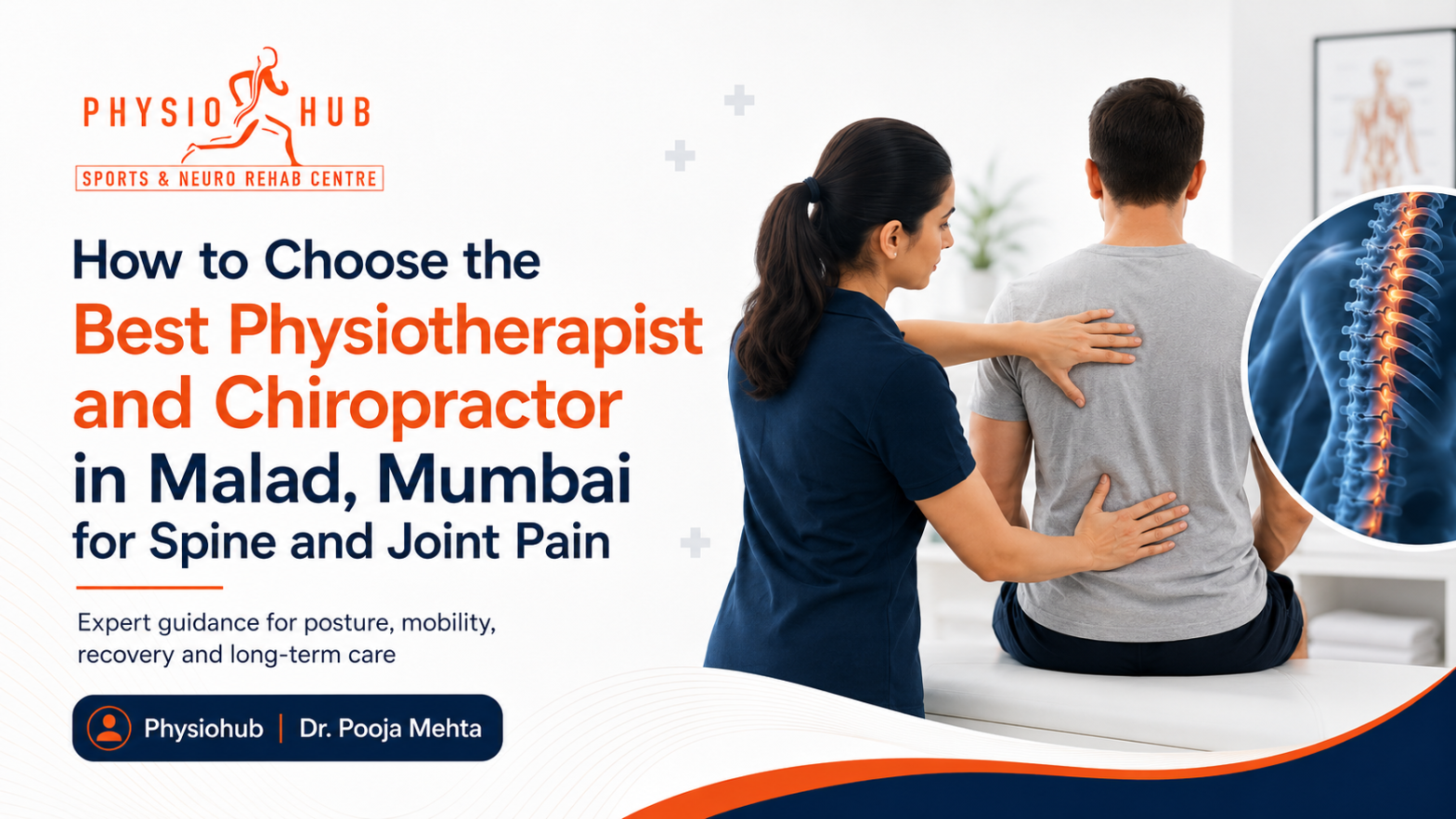
At Physiohub | Dr. Pooja Mehta, the focus is on finding the root cause and creating a safe recovery plan. If you are searching for a trusted Physiotherapist and chiropractor in malad, mumbai, choose care that combines proper assessment, pain relief, movement correction, manual therapy, rehab, and patient education.

How do I choose the best chiropractor or physiotherapist in Malad?

Choose a physiotherapist or chiropractor in Malad by checking their qualification, assessment process, treatment approach, patient reviews, rehab support, safety standards, and experience with spine and joint pain. The best clinic should focus on root-cause diagnosis, pain relief, mobility improvement, strengthening, posture correction, and long-term recovery.

What is Physiotherapist and Chiropractor Care for Spine and Joint Pain?

Physiotherapist and chiropractor care for spine and joint pain is a non-surgical approach that helps reduce pain, improve movement, restore function, and support long-term recovery. It may include assessment, manual therapy, joint mobility work, exercise therapy, posture correction, strengthening, and lifestyle guidance.

Physiotherapy focuses on how your body moves. It works on strength, flexibility, balance, posture, mobility, and daily function.

Chiropractic care often focuses on joint mobility, spinal movement, and manual techniques for selected spine-related conditions.

In a modern rehab setting, both approaches should start with one thing: proper assessment. Treatment should never feel random. What works for one person may not be right for another.

A care plan may include:

  • Spine and joint assessment
  • Posture evaluation
  • Pain and mobility testing
  • Manual therapy when needed
  • Corrective exercises
  • Strength training
  • Ergonomic advice
  • Gait and balance training
  • Sports or injury rehab
  • Home exercise planning

The goal is not only to reduce pain for a few days. The real goal is to help you move better, feel stronger, and reduce the chances of pain returning.

chiropractor in malad mumbai

Why Do You Need the Right Spine and Joint Pain Specialist?

Choosing the right specialist matters because spine and joint pain can have many layers. Sometimes the pain is in your lower back, but the actual issue may be weak hips, poor posture, or tight muscles.

If only the painful area is treated, relief may be temporary. But when the root cause is addressed, recovery becomes more meaningful.

Common reasons people need physiotherapy or chiropractic care include:

  • Neck pain from long screen time
  • Lower back pain due to sitting or lifting
  • Shoulder stiffness or impingement
  • Knee pain while walking or climbing stairs
  • Hip stiffness or poor mobility
  • Sciatica or nerve irritation
  • Posture-related pain
  • Sports injuries
  • Muscle imbalance
  • Joint stiffness
  • Weak core muscles
  • Poor lifting technique
  • Post-surgery weakness
  • Balance or walking difficulty
  • Recurring pain after temporary relief

For example, an office worker may feel neck pain after long hours on a laptop. But the problem may also include rounded shoulders, weak upper back muscles, and poor desk setup.

A gym-goer may complain of back pain after deadlifts. In that case, the issue may be lifting technique, weak core control, or tight hips.

This is why proper assessment matters. Pain relief is important, but long-term recovery needs strength, mobility, posture correction, and better movement habits.

How Does the Treatment Process Work?

A good treatment process should feel clear, safe, and personal. You should know what is being treated, why it is being treated, and how each step supports your recovery.

At Physiohub | Dr. Pooja Mehta in Malad, Mumbai, spine and joint pain care may follow a structured step-by-step plan.

Step 1: Detailed Consultation

The first step is understanding your pain story. When did it start? What makes it worse? What helps? Does it affect your work, sleep, walking, gym routine, or daily confidence?

The physiotherapist checks:

  • Where the pain is located
  • When the pain started
  • What increases or reduces it
  • Whether pain spreads to the arm or leg
  • Your work routine
  • Your activity level
  • Your previous injury history
  • Your fitness or sports routine
  • Your daily posture habits

This helps identify whether the pain is muscle-related, joint-related, posture-related, nerve-related, or linked to weakness.

Step 2: Physical Assessment

The next step is checking how your body moves in real life.

This may include:

  • Spine movement testing
  • Joint mobility testing
  • Muscle strength check
  • Flexibility check
  • Posture assessment
  • Balance assessment
  • Walking pattern assessment
  • Nerve-related screening
  • Functional movement testing

For instance, two people may both say, “I have back pain.” But one may have joint stiffness, while the other may have nerve irritation or weak stabilizing muscles. Their treatment should not be the same.

This step helps the therapist decide whether you need Physiotherapy in malad, chiropractic-style joint mobility work, osteopathy-based manual care, sports rehab, or a combined plan.

Step 3: Pain Relief and Mobility Work

In the early stage, the goal is to calm pain and reduce stiffness. This may include gentle manual therapy, mobility exercises, soft tissue work, joint mobilization, and safe movement guidance.

If chiropractic techniques are suitable, they should be used only after a proper assessment. Safety and comfort should always come first.

Many patients are afraid to move when pain starts. That fear is understandable. But with the right guidance, movement can slowly become safer and easier again.

Step 4: Strength and Corrective Exercises

Once pain starts improving, strengthening becomes important. This is the stage that helps reduce repeated flare-ups.

Your plan may include:

  • Core strengthening
  • Back strengthening
  • Shoulder stability exercises
  • Hip and knee strengthening
  • Mobility drills
  • Balance exercises
  • Functional movement training
  • Return-to-sport training

For example, if your knee pain has changed the way you walk, your back and hips may start taking extra load. If your shoulder is weak, your neck may stay tight. The body works as a chain, so treatment should look beyond one painful point.

Step 5: Posture, Ergonomics and Lifestyle Guidance

Many patients in Malad, Mumbai spend long hours sitting, commuting, working on screens, or driving. These habits can slowly increase stress on the spine and joints.

Your therapist may guide you on:

  • Laptop height
  • Chair support
  • Sitting breaks
  • Sleeping posture
  • Lifting technique
  • Driving posture
  • Exercise form
  • Safe return to gym or sport

Small changes can make a big difference. A better chair setup, regular movement breaks, or corrected lifting form may reduce daily strain more than you expect.

The best spine and joint pain care combines assessment, pain relief, mobility work, strengthening, posture correction, and prevention. Whether you need Physiotherapy in malad, a Chiropractor in malad, or osteopathy in malad, treatment should always match your condition and safety needs.

What Are the Benefits of Choosing the Right Care?

The right care can help you do more than feel temporary relief. It can help you understand your body, move with more confidence, and return to daily life without constantly worrying about pain.

Key benefits include:

  • Reduced spine and joint pain
  • Better neck and back mobility
  • Improved posture
  • Stronger muscles
  • Better walking and balance
  • Reduced stiffness
  • Safer return to work
  • Safer return to gym or sports
  • Better joint control
  • Reduced fear of movement
  • Better body awareness
  • Lower risk of repeated flare-ups
  • Improved daily comfort

There is also an emotional side to pain. When every step, bend, or lift feels risky, your confidence drops. A good recovery plan helps you feel more in control again.

For patients with neurological weakness, walking difficulty, or balance problems, a Neuro rehab centre in malad may be useful. For patients recovering from knee ligament injuries, acl rehab in malad can help restore strength, stability, and safe movement.

Physiotherapist vs Chiropractor vs Osteopathy: Which One Should You Choose?

Many patients feel confused when they compare physiotherapy, chiropractic care, and osteopathy. The terms sound similar, but the focus can be different.

Here is a simple way to understand the options:

Treatment Option Main Focus Best For Limitation
Physiotherapy Pain relief, movement correction, strength, posture, rehab Long-term recovery, sports injury, post-surgery rehab, back and joint pain Needs active participation
Chiropractor in malad Joint mobility and spinal manual techniques Selected stiffness-related spine and joint issues Should be guided by assessment and supported with exercise
osteopathy in malad Whole-body manual approach, mobility, posture balance Mobility restrictions and posture-related discomfort May not be enough without strengthening
Painkillers Temporary symptom relief Short-term pain control Does not correct weakness, posture, or movement patterns
Massage Muscle relaxation Mild tightness or stress-related discomfort Relief may be temporary
Rest only Reduces immediate strain Very acute pain for a short time Too much rest may increase stiffness

Physiotherapy is often preferred when the goal is long-term recovery. Chiropractic or osteopathy-based care may help selected patients, but lasting improvement usually needs exercise, education, and movement retraining.

A Chiropractor in malad may help with selected joint mobility concerns. Osteopathy in malad may support whole-body movement and manual care. Physiotherapy connects pain relief with strengthening, posture correction, functional rehab, and prevention.

Who Needs a Physiotherapist and Chiropractor in Malad, Mumbai?

You may need professional care if pain is affecting your routine, sleep, work, exercise, or confidence.

You should consider visiting a Physiotherapist and chiropractor in malad, mumbai if you have:

  • Back pain lasting more than a few days
  • Neck pain from desk work
  • Shoulder pain or stiffness
  • Knee pain while walking or climbing stairs
  • Hip pain or stiffness
  • Pain travelling to the arm or leg
  • Tingling or numbness
  • Morning stiffness
  • Poor posture
  • Repeated muscle tightness
  • Sports or gym injury
  • Post-surgery weakness
  • Walking or balance difficulty
  • Pain after lifting or twisting
  • Fear of movement due to pain

Ask yourself this: are you changing the way you sit, walk, sleep, or exercise because of pain? If yes, your body may need guided support.

You should seek urgent medical care if you have sudden weakness, loss of bladder or bowel control, unexplained fever, major trauma, severe night pain, or rapidly worsening symptoms.

What Affects the Cost of Treatment?

The cost of spine and joint pain treatment in Malad, Mumbai can vary based on your condition and treatment needs.

Pricing factors may include:

  • Severity of pain
  • Type of condition
  • Acute or chronic pain
  • Number of sessions needed
  • Manual therapy requirement
  • Exercise rehab requirement
  • Need for neuro rehab
  • Need for sports or ACL rehab
  • Advanced equipment use
  • One-on-one therapy time
  • Home exercise monitoring
  • Clinic-based or home-based care

A mild posture-related issue may need fewer sessions. Chronic spine pain, nerve symptoms, sports injuries, post-surgery weakness, or neurological conditions may need a longer rehab plan.

For example, someone with mild neck stiffness from laptop work may need a shorter plan. A person recovering from surgery, ACL injury, or nerve-related pain may need a more structured and longer rehab process.

The best way to understand cost is through a proper assessment. After evaluation, your therapist can suggest a realistic treatment plan and session frequency.

Spine and Joint Pain Care Trends in 2026

In 2026, spine and joint pain care is becoming more personalized, evidence-informed, and movement-focused.

Important trends include:

  • Exercise-led rehab plans
  • Patient education and self-management
  • Manual therapy combined with strengthening
  • Posture correction for desk workers
  • Sports-specific rehab
  • Return-to-gym planning
  • Neuro-musculoskeletal rehabilitation
  • Technology-supported rehab tracking
  • Preventive care for recurring pain
  • Integrated physiotherapy, chiropractic, and osteopathy approaches
  • Focus on long-term function, not only pain relief

More people are searching for a physiotherapist in mumbai who can provide complete care instead of temporary relief. Patients want to know why pain is happening, how to reduce it, and how to stop it from returning.

Modern care is becoming less about “quick fixes” and more about understanding the body as a whole. The aim is to improve movement quality, strength, posture, and confidence.

Why Choose Physiohub | Dr. Pooja Mehta in Malad, Mumbai?

Physiohub | Dr. Pooja Mehta offers patient-focused care for spine and joint pain in Malad, Mumbai. The clinic focuses on detailed assessment, safe treatment, guided rehab, and long-term recovery.

Reasons to choose Physiohub:

  • Detailed assessment before treatment
  • Personalized recovery plans
  • Physiotherapy and rehab-based care
  • Manual therapy when required
  • Posture and ergonomic guidance
  • Neuro rehab support
  • Sports injury care
  • ACL rehab support
  • Exercise-based strengthening
  • Patient education
  • Home exercise guidance
  • Focus on safe, long-term improvement

Whether you are dealing with back pain, neck pain, shoulder stiffness, knee pain, posture issues, sports injury, or post-surgery weakness, Physiohub helps you understand your condition and recover step by step.

For anyone looking for a Physiotherapist and chiropractor in malad, mumbai, the right clinic should help you move better, feel stronger, and return to daily life with confidence.

FAQs About Physiotherapist and Chiropractor Care in Malad

1. How do I choose the best chiropractor in Malad, Mumbai?

Choose a chiropractor or physiotherapy clinic by checking qualification, assessment process, treatment safety, rehab support, patient reviews, and experience with spine and joint pain. A good clinic should focus on diagnosis, pain relief, mobility, strengthening, and prevention.

2. Is a physiotherapist better than a chiropractor for back pain?

It depends on your condition. Physiotherapy focuses on pain relief, movement correction, strength, posture, and rehab. Chiropractic care may help selected joint mobility issues. For long-term recovery, exercise-based rehabilitation is often important.

3. Can physiotherapy help with neck pain and posture problems?

Yes. Physiotherapy can help improve neck mobility, reduce stiffness, strengthen postural muscles, and correct daily habits that increase strain. It is useful for desk workers, students, drivers, and people with screen-related neck pain.

4. Is chiropractic treatment safe for everyone?

Chiropractic-style techniques are not suitable for everyone. Safety depends on your condition, symptoms, medical history, and assessment findings. Patients with nerve symptoms, severe pain, osteoporosis, trauma, or red flags need careful evaluation before manual techniques.

5. When should I visit Physiohub | Dr. Pooja Mehta?

You should visit if you have back pain, neck pain, joint stiffness, sports injury, posture problems, walking difficulty, balance issues, post-surgery weakness, or recurring pain that affects daily life.

Spine and joint pain should not control your work, sleep, fitness, travel, or daily routine.

If you are searching for a trusted Physiotherapist and chiropractor in malad, mumbai, visit Physiohub | Dr. Pooja Mehta for a detailed assessment and personalized recovery plan.

Book your consultation today and take the first step toward pain relief, better movement, and long-term recovery.