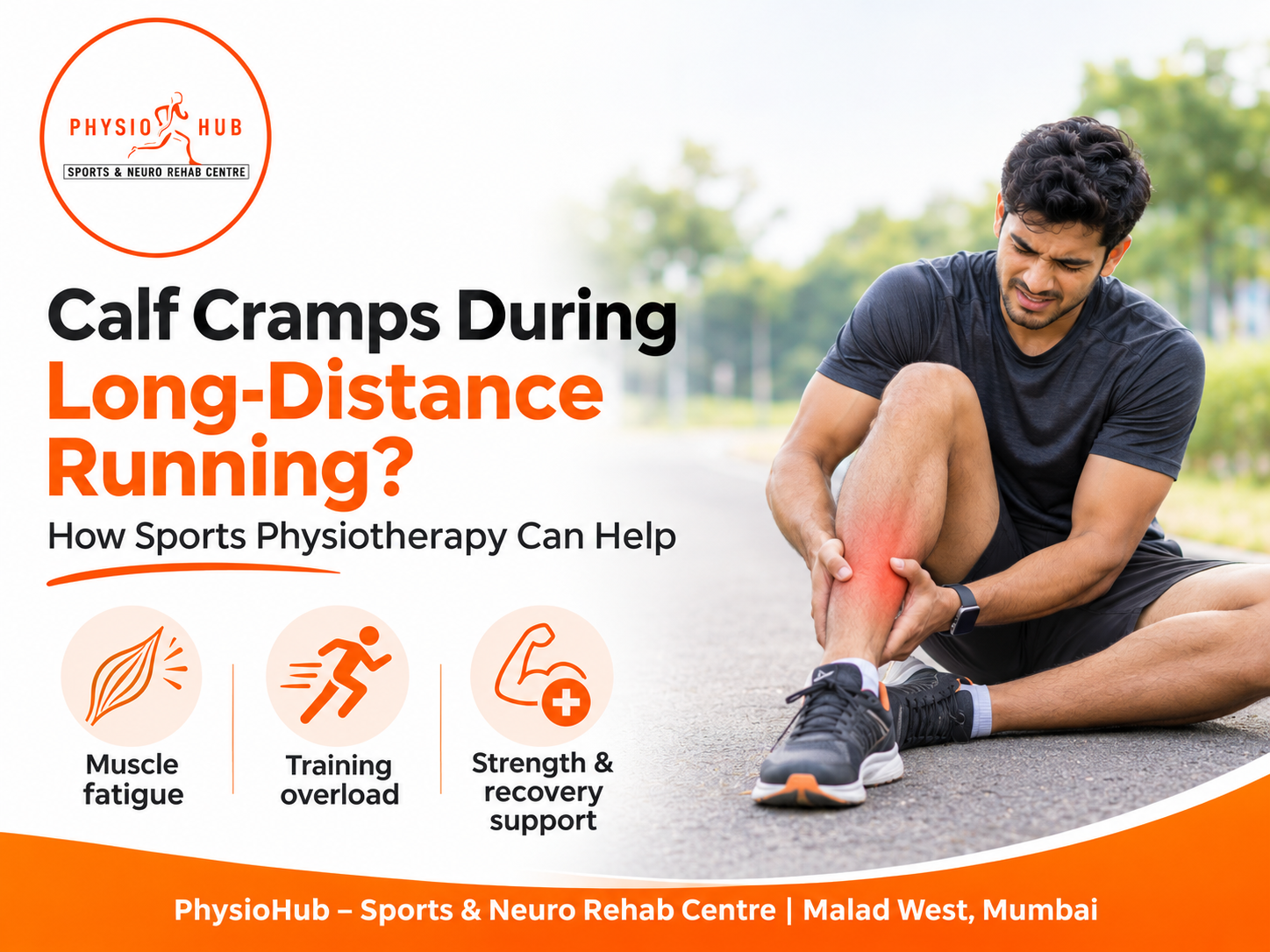
Imagine you’re halfway through your morning run, feeling energetic and maintaining a comfortable pace. Suddenly, your calf tightens, making every step painful. You slow down, stretch your leg, and wonder why this keeps happening.
Sound familiar?
Calf cramps are a frustrating problem for long-distance runners, marathon participants, and fitness enthusiasts. They can appear without much warning, interrupt training sessions, and leave you worried about your next run.
Many runners assume calf cramps happen only because of dehydration or low electrolytes. However, the real explanation is often more complicated. Muscle fatigue, training demands, running mechanics, and individual physical factors may all play a role.
Ignoring repeated cramps can affect your confidence and training consistency. That’s why understanding your body’s response to long-distance running matters.
With guidance from a physiotherapist in Malad, Mumbai, runners can assess muscle strength, movement patterns, and possible triggers behind recurring cramps.
At PhysioHub – Sports & Neuro Rehab Centre, sports physiotherapy in Malad focuses on identifying movement problems, improving physical capacity, and helping runners return to training with greater confidence.
Why Do Calf Cramps Occur During Long-Distance Running?
Calf cramps during long-distance running are sudden, painful, involuntary muscle contractions. They may be linked to muscle fatigue, running demands, previous cramping episodes, and individual physical factors. Sports physiotherapy helps assess possible triggers, improve calf strength and endurance, guide training changes, and develop personalised strategies to manage recurring cramps.
What Are Calf Cramps During Long-Distance Running?
A calf cramp is a sudden, uncontrollable tightening of the muscles at the back of your lower leg. It commonly affects the gastrocnemius or soleus muscle, which helps you walk, run, and push off the ground.
During long-distance running, these muscles work repeatedly to support your body and propel you forward.
When a cramp occurs, you may experience:
-
Sudden, sharp pain in the calf.
-
A tight or hard feeling in the muscle.
-
Difficulty walking or continuing to run.
-
Temporary stiffness or tenderness after the cramp.
Most exercise-related cramps settle within a short period. However, recurring cramps deserve attention, especially when they affect your training.
What Causes Calf Cramps During Long-Distance Running?
There isn’t always one clear reason for calf cramps. Research suggests exercise-associated muscle cramping can involve several interacting factors.
Some possible contributors include:
-
Muscle fatigue: Running longer or harder than your muscles are prepared for may contribute to cramping.
-
Sudden training increases: Rapid changes in running distance, speed, or intensity may place unfamiliar demands on the calves.
-
Limited muscular endurance: Your calf muscles may struggle to maintain repeated contractions throughout a long run.
-
Running mechanics: Stride patterns and movement habits can influence how much work your calf muscles perform.
-
Hydration and nutrition: These remain important for general performance and health, although dehydration or electrolyte loss does not explain every running cramp.
-
Previous cramping history: Runners who have experienced exercise-related cramps may be more likely to experience them again.
A 2026 systematic review involving 11,274 participants found that a previous history of exercise-associated cramps was associated with approximately 4.4 times higher odds of future cramping. Other proposed risk factors showed less consistent evidence.
This is why a personalised assessment can be more useful than relying on a single prevention tip.
How Does Sports Physiotherapy Help Manage Calf Cramps?

Sports physiotherapy in Malad takes a structured approach to understanding why cramps may occur and what a runner can do about them.
A Sports Physiotherapist in Mumbai may use the following steps:
Step 1: Assess Muscle Strength and Flexibility
The physiotherapist examines calf strength, ankle mobility, muscle endurance, and any pain or stiffness.
This helps identify physical limitations that may affect running comfort.
Step 2: Evaluate Running Mechanics
Your walking and running movements may be assessed to understand how your calves handle repeated loading.
For example, a runner who places high demands on the forefoot may require specific calf-strengthening or technique advice.
Step 3: Develop a Strengthening Programme
Exercises may include:
-
Standing calf raises.
-
Bent-knee calf raises.
-
Controlled heel-lowering exercises.
-
Single-leg balance training.
-
Progressive calf endurance exercises.
The number of repetitions and difficulty should match the runner’s current capacity.
Step 4: Guide Recovery and Training
A physiotherapist may recommend changes to running volume, intensity, rest periods, and recovery routines.
Appropriate stretching and hands-on treatment may also be considered when clinically indicated.
Step 5: Support a Gradual Return to Running
Progress is reviewed through strength, endurance, symptoms, and running tolerance.
The aim is to help runners manage discomfort and build the capacity needed for their chosen distance.
What Are the Benefits of Sports Physiotherapy for Runners?
Regular sports physiotherapy in Malad can support runners in several ways, particularly when cramps are frequent or affect performance.
-
Improved calf strength: Progressive exercises help muscles manage the repeated demands of running.
-
Better muscular endurance: Endurance training may help calves tolerate longer running sessions.
-
Improved movement control: Gait assessment can identify movement patterns worth addressing.
-
Personalised injury prevention: Rehabilitation considers previous injuries, physical limitations, and training goals.
-
Greater running confidence: A structured programme helps runners understand how to progress safely.
For athletes searching for a Sports Physiotherapist in Malad, an individual assessment can help identify whether calf cramps are related to training demands or require further medical investigation.
Sports Physiotherapy vs Home Remedies: Which Is Better for Calf Cramps?
Many runners try stretching, drinking water, or taking electrolytes whenever cramps occur.
These approaches may be useful in certain situations, but they do not always address recurring symptoms.
| Approach | Main purpose | Limitations |
|---|---|---|
| Gentle stretching | Relieves an active cramp | Does not identify recurring triggers |
| Hydration | Supports normal fluid balance | May not prevent all cramps |
| Massage | May temporarily ease muscle discomfort | Limited evidence for preventing recurrence |
| Sports physiotherapy | Assesses strength, endurance, movement, and training | Requires consistent participation |
| Guided strength training | Builds muscular capacity over time | Needs appropriate progression |
Evidence-based sports medicine reviews support gentle static stretching for immediate relief and individualised assessment for preventing future episodes.
If a calf suddenly cramps during running, stop, gently stretch the affected muscle, and avoid forcing yourself to continue through severe pain.
Who Should Consult a Sports Physiotherapist for Calf Cramps?
Not every occasional calf cramp requires treatment. However, repeated episodes shouldn’t become something you simply accept as part of running.
Consider consulting a physiotherapist if:
-
Your calves cramp regularly during long runs.
-
You experience repeated tightness despite adjusting your training.
-
Calf discomfort affects your running distance or speed.
-
You are preparing for a marathon or endurance event.
-
You are returning to running after a lower-limb injury.
-
You experience recurring calf problems alongside ankle or knee discomfort.
A professional assessment can also benefit runners recovering from previous injuries.
For example, someone undergoing ACL rehab in Malad may need progressive lower-limb strengthening before returning to demanding running activities.
Important: Sudden calf swelling, redness, warmth, severe persistent pain, or unusual weakness needs medical assessment. Seek urgent care for calf symptoms accompanied by chest pain or breathlessness.
How Much Does Sports Physiotherapy for Calf Cramps Cost in Malad?
The cost of physiotherapy near Malad, Mumbai depends on the type of assessment, individual treatment needs, and rehabilitation programme.
Common pricing factors include:
-
Initial consultation: A detailed assessment may involve strength, mobility, and movement testing.
-
Treatment requirements: Sessions may involve exercise therapy, manual therapy, or specialised rehabilitation techniques.
-
Number of sessions: Recurring problems may require a longer strengthening programme.
-
Individual goals: Marathon preparation and post-injury rehabilitation may involve different levels of support.
Rather than choosing treatment based only on session fees, consider the physiotherapist’s qualifications, assessment process, and approach to personalised rehabilitation.
For current consultation charges, contact PhysioHub directly.
What Are the Latest Sports Physiotherapy Trends for Runners in 2026?
Sports rehabilitation continues to evolve, with growing attention to personalised training, objective movement assessment, and rehabilitation monitoring.
Some developments relevant to runners include:
-
Wearable fitness technology: Smartwatches and fitness devices can help track running distance, heart rate, and training patterns.
-
Sensor-based gait analysis: Wearable movement sensors are being studied for their ability to assess running mechanics and loading.
-
Individualised strength programmes: Exercise plans can be adjusted according to the runner’s current capacity and rehabilitation progress.
-
Training-load monitoring: Reviewing running volume and intensity helps support gradual progression.
The American College of Sports Medicine identified wearable technology as its leading fitness trend for 2026. A systematic review published in January 2026 also highlighted the emerging use of wearable sensors in gait analysis and sports rehabilitation.
These technologies can support clinical decisions, but they do not replace professional assessment or guarantee that cramps can be prevented.
Why Choose PhysioHub – Sports & Neuro Rehab Centre in Malad?
When calf cramps repeatedly interrupt your runs, understanding the possible cause is an important first step.
At PhysioHub – Sports & Neuro Rehab Centre, runners can access physiotherapy services focused on sports rehabilitation, muscle strength, mobility, and movement recovery.
The centre is led by Dr. Pooja Mehta, who has over 17 years of experience and a background in sports physiotherapy, osteopathy, and musculoskeletal rehabilitation.
drpoojaphysiohub.com
PhysioHub’s approach includes:
-
Individual physiotherapy assessments.
-
Sports injury rehabilitation and strengthening.
-
Mobility and movement improvement.
-
Personalised exercise programmes.
-
Rehabilitation guidance based on individual goals.
Alongside sports rehabilitation, PhysioHub offers other Physiotherapy Services in Malad, Mumbai, including neck pain treatment in Malad Mumbai, shoulder pain treatment in Malad Mumbai, osteopathy in Malad, and neuro physiotherapy in Malad.
Its wider rehabilitation services also address knee replacement recovery in Malad Mumbai, rehab exercises for knee ligament injuries, and neurological conditions requiring specialised care.
For people seeking a Neuro rehab centre in Malad, Mumbai, or a Chiropractor in Malad, Mumbai, the clinic provides additional rehabilitation and manual therapy services.
The goal is to help individuals understand their physical limitations and work towards better everyday movement and sporting activity.
Frequently Asked Questions (FAQs)
1. Why do my calves cramp during long-distance running?
Calf cramps may occur due to muscle fatigue, training demands, and individual physical factors. Previous cramping episodes are also associated with a higher risk of recurrence. A sports physiotherapist can help assess possible contributing factors.
2. Can sports physiotherapy prevent calf cramps while running?
Sports physiotherapy may help reduce individual risk factors through strengthening, endurance exercises, running assessments, and training guidance. However, no treatment can guarantee complete prevention of exercise-related cramps.
3. What should I do immediately when my calf cramps during a run?
Stop running and gently stretch the affected calf. Rest until the cramp settles, and avoid pushing through severe pain. If cramps repeatedly interrupt your runs, seek professional advice.
4. Should I continue running if my calves keep cramping?
Continuing through painful or repeated cramps is not advisable. Reduce or stop the activity, assess your symptoms, and seek guidance if the problem continues. Returning gradually is generally safer than forcing yourself through discomfort.
5. When should I visit a physiotherapist for recurring calf cramps?
If calf cramps regularly affect your running distance, training routine, or comfort, consult a physiotherapist. A qualified professional can assess muscle function, identify possible triggers, and recommend a suitable rehabilitation plan.
Take the Next Step Towards Comfortable Running
Calf cramps shouldn’t repeatedly hold you back from enjoying your runs.
Whether you’re preparing for a marathon, building your running endurance, or struggling with recurring calf tightness, professional assessment can help you understand what your muscles need.
At PhysioHub – Sports & Neuro Rehab Centre, Dr. Pooja Mehta and her team provide personalised sports rehabilitation and physiotherapy services.
For more information contact:
PhysioHub -sports &neuro rehab centre