
Pain can quietly affect your routine before you even realize it. A stiff neck after long working hours, back pain from sitting too much, shoulder pain while lifting, knee pain while climbing stairs, or sports injuries that keep returning — these problems can disturb your work, sleep, movement, and confidence.
Many people search for physiotherapy near me only when the pain becomes difficult to manage. But the right physiotherapy care is not just about temporary pain relief. It is about finding the root cause, improving movement, restoring strength, and preventing the same problem from coming back.
If you are looking for a physiotherapist in Malad, choosing the right clinic matters. A good clinic should offer proper assessment, personalized treatment, advanced rehab methods, exercise guidance, and clear progress tracking.
In 2026, physiotherapy is becoming more evidence-based, technology-supported, and patient-focused. The goal is simple: help you move better, recover safely, and return to normal life with confidence.
Who is the best physiotherapist in Malad for pain relief?
The best physiotherapist in Malad is one who identifies the root cause of pain, offers personalized treatment, uses evidence-based rehab, tracks recovery progress, and guides patients with exercises, posture correction, and lifestyle advice. Physio Hub in Malad, Mumbai provides structured physiotherapy care for pain relief, injury recovery, sports rehab, and mobility improvement.
What is physiotherapy for pain relief?
Physiotherapy for pain relief is a non-surgical healthcare approach that helps reduce pain, improve movement, restore muscle strength, and support long-term recovery. It uses assessment, manual therapy, therapeutic exercises, posture correction, mobility training, electrotherapy, and rehab planning.
A qualified physiotherapist in Malad does not only treat the painful area. They assess how your body moves, how your muscles work, where stiffness exists, and what daily habits may be causing the problem.
For example, back pain may not always be only a “back issue.” It may be linked to weak core muscles, poor sitting posture, tight hips, reduced mobility, or incorrect lifting habits.
Globally, rehabilitation is becoming more important because WHO estimates that 1 in 3 people live with a health condition that could benefit from rehabilitation. The need for rehabilitation has also increased from 1.48 billion people in 1990 to 2.41 billion people.
Mini Summary Box
Physiotherapy helps manage pain by treating the cause, not just the symptom. It combines assessment, movement correction, strengthening, and guided recovery.
Why do people need a physiotherapist in Malad?
People in Malad, Mumbai often visit a physiotherapy clinic because pain starts affecting daily activities. The need may come from lifestyle, injury, age-related changes, sports load, or neurological conditions.
Common reasons include:
- Back pain due to long sitting hours
- Neck pain from laptop or mobile use
- Shoulder pain or frozen shoulder
- Knee pain while walking or climbing stairs
- Sports injuries like sprains, muscle pulls, ligament strain
- Post-surgery rehabilitation
- Stroke or neurological recovery
- Balance and walking issues
- Muscle weakness after injury
- Poor posture and stiffness
- Recurring pain after temporary relief
Low back pain is one of the most common pain conditions worldwide. WHO states that around 619 million people lived with low back pain in 2020, and it is the leading cause of disability globally.
This is why choosing the best physiotherapist in Malad should not be based only on distance or price. The focus should be on diagnosis, treatment planning, and long-term recovery.
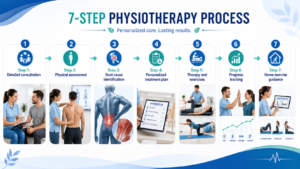
How does physiotherapy treatment work step by step?
A professional physiotherapy process should be clear, structured, and patient-friendly.
Step 1: Detailed consultation
The physiotherapist understands your pain history, lifestyle, daily routine, work habits, injury background, and medical history.
Step 2: Physical assessment
Your posture, movement, strength, flexibility, joint mobility, balance, and pain triggers are checked.
Step 3: Root cause identification
The therapist identifies whether the pain is due to weakness, stiffness, overuse, nerve irritation, posture, injury, or poor movement patterns.
Step 4: Personalized treatment plan
A treatment plan is created based on your condition, pain level, age, activity goals, and recovery timeline.
Step 5: Therapy and exercises
Treatment may include manual therapy, strengthening exercises, mobility work, stretching, machine-based therapy, balance training, or sports rehab.
Step 6: Progress tracking
Your improvement is monitored through pain reduction, movement range, strength, function, and daily activity comfort.
Step 7: Home exercise guidance
You are given safe exercises and posture tips to continue recovery outside the clinic.
Mini Summary Box
Good physiotherapy follows a process: assess, diagnose, treat, strengthen, track progress, and prevent recurrence.
What are the benefits of choosing the right physiotherapy clinic?
The right clinic can help you recover faster and avoid repeated pain cycles.
Key benefits include:
- Reduced pain without unnecessary dependency on medicines
- Better joint movement and flexibility
- Improved muscle strength
- Faster injury recovery
- Better posture and body alignment
- Improved walking, balance, and mobility
- Safe return to sports or gym activity
- Lower risk of recurring injuries
- Better confidence in daily movement
- Personalized rehab instead of generic exercises
- Support for long-term physical health
A good physiotherapy and sports clinic is especially useful for active individuals, gym-goers, runners, athletes, and people recovering from sports injuries.
Physiotherapy vs other pain relief options
| Option | How it helps | Best for | Limitation |
|---|---|---|---|
| Painkillers | Reduces pain temporarily | Short-term pain control | Does not fix root cause |
| Rest only | Gives temporary relief | Acute strain in early stage | Too much rest may increase stiffness |
| Massage | Relaxes muscles | Mild tightness or fatigue | May not solve injury or weakness |
| Physiotherapy | Treats pain, movement, strength, and function | Long-term recovery and rehab | Requires consistency |
| Surgery | Corrects severe structural issues | Specific advanced cases | Not needed for every pain condition |
Physiotherapy stands out because it focuses on function. It helps you understand why pain is happening and what your body needs to recover safely.
Who needs physiotherapy?
You may need physiotherapy if pain is affecting your movement, work, sleep, or confidence.
Physiotherapy is suitable for:
- Office workers with neck, shoulder, or back pain
- Senior citizens with balance or mobility issues
- Athletes with sports injuries
- Gym-goers with muscle strain or joint pain
- Patients recovering after surgery
- Stroke patients needing neuro rehab
- People with frozen shoulder
- People with knee pain or arthritis-related stiffness
- Individuals with recurring pain despite medicines
- Anyone searching for a trusted physiotherapist in Malad for guided recovery
You should consult a healthcare professional urgently if pain is severe, follows a major injury, causes numbness or weakness, affects bladder or bowel control, or worsens rapidly.
What is the cost of physiotherapy in Malad?
The cost of physiotherapy depends on the condition, treatment type, number of sessions, clinic facilities, therapist experience, and whether advanced rehab machines are required.
Common pricing factors include:
- Initial assessment and consultation
- Type of condition: pain, injury, post-surgery, sports, or neuro rehab
- Session duration
- Manual therapy requirements
- Machine-based therapy if needed
- Exercise rehab and supervision
- Number of sessions required
- Home exercise planning and follow-up
A simple pain case may need fewer sessions, while sports rehab, post-operative rehab, or neurological recovery may need a longer plan.
The best approach is to first get assessed. After that, the physiotherapist can suggest a realistic recovery plan based on your condition.
Physiotherapy industry trends in 2026
Physiotherapy in 2026 is becoming more personalized, data-driven, and technology-supported.
Important trends include:
1. Personalized rehab plans
Patients no longer want generic exercises. Clinics are focusing on condition-specific and goal-based rehab.
2. Sports performance rehab
A modern physiotherapy and sports clinic helps not only with injury recovery but also movement quality, strength, flexibility, and performance improvement.
3. Digital progress tracking
Therapists are using clearer progress markers such as pain scores, range of motion, strength levels, and functional goals.
4. AI and assistive technology
World Physiotherapy notes that AI and assistive technologies are already becoming part of physiotherapy, but their use should be guided by ethics, equity, and evidence.
5. Hybrid care and home guidance
Many clinics now combine in-clinic treatment with home exercise programs and follow-up guidance.
6. Prevention-focused care
People are visiting physiotherapists not only after injury but also to prevent pain, improve posture, and maintain mobility.
Mini Summary Box
In 2026, physiotherapy is moving toward personalized care, sports-focused rehab, digital tracking, AI-supported tools, and prevention-based treatment.
Why choose Physio Hub in Malad, Mumbai?
Physio Hub is positioned as a trusted physiotherapy and rehab clinic for people looking for pain relief, injury rehabilitation, mobility improvement, and performance enhancement in Malad, Mumbai.
Here’s why patients can consider Physio Hub:
- Personalized assessment-based treatment
- Focus on root cause, not just symptoms
- Support for pain relief, sports rehab, and neuro rehab
- Guided exercise programs
- Patient-friendly explanation of the condition
- Rehab planning based on recovery goals
- Convenient option for those searching physiotherapy near me in Malad
- Care for back pain, neck pain, shoulder pain, knee pain, mobility issues, and injury recovery
- Structured approach for long-term improvement
If you are searching for a physiotherapist in Malad, Physio Hub helps you move from confusion to clarity with a planned recovery approach.
FAQs: People Also Ask
1. How do I choose the best physiotherapist in Malad?
Choose a physiotherapist who performs a proper assessment, explains the cause of pain, creates a personalized treatment plan, tracks progress, and gives home exercises. Also check clinic experience, rehab facilities, patient reviews, and location convenience.
2. When should I visit a physiotherapist for pain?
You should visit a physiotherapist if pain lasts more than a few days, keeps returning, affects daily movement, causes stiffness, limits work, or stops you from exercising. Early care can prevent the condition from becoming worse.
3. Is physiotherapy useful for back pain and neck pain?
Yes. Physiotherapy can help with back pain and neck pain by improving posture, mobility, muscle strength, flexibility, and movement habits. It also helps identify lifestyle factors that may be triggering pain.
4. Can physiotherapy help sports injuries?
Yes. Sports physiotherapy helps with injury recovery, strength rebuilding, flexibility, balance, movement correction, and safe return to sport. A physiotherapy and sports clinic can also help reduce the risk of future injuries.
5. How many physiotherapy sessions are needed?
The number of sessions depends on the condition, pain severity, age, activity level, and recovery goal. Mild pain may need fewer sessions, while sports injuries, post-surgery rehab, or neuro rehab may require a longer plan.
Pain should not control your routine, movement, or confidence.
If you are looking for a trusted physiotherapist in Malad, visit Physio Hub in Malad, Mumbai for personalized pain relief, injury recovery, sports rehab, and mobility improvement.
Book your consultation today and take the first step toward moving better, feeling stronger, and living pain-free.