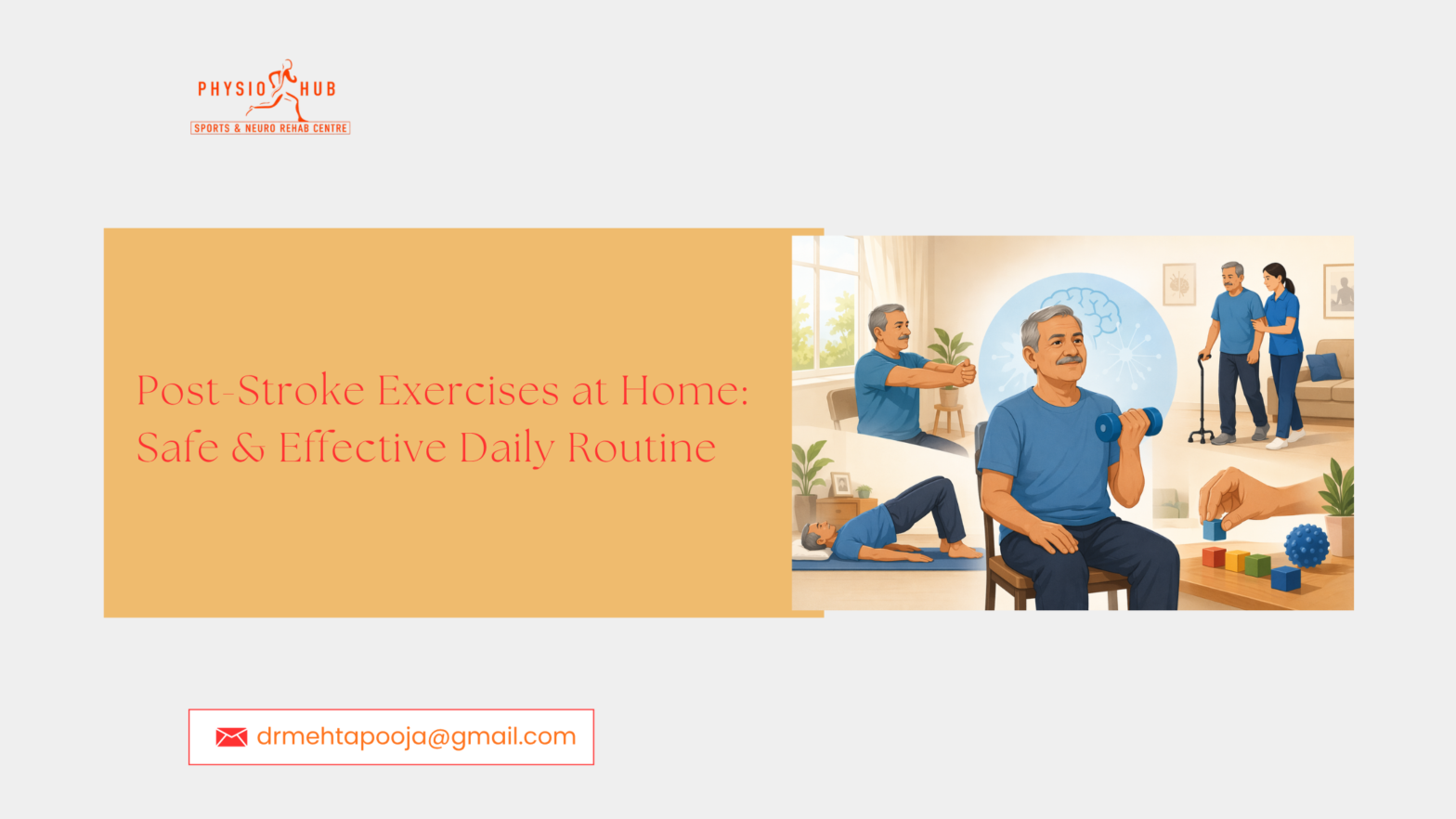
Post-stroke exercises at home are simple, guided movements done daily (20–30 minutes) to improve strength, balance, and brain-muscle connection after a stroke. With consistent practice, most patients start noticing better movement, coordination, and confidence within a few weeks.
What is Post-Stroke Exercise at Home?
Post-stroke exercises are structured movements designed to help the brain relearn control over muscles after a stroke.
After a stroke, something important changes the communication between your brain and body slows down or gets disrupted. And that’s exactly what these exercises work on.
Think of it like this:
Your muscles are ready… but your brain needs a little reminder on how to use them again.
Many patients we see at a neuro and sports rehab centre in malad say the same thing:
“I can feel my hand… but I can’t control it properly.”
That’s where consistent training makes all the difference.
Who Needs Post-Stroke Exercises?
You might be wondering “Is this really necessary for me?”
If you’ve had a stroke, chances are your body needs some level of retraining.
You should start (with proper guidance) if you notice:
- Weakness on one side of the body
- Difficulty walking or balancing
- Trouble using your hands (grip, coordination)
- Facial weakness or speech issues
- Fear or hesitation during daily activities
Even if your stroke happened months ago, recovery doesn’t just stop.
In fact, many patients improve even after 6–12 months with the right home exercises after stroke recovery.
Common Symptoms After Stroke
No two strokes are exactly the same. But certain patterns show up often.
You might experience:
- Weakness in arm or leg
- Loss of balance while walking
- Difficulty standing for long
- Hand stiffness or poor grip
- Facial drooping
- Slow or tiring movements
At first, these changes can feel frustrating. Simple tasks suddenly feel difficult.
That’s exactly why physiotherapy exercises for stroke patients are so important — they help you slowly regain control.
Benefits of Daily Stroke Recovery Exercises
Let’s be honest doing exercises daily isn’t always easy.
Some days you’ll feel motivated. Some days, not so much.
But here’s what consistent stroke recovery exercises daily routine can do:
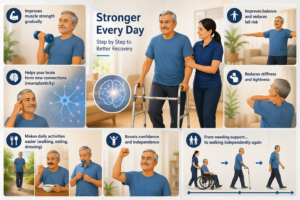
- Improves muscle strength gradually
- Helps your brain form new connections (neuroplasticity)
- Improves balance and reduces fall risk
- Reduces stiffness and tightness
- Makes daily activities easier (walking, eating, dressing)
- Boosts confidence and independence
We’ve seen patients go from needing full support… to walking independently again.
Not overnight. But step by step.
Post-Stroke Exercise Routine at Home
Perform this routine 1–2 times daily (20–30 minutes)
Don’t rush. Take breaks if needed. This is not a race it’s recovery.
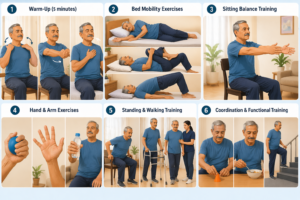
1: Warm-Up (5 minutes)
Start gently.
- Slow shoulder rotations
- Light arm movements
- Deep breathing
This prepares your body. Think of it as switching your system “on”.
2: Bed Mobility Exercises
Especially helpful in early recovery.
- Rolling side to side
- Assisted leg bending
- Hip lifting (bridging)
These small movements build the foundation for bigger ones.
3: Sitting Balance Training
This may look simple but it’s powerful.
- Sit upright without support
- Shift weight left and right
- Reach forward slowly
At first, even sitting steady can feel like a task. That’s normal.
4: Hand & Arm Exercises
This is where many patients struggle and improve.
- Squeeze a soft ball
- Open and close fingers
- Lift arm with support
One patient told us, “I couldn’t even hold a spoon… now I can eat on my own.”
That’s progress.
5: Standing & Walking Training
Now we move to functional recovery.
- Practice sit-to-stand
- Stand with support
- Walk slowly with assistance
It might feel scary initially.
“What if I lose balance?”
That fear is real and it reduces with practice.
6: Coordination & Functional Training
This is where things start feeling like “normal life” again.
- Picking up objects
- Practicing daily tasks
- Step training
Because recovery isn’t just about movement… it’s about getting your life back.
Recovery Time: How Long Does It Take?
This is one of the most common questions.
And the honest answer is it depends.
But here’s a general idea:
- First 1–2 weeks: Small visible improvements
- 1–3 months: Better control and strength
- 3–6 months: Functional recovery improves
- 6+ months: Continued progress with routine
Some days will feel slow. Some days will surprise you.
What matters most? Showing up daily.
Home Exercises vs Physiotherapy Centre
| Factor | Home Exercises | Rehab Centre |
|---|---|---|
| Convenience | High | Medium |
| Guidance | Limited | Expert supervision |
| Recovery Speed | Moderate | Faster |
| Customization | Basic | Highly personalized |
| Safety | Needs care | Monitored |
Home exercises are important. But doing them alone can sometimes feel confusing.
That’s why visiting a physiotherapist in malad helps you stay on the right track.
Risks & Safety Tips
While doing neuro rehab exercises at home, keep it safe:
- Avoid pushing too hard
- Move slowly and mindfully
- Use support (chair, wall, helper)
- Stop if you feel pain or dizziness
- Always follow expert guidance
Recovery should feel challenging… not risky.
Why Choose a Neuro Rehab Centre in Malad?
Here’s something many people don’t realize:
Recovery is not just about doing exercises it’s about doing the right exercises.
At a neuro and sports rehab centre in malad, you get:
- Personalized recovery plans
- Expert neuro physiotherapy support
- Guided stroke rehabilitation exercises at home
- Progress tracking and adjustments
- Motivation and emotional support
And honestly, that support makes a big difference.
FAQs
1. What are the best home exercises after stroke recovery?
Simple movements like arm lifting, hand grip exercises, sitting balance training, and walking practice are highly effective and commonly recommended.
2. How many times a day should stroke exercises be done?
Ideally, 1–2 times daily for 20–30 minutes. Regular practice gives better results than doing too much at once.
3. Can physiotherapy exercises fully cure stroke effects?
Stroke recovery varies, but physiotherapy helps improve strength, coordination, and independence significantly over time.
4. Is it safe to do stroke exercises without supervision?
Basic exercises can be done at home, but it’s always safer to consult a physiotherapist in malad for proper guidance.
5. When should stroke rehabilitation start?
Rehabilitation should begin as early as possible — often within a few days after the stroke, depending on medical advice.
Conclusion
Stroke recovery can feel slow. Some days, it might even feel like nothing is changing.
But if you look closely… small improvements are always happening.
A better grip. A steadier step. A little more confidence.
And that’s how recovery works.
With the right stroke recovery exercises daily routine, support, and patience your body can relearn.
Start Your Recovery with Expert Guidance
If you or your loved one is going through stroke recovery, don’t try to figure it out alone.
Visit Physio Hub – the best neuro and sports rehab centre in malad Mumbai for expert care and guided recovery plans.
Book a consultation with a trusted physiotherapist in malad today and take the first real step towards independent living.