Bell’s Palsy usually starts improving within 2–3 weeks and recovers in 3–6 months. If your recovery is slow, it often means the facial nerve is not being retrained properly and with the right neuro physiotherapy, improvement can still happen even after months.
If you’re reading this, chances are you’ve been waiting… and waiting… but not seeing the change you expected.
Maybe your smile still feels uneven.
Maybe your eye doesn’t close fully.
Or maybe you’re just thinking “Why is this taking so long?”
You’re not alone. Many patients come to a neuro and sports rehab centre in Malad with the exact same concern.
Let’s understand what’s really going on in a simple way.
What is Bell’s Palsy?
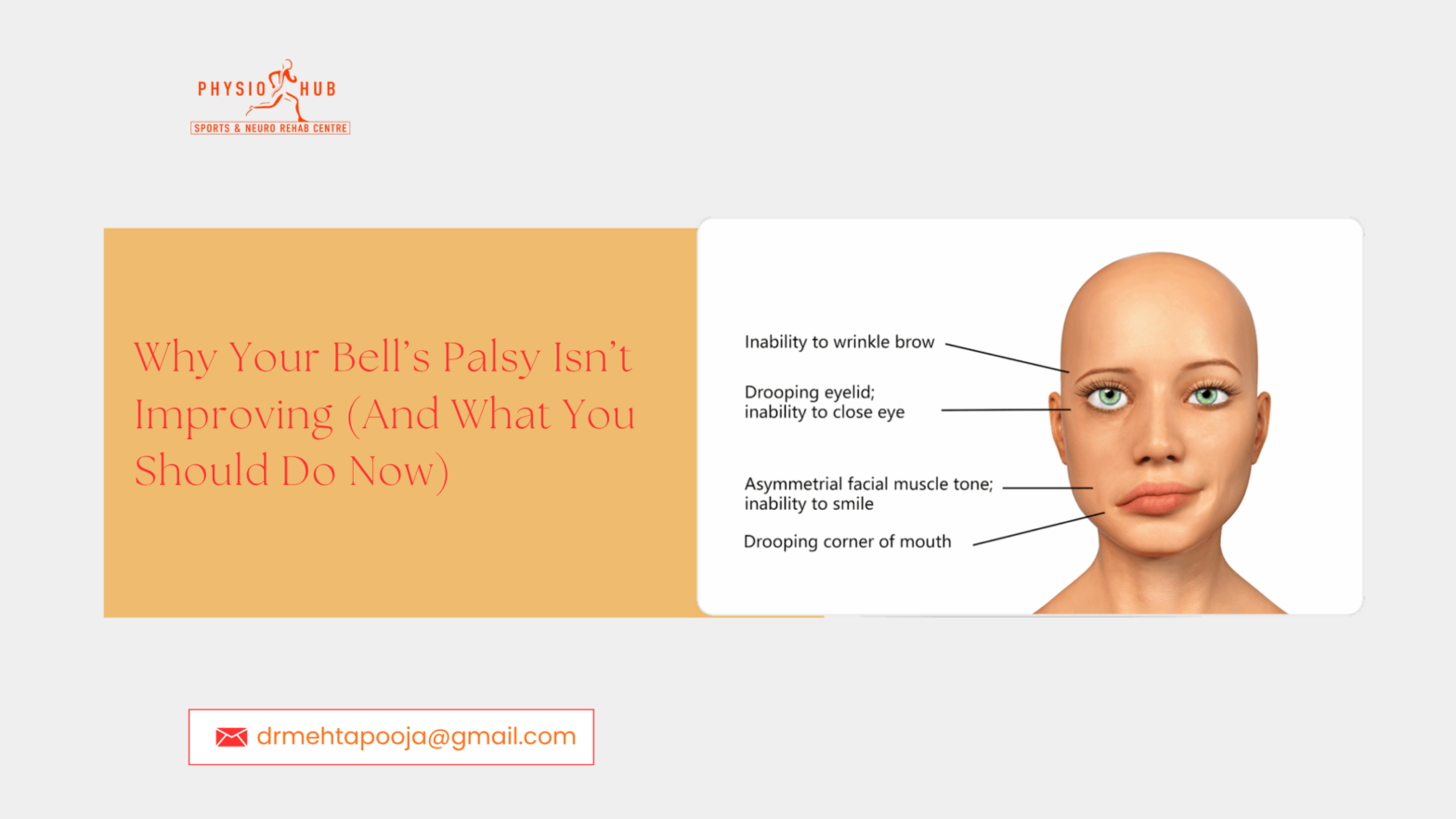
Bell’s Palsy is a sudden weakness or paralysis of facial muscles, usually affecting one side of your face.
It happens when the facial nerve becomes inflamed or compressed.
That’s when you start noticing small but scary changes:
- One side of the face drooping
- Difficulty smiling properly
- Trouble closing your eye
- Speech or eating feeling slightly off
It often happens overnight, which is why it feels even more alarming.
But here’s something important recovery is possible.
The real question is… are you guiding your recovery the right way?
Who Needs This Treatment?
You might need proper rehab if:
- It’s been 2–3 weeks and you don’t see improvement
- Your face still feels tight or heavy
- Your smile looks uneven in the mirror
- You struggle to close your eye fully
- You feel stuck despite taking medicines
A lot of people search for a physiotherapist in Malad West at this stage and honestly, that’s the right move.
Because this is where recovery needs direction.
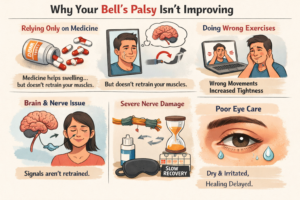
Why Your Bell’s Palsy Isn’t Improving
Let’s talk about the real reasons the ones most people don’t realize.
1. Delayed Physiotherapy
Many patients depend only on medicines in the beginning.
Medicines help reduce swelling, yes…
But they don’t teach your face how to move again.
Think of it like this
your muscles are ready, but your brain isn’t giving the right signals.
2. Incorrect Exercises
You might have tried exercises from YouTube or random sources.
But without guidance:
- You may activate the wrong muscles
- Movements become uncoordinated
- Tightness increases
We’ve seen patients who tried too hard… and unknowingly slowed their recovery.
3. Lack of Neuro Retraining
Here’s something most people don’t know:
Bell’s Palsy is not just a muscle problem it’s a brain + nerve problem.
Your brain needs to relearn how to control your face.
Without this retraining, signals stay weak or confused.
4. Severe Nerve Involvement
Sometimes, the nerve damage is deeper.
In such cases:
- Recovery takes longer
- Progress feels slow
- But improvement is still possible
It just needs patience… and the right approach.
5. Poor Eye Care
This part is often ignored.
If your eye isn’t closing properly:
- It can become dry
- Irritation can increase
- Healing may slow down
Something as simple as eye care can make a big difference.
Symptoms That Need Immediate Attention
If you’re noticing these signs, it’s better not to wait:
- No improvement even after 3–4 weeks
- Sudden tightness or twitching in the face
- Eye redness or dryness
- Difficulty eating or speaking clearly
This is when visiting a neuro rehab centre in Malad becomes important.
Benefits of Proper Physiotherapy for Bell’s Palsy
With the right guidance at a best physiotherapy clinic in Malad, recovery becomes more structured and predictable.
Here’s what patients usually experience:
- Better control over facial movements
- More symmetrical smile over time
- Reduced stiffness and tightness
- Improved coordination between brain and muscles
- Faster recovery (often significantly better than doing nothing)
- Lower risk of long-term complications
A good neuro physiotherapy Mumbai approach doesn’t just treat the face it retrains the brain behind it.
Bell’s Palsy Treatment Process
At Physio Hub, every patient’s journey is a little different but here’s how it generally looks:
1. Assessment (Day 1)
We start by understanding your condition:
- Facial strength
- Nerve response
- Movement patterns
It’s not just about what’s weak… but how your face is behaving.
2. Facial Muscle Activation
We begin gently.
- Assisted movements
- Controlled exercises
- Mirror-based feedback
At first, even small movements matter.
3. Neuro Re-education
This is where real change begins.
We retrain your brain to send correct signals again.
- Controlled expressions
- Repetition with awareness
- Gradual improvement
It’s like teaching your face a skill it has forgotten.
4. Manual Therapy
To reduce tightness:
- Soft tissue release
- Gentle facial massage
- Relaxation techniques
Many patients say this step brings relief almost immediately.
5. Home Exercise Plan
Consistency is key.
- 20–30 minutes daily
- Simple guided routine
- Easy to follow
No confusion. No guesswork.
6. Advanced Techniques
In some cases:
- Electrical stimulation
- Biofeedback therapy
A facial rehab specialist in Mumbai decides what’s right for you not a one-size-fits-all approach.
Recovery Time: What to Expect
Every patient asks this “How long will it take?”
Here’s a realistic idea:
| Stage | Timeline | What Happens |
|---|---|---|
| Early Stage | 1–2 weeks | Small improvements begin |
| Active Rehab | 3–8 weeks | Better control and movement |
| Advanced Recovery | 2–6 months | Smile and symmetry improve |
Some recover faster. Some take longer.
And that’s okay.
Home vs Clinic Treatment (Comparison)
| Factor | Home Exercises | Clinic Physiotherapy |
|---|---|---|
| Guidance | Limited | Expert supervision |
| Accuracy | Low | High |
| Results | Slow | Faster |
| Risk of mistakes | High | Minimal |
The best results usually come from combining both.
Risks of Ignoring Proper Treatment
Let’s be honest ignoring rehab can lead to:
- Permanent facial imbalance
- Unwanted movements (synkinesis)
- Long-term stiffness
- Confidence issues
We’ve seen patients regret waiting too long.
But the good news? It’s rarely too late to start.
Is Bell’s Palsy Recovery Possible After Months?
Yes, absolutely. Even after 2–3 months, recovery is still possible with proper neuro physiotherapy.
Your brain has something called neuroplasticity
which means it can relearn and adapt.
With the right training, change can still happen.
FAQs
1. Why is my Bell’s Palsy not improving?
It could be due to delayed physiotherapy, incorrect exercises, or lack of nerve retraining. With the right rehab approach, improvement can still begin.
2. How long does Bell’s Palsy take to recover?
Most people recover within 3–6 months. Mild cases may improve in a few weeks, while others take longer.
3. Can physiotherapy cure Bell’s Palsy?
Physiotherapy helps restore function and movement. It improves coordination and speeds up recovery significantly.
4. What happens if Bell’s Palsy is left untreated?
It can lead to long-term stiffness, facial imbalance, or unwanted movements.
5. When should I start physiotherapy for Bell’s Palsy?
Ideally within the first 1–2 weeks. Early treatment gives better results.
6. Is facial massage helpful in Bell’s Palsy?
Yes, but only when done correctly. Wrong techniques can worsen symptoms.
Conclusion
If your Bell’s Palsy isn’t improving, don’t ignore that feeling.
Your body is telling you something.
Instead of waiting, take action:
- Start structured physiotherapy
- Avoid random exercises
- Focus on proper neuro retraining
At Physio Hub, a trusted neuro and sports rehab centre in Malad, we understand how frustrating this phase can feel.
And more importantly we know how to guide you through it.
Take the First Step Toward Recovery
If you or someone close to you is going through Bell’s Palsy:
Consult the best physiotherapist in Malad Mumbai at Physio Hub
Get a personalized recovery plan
Start seeing real, measurable improvement
Don’t wait for recovery to happen. Take the first step today.